Building the business case to fight climate change
Beyond responsibility and risk, the rationale of benefit is key. Companies must see that it is in their very own self-interest to take on climate change.
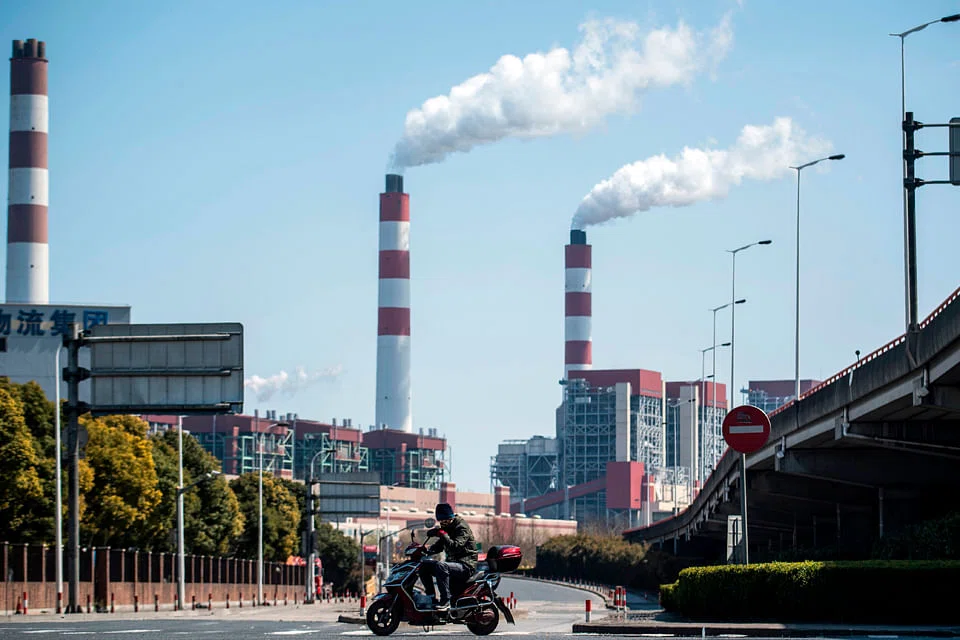
THE recent US$2 billion commitment by Singapore to drive sustainability, particularly green finance, could not have been made at a more critical time. It came at the heels of an unprecedented warning by 11,258 scientists across 153 countries that our planet faces a climate emergency.
Businesses will now have to go back to the drawing board to reassess the emerging threats from climate change as well as map out responses demanded by stakeholders. Most significantly, they have to build a new case to fight climate change that goes beyond responsibility and risks.
Real anguish
For businesses, the starting point to consider climate change is normally via sustainability. Along this vein, I remember advocating the importance of sustainability even with the smaller enterprises. There was a memorable rebuttal from a printing company CEO. He proclaimed that if his company embraced sustainability, he would have to close his business. He further retorted that his greatest enemy is the PDF file format which greatly affected his paper printing business.
The reaction epitomises the real sentiments, even anguish, amongst companies on sustainability. To them, it is basic survival that matters first. Sustainability is for the rest of the world but leave me alone to upkeep the business - goes the sentiment so often felt.
I can imagine that the "not-for-me" free-riding syndrome will be even more protracted in the battle against climate change. If anything, the impact is distant and indirect. It will be difficult to conceive that business leaders will commit to fight climate change fully and immediately.
Needed action
Climate change is not a new revelation overnight. The major initiating milestone was the United Nations' Earth Summit held in Rio de Janeiro in June 1992 where countries sought to reduce damage to the environment, especially in the use of fossil fuels.
But the key turning point was the Paris Agreement in 2015 which aimed to keep global temperature increase to below 2 deg C above pre-industrial levels and to pursue an even more stringent limit of 1.5 deg C. While this agreement has been cited just too frequently, it often goes unnoticed that each of the signatory countries, including Singapore, must act and regularly report on its efforts.
The greatest push at the home front to combat climate change came from Prime Minister Lee Hsien Loong at his National Day Rally in August 2019. Mr Lee highlighted, in particular, the potential sea level rise that will profoundly affect the island state. Accordingly, the country will adopt a three-pronged strategy to combat climate change - understand the issue, take measures to mitigate it, and adapt to it.
Dual angles
Companies play a pivotal role in the climate crisis due to intense environment impact, particularly from carbon emission. Building a compelling business case is a crucial lever for action. In my view, the case has thus far been built on two angles.
The first angle comes in the form of "responsibility" to the community by not degrading the environment. It is something good for companies to do socially, and relies on corporate altruism to place society above profit.
In the second angle, consideration of climate change takes the form of "risk". Companies make assessment of two types of risk that may come about from climate change - direct risk and derived risk.
Direct risk refers to physical impact that may actually damage the company's products and markets, including the supply chains, through severe weather patterns such as floods and hurricanes.
Derived risk comes from new demands of consumers and investors for the company to adopt climate change actions. These may have implications on sales revenues and capital costs. The risk may also emanate from changes in regulation that require the company to pursue climate-related actions thus entailing not only costs but also operational modifications.
Third angle
However, for businesses to fully accept climate change, a third angle to complete the triangle is needed - that of "rationale". Companies must see that it is in their very own self-interest to take on climate change. This will entail assessing implications of climate change actions on financial bottom lines.
The rationale angle is still in the early stage as many of the climate-related standards, such as those embodied in the Global Reporting Initiative (GRI) and the Task Force on Climate-related Financial Disclosures (TCFD), are just emerging and being applied.
On business benefit, there has been clear evidence on the financial impact of sustainability as a broader whole. In my study of Singapore-listed companies conducted at my research centre with Asean CSR Network, we found a significant positive relationship between sustainability reporting and firm value.
In a summative analysis conducted by University of Oxford and Arabesque Partners involving more than 200 studies, it was found that 88 per cent of the studies show that good sustainability practices result in better operational performances. Moreover, 80 per cent indicate that such good practices give rise to better stock price performance.
But the greatest challenge is to demonstrate that climate change practices are beneficial to the company, one company at a time. The evidence is mostly anecdotal as of now.
In a recent September article, The Straits Times calculated that PSA Corp's purchase of 200 liquefied natural gas (LNG) trucks, which represented 15 per cent of its truck fleet, reduced its carbon dioxide emission by 26 per cent compared to diesel trucks. The company stood to gain more than S$3.5 million in operational savings over 10 years. And this could increase if PSA ramped up its LNG fleet even more.
The rationale view is the most crucial third angle to be triangulated with the angles of responsibility and risk. Only then will we see companies voluntarily embracing the battle of climate change.
Back to the story of the printing house and its resistance to sustainability - it is clear that if the company sees the tangible returns, it will be serious about sustainability including climate change. The PDF threat, as feared by the CEO, suggests that the company should switch to a new business model. And this will be rationalised on the fundamental reasoning of self-interest - business benefit.