Creating the Singapore advantage in Industry 4.0
A National Digital Infrastructure would create a domestic innovation hub for startups, academics and budding entrepreneurs.
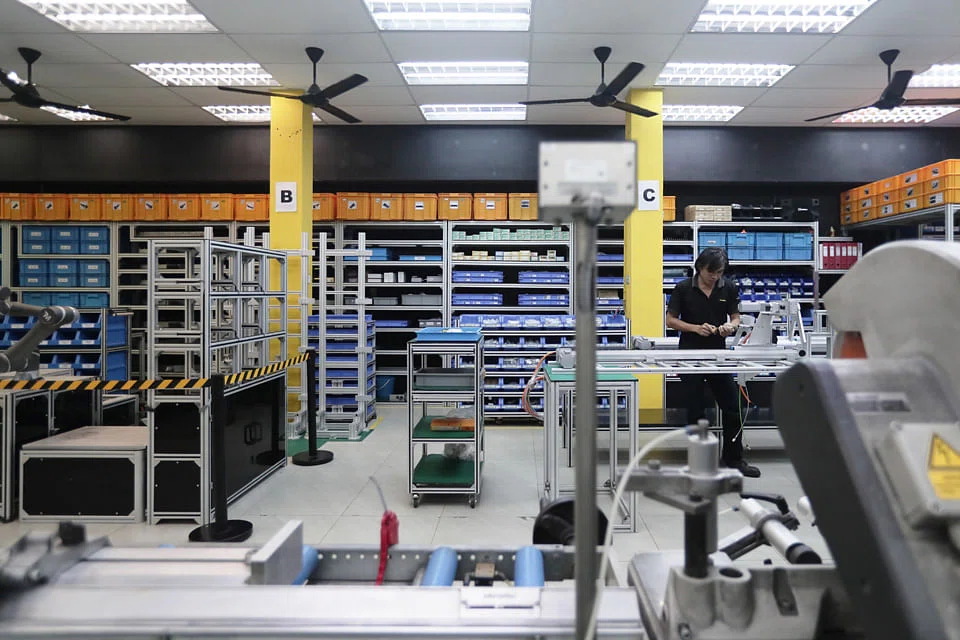
IT MAY come as a surprise to some that as of 2019, the manufacturing sector accounted for close to 21 per cent of Singapore's gross domestic product (GDP).
Ensuring that manufacturing remains a key pillar of the economy in the future requires enhancing the strength of the sector against a growing regional and global competitive market. This competition is heightened due not least to relatively high operating costs here - for such as talent and real estate - which makes maintaining a strategic competitive advantage in Singapore challenging. While there are great benefits such as a skilled workforce, strong IP protection and technology/research capabilities, it can be argued that regional countries have been fast gaining ground. At some point, other nations will catch up. This means that Singapore's current advantages will become less compelling for manufacturers considering locating production here or purchasing parts and components from the Republic.
Another competitive battleground is centred on automation, robotics, and analytics to keep production in Singapore. This often comes in the form of "buying" this advantage. However, these same advanced solutions such as AGVs (automatic guided vehicles), Cobots and 3D printing can just as easily be moved to a regional country where costs of operations/workforce, real estate and sourcing of raw materials are much more competitive.
This leaves Singapore in a challenging situation and we must start looking beyond a "purchasing" style of competitive advantage. Instead, we should capitalise on what put Singapore on the map for manufacturers in the first place: infrastructure. We need to look at building a competitive advantage in digital infrastructure that cuts across industries and provides a benefit that cannot be easily matched.
Just as Singapore invested heavily in reliable electricity, clean running water, roads and seaports to ensure manufacturers can put down roots and flourish here, we need now to invest in the next infrastructural requirement - data.
Imagine a situation where every manufacturer, logistics firm and supplier is connected to a real-time digital network. Production processes are reported in real time down to individual stations and items that are being produced. Materials in transit on land, in the sea or in the air are tracked down to the square metre. Suppliers in Singapore and around the world are fully synchronised to ensure things arrive on time, built to exacting standards and quality, with the right specifications/credentials and completed in compliance with the best sustainable requirements.
Imagine the power and advantage any new manufacturer coming into Singapore will have. They can instantly plug into a digital ecosystem of suppliers, solutions providers, and integrate into a digital supply chain right from the start. This competitive advantage transcends individual industry sectors and will put Singapore on a standing of digital manufacturing prowess that other nations will envy.
Building this advantage comes at a cost. It requires the next level of digital infrastructure to be constructed. Just as it took effort to build the roads to transport goods, to flatten the land for air cargo to land and to dredge the ports for container ships to dock, construction of this nation-wide digital network will not be easy.
NEW NORM
It requires an unbiased, open, secure and real-time system. No one player nor vendor can do it all and this requires the participation and collaboration of every manufacturer, solutions vendor and supplier. More importantly, it requires businesses and operations in Singapore to realise that maintaining a competitive advantage is no longer about strengthening one's own organisation, but opening up to build a Singapore digital manufacturing brand instead.
Selective data sharing, inter-organisational collaboration and leveraging data as the means of communication needs to be the new norm. A mindset change is required of every SME (small and medium-sized enterprise), LLE (large local enterprise), and MNC (multinational corporation) to connect, share, coordinate and optimise. This will be a monumental shift from doing business as usual and requires that we look beyond a singular facility and realise that in order for manufacturing to thrive in Singapore, a cohesive and optimised ecosystem is required to maintain competitiveness.
Just as roads, airports and seaports brought businesses to Singapore, a National Digital Infrastructure would create a domestic innovation hub for startups, academics and budding entrepreneurs. For the vast number of deep tech companies focused on machine learning, artificial intelligence, optimisation and analytics, funding is only one aspect of the keys to success. The other critical element is having the vast data vaults and real-time data streams to drive those analytical engines, algorithms and models. In this scenario, both funding and data would be readily available to any able and passionate innovator and entrepreneur to start their journey in Singapore - and have something that no other country can provide in the field of Industry & Supply Chain 4.0.
This National Digital Infrastructure ecosystem would sprout digital and traditional innovations as well. Real-time production data from all manufacturers in an area can be used to optimise the best timings for delivery pickups to minimise costs and reduce carbon emissions. A new startup can emerge to analyse the breakdown patterns of equipment across every manufacturer in Singapore to better predict the failure rates of machines and perform preventative maintenance. Raw material consumption rates of competing companies can be pooled together to optimise ordering costs for restocking. New startups can be founded to help turn excess capacity in factories here into parts/components production for global markets. The list of new solutions is endless when the infrastructure is there. If you build it, they will come.
The competitive market for manufacturing globally will only get tougher over time. It is inevitable that certain manufacturing industries in Singapore will see their businesses decline and be labelled "sunset". As consumer behaviors shift and buying cultures evolve, manufacturers must change and adapt. Amid change and disruption, can a manufacturer remain competitive in Singapore? How will manufacturers survive as expenses and costs increase? The answer is to embrace an open National Digital Infrastructure to ensure that even as businesses and manufacturers ebb and flow, the digital infrastructure stands firm.
Some may see the concept of a National Digital Infrastructure as wishful thinking and a wild dream. The hurdles for the opening up of traditional business are too high. Mindsets of business owners are too closed. The number of objections can be staggering, but it will ultimately be a decision for Singapore and Singaporeans to make.