

Fear of imperial China driving trade wars
There is both bipartisan and nationwide support in the US for what Trump is doing to counter what most fear is the unchecked rise of China.
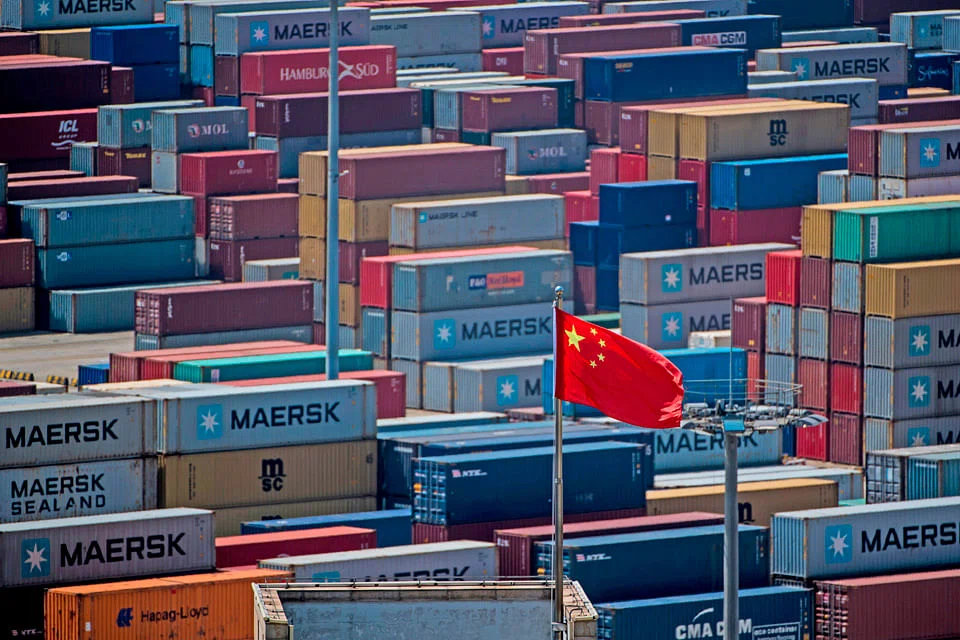
MANY of us in financial markets may have misread the true nature of the trade fight between the United States and China. The background context to this trade dispute is years of talks that have yielded no substantial results between US and China for fairer trade practices. That, with the current US administration being staffed with hardliners, it's no surprise that the US is aggressively using trade tactics to cajole China into a speedier negotiation.
Tech dominance with "Made in China 2025"
On the surface, the Trump administration has started a trade war to protect its footing as the global leader across the board. But below the surface, you'll find that Americans view China as a national security threat when it comes to technology. That's because China has demonstrated unfair trade practices and intellectual property breaches to assert itself towards technological dominance with its 2025 plan that involves explicit aspirations to gain global tech dominance.
The US doesn't intend just to stop China from gaining tech dominance, though. Even more important to the US is to curtail the rise of Chinese imperialism in order to protect the US's national security and dominance in the world.
Xi is now Emperor-like
The rise of Chinese imperialism has been quite apparent for some time. The current administration in China is very different from those before, when under Deng Xiaoping's time, and even the subsequent leaders before Xi Jinping, the Chinese had always deployed a policy of hide and bide: "Hide your capacities, bide your time." China used to do this because if they're going to challenge the biggest elephant in the room, they want to hide their strength, grow it beyond that elephant's strength, and then pounce on it. In other words, take the the incumbent power by surprise. President Xi has put aside that conventional wisdom from generations of Chinese politicians since he took power, and has taken a more assertive approach. On the first day of ascending to the position of President of China, he took over power of the military. It was a first for a president of China to do this. President Xi is also the first president not to face re-election risk, meaning he can serve his terms indefinitely.
What Does 'One Belt, One Road' Really Mean?
Adding to Xi's emperor-like behaviour, another concern in China's means to ascendence as a global power is the One Belt, One Road project. No one really knows what China's intentions are with the One Belt, One Road programme, and we're increasingly asking ourselves whether China knows what its intentions really are. The billions of dollars invested in infrastructure in countries in Asia and poorer nations east of China are reasons for concern because those investments generally come with conditions. This is China dangling carrots to less powerful, less-resourced nations in order to own more assets outside of its own borders. And Washington has a problem with this. It's hard not to view One Belt, One Road as the modern day Han dynasty's Silk Road, but at least back then, intentions were clearer.
China's military assertion in the Asia-Pacific
The US has a huge military presence and a number of bases in Asia with allies to maintain order, and in recent years, China has been pursuing the same strategy. China's aggressive military display in the Asia-Pacific region underlies Chinese ambitions and territorial claims in the South China Sea. China has territorial disputes with many countries in APAC: it spreads from Japan, all the way to South-east Asia, as close as Singapore. These aggressive, territorial displays and claims simmer, and then come back, and then go away, and then come back again, raising eyebrows in Washington for years.
Part of China's strategy relates to Taiwan, because, traditionally, China views Taiwan as part of China. President Xi warned US Defense Secretary Jim Mattis that China will not give up "even one inch" of territory, and that refers to Taiwan. "It's given by our ancestors", Mr Xi said. China is ramping up its military assertion in Asia, because territorial claims aside, China can show its might and intimidate Taiwan into a potential sort of unification one day. In reality, the importance of Taiwan has diminished over the last decade. Yet, as small as it is, Taiwan could very well be the next pain point and the next escalation between the Trump administration and the Chinese government in negotiations.
Meddling with North Korea and US interactions
Ultimately, there is a good chance that US could use Taiwan as a card in the negotiations, just as China used North Korea as yet another carrot to dangle with Trump, who is surely vying for the Nobel Peace Prize. That's why we had these not-very-productive meetings between Mr Trump and North Korean leader Kim Jong Un in Singapore. It was more entertainment and showmanship that was actually being delivered. Behind the scenes of it all, China holds the strings when it comes to US-North Korea negotiations. Kim flew into Singapore for the meeting on an Air China plane, and immediately after the summit he visited Xi again. It's the first time ever that a North Korean leader visited China three times within a month or two.
Let's be clear: North Korea and Taiwan are merely pawns in the bigger scheme of things. To China, it serves to annoy and it serves to bargain. Rhetorics between government officials will continue to be fierce and furious, on and off, and the theme is 'it's going to recur, it's here to stay'. We're going to have to deal with it.
Even though Mr Trump's methods may be unorthodox, fear of an imperialist China is rising so quickly that there's bipartisan support in Washington, and nationwide support, for what he's doing in and "to" China. Investors in the markets, and even the Chinese officials themselves, underestimated how quickly that sentiment would escalate in the US. If we aren't careful, this trade war may escalate into a Cold War.






