

For S-East Asia, Africa spells opportunity
Singapore is considered the "best brand" in the continent, and some big opportunities for it lie in urban development and planning, says Aseacc's co-founder.
WITH Africa now billed as one of the most promising "new frontiers" of the global economy, South-east Asian companies are positioning themselves to play a bigger role in the continent. One of the institutions that is helping pave their way is the Africa-South East Asia Chamber of Commerce (Aseacc).
Operational since 2013, this newest business chamber in Singapore has 14 members and counting.
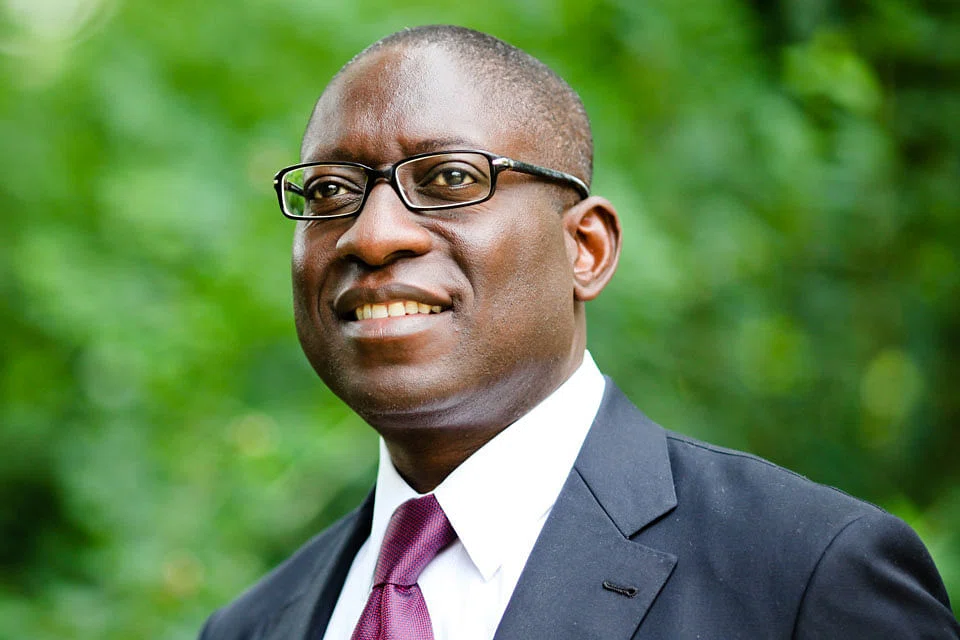
"We have the big guys," says the Chamber's co-founder and chairman of its advisory board Paulo Gomes, a Harvard-educated native of Guinea Bissau and former executive director for 24 African countries at the World Bank.
Mr Gomes was recently in Singapore on a three-month stint as distinguished visiting fellow at the Centre for African Studies established by Nanyang Technological University (NTU) and the Singapore Business Federation.
He notes that the membership includes the large shipping company Pacific International Lines, commodity players Wilmar International and Olam International, the water treatment company Hyflux, and a clutch of large African companies such as Ecobank (the leading pan-African bank), African Export-Import Bank and NSIA Insurance, one of Africa's largest insurance groups.
The membership is set to expand, according to Mr Gomes. "We have a big group from Malaysia who is also interested, as well as a few companies from Indonesia, the MAC Group from Tanzania - a large private-sector group - and others. We'll be having our first AGM in Africa in November."
The Aseacc was born of an idea proposed at the first Africa-South East Asia Business Forum in 2010. There was some debate about where in South-east Asia it should be based. "There was lots of lobbying from Malaysia and Indonesia to set it up in those countries," says M Gomes. "But we, the founders, thought Singapore would be a better place to do it."
One reason was that they wanted to expose Africa's business community to the "Singapore model".
"Singapore has succeeded in blending the private sector and the public sector to transform a country," he points out. "We thought that model is useful to learn from.
"We're not saying it's a perfect example; Singapore is a different context and its model is not easily replicable in many African countries. But many have large public sectors, and many have had to sell a lot of state enterprises because they were inefficient."
However, there are cases of state-owned companies being run efficiently, according to Mr Gomes. "Ethiopia has a number of public-sector enterprises and some are successful - like Ethiopian Airlines, which is the best African airline. It is run like a Singapore GLC. There is no interference by government, and it works. And now, that experience is being extended to other African countries."
CHINA'S PRESENCE IN AFRICA
"People talk a lot about China's links with Africa," says Mr Gomes. "But South-east Asia has been engaged with Africa for many years - since the Bandung Conference of 1955." Initially, the engagement was more political and not so much focused on business. But subsequently, business activities have picked up.
In terms of trade, China is by far Africa's biggest partner, with two-way trade flows approaching US$200 billion.
China is also big in terms of projects. "China's SOEs (state-owned enterprises) build, but they don't invest so much," explains Mr Gomes. "They get financing from China, they build a dam or they build a bridge, and then they leave." Most of the equipment comes from China as well, so there are few spin-offs for local SMEs (small and medium enterprises).
But that said, Mr Gomes points out that China's contribution to Africa's development has been enormous. "We have to be grateful for what China has done. We were really struggling to find resources to finance infrastructure. And how can you develop a continent without infrastructure?"
Mr Gomes points out that some of what China has built has transformed entire countries. "In Guinea-Conakry, they financed a dam which is now operational. It supplies 260 megawatts and it will provide 40 per cent of the country's energy needs. In my country, Guinea-Bissau, we had only 10 megawatts of installed capacity - probably even less than NTU. Because of this dam, 40 per cent of Guinea Bissau's needs will also be met, and 15 per cent of Gambia's and 6 per cent of Senegal's."
However, when it comes to investment, China is not the biggest; it lags behind the United States, UK, France and South Africa. In recent years, South-east Asia's investments in Africa have also reached significant proportions. For example, Temasek-owned Pavilion Energy has major investments in natural gas in Nigeria and Tanzania; Singapore-listed Olam and Wilmar have invested heavily in Gabon, Nigeria, Liberia and Côte d'Ivoire, among others. Many Malaysian companies also have large investments in Africa.
THE SINGAPORE BRAND
Among South-east Asian countries, Singapore is considered the "best brand", according to Mr Gomes. "The Singapore brand is unique in Africa," he says. "And I think Singaporeans don't realise that enough. When you are a brand, it's an asset."
There is a strong consciousness of Singapore in Nigeria, the most populous African country. "Rwanda is also aligning itself with Singapore in terms of its strategy. It even has an embassy here."
Some big opportunities for Singapore lie in urban development and planning. Mr Gomes points out that Temasek-linked Surbana, which specialises in urban solutions, is already designing master plans for cities in Rwanda, Burundi and Congo, and exploring opportunities in Senegal and Guinea-Bissau. "There are more than 20 African mayors pressuring us to get Surbana to do their urban planning," he says.
The needs are urgent, because Africa faces major challenges from both climate change and rural-to-urban migration. "No place in the world will be facing the challenge Africa will be facing in the next 10 years in dealing with the massive arrival of people in cities - not even China. So, if you don't plan the cities, you're going to have a catastrophic situation."
Africa also faces challenges arising from the downturn in commodity prices. "It's going to hurt us," says Mr Gomes. "But it's a good lesson and it's happening at the best moment. We cannot continue to design our budgets with such high commodity price assumptions, as some countries have done. So it's a reality check. We have been talking in Africa about diversification and industrialisation for the last 20 years. But we haven't moved forcibly."
Africa must do that, he adds. "About two million young people a month enter the labour market every month. How do we give them jobs? We can't do it by exporting cocoa and cotton."
And so, value-added manufacturing spells another opportunity, says Mr Gomes. Some African countries have already started to go beyond exporting raw materials. "Côte d'Ivoire is the number one producer of cocoa in the world. In the last three years, they have transformed about 15 per cent of their cocoa production by adding value. They haven't gone all the way to chocolate yet. But they're making cocoa butter, cocoa-based liquor and moving into the supply chain. This creates jobs."
There is thus a wealth of opportunities in Africa for South-east Asian countries to tap. And they can go it alone, says Mr Gomes. They don't necessarily need hand-holding by countries which may have a longer relationship with the continent.
"Doing business in Africa today doesn't need a historical relationship," he points out. "You just need to go with pragmatism. There is a whole new generation of people in Africa who have been exposed to Asia, America and elsewhere and who would be more than happy to team up with Singapore."
TRENDING NOW

Once staunchly pro-China, Malaysian Chinese businesses are now distancing themselves from Beijing

Philippine power giant First Gen rebuffs foreign offers, plans up to US$2.6 billion in expansion

Grab CEO’s wife Chloe Tong on life with Anthony Tan and finding her purpose
The line between public servants and private property

