

Frasers Property can do more to unlock value, such as distribute FCT units

Leslie Yee
FOR the financial year ended Sep 30, 2021 (FY21), (FPL) posted S$833.1 million in attributable profit. This was a significant increase from the S$188.1 million reported in FY20.
But FPL’s shareholders had little to cheer from the better financial performance. The dividend per share for FY21 of 2 Singapore cents was up from 1.5 Singapore cents for FY20. But it is still much lower than the 8.6 Singapore cents for each of FY17 and FY18, and 6 Singapore cents for FY19.
FPL’s profit for FY21 was boosted by a one-time non-cash accounting gain from the change in use of a portfolio of industrial and logistics properties. The payout ratio excluding this one-time accounting gain is around 53 per cent.
Of course, FPL has continued to improve its financial performance. Last week, the group reported that attributable profit grew from S$22.5 million a year ago to S$158.2 million in H1 FY22. This comparison excludes the impact from the change in use of properties in FY21.
Nevertheless, FPL continues to trade below its net asset value (NAV). Based on its close on Tuesday (May 17) at S$1.08, FPL is valued at 43 per cent of its NAV per share of S$2.53 as at Mar 31, 2022. The stock is also 8 per cent below the price of S$1.18 paid by shareholders who subscribed for FPL’s rights issue in March 2021.
FPL’s share price may be affected by the group’s small free float. Based on its latest annual report, Charoen Sirivadhanabhakdi and his spouse, Khunying Wanna Sirivadhanabhakdi, have a deemed interest of around 87 per cent of FPL, and the group’s free float is about 11 per cent.
Given that FPL trades at a huge discount to book value, perhaps the Sirivadhanabhakdi family will be tempted to take the asset-heavy group private. Possibly, FPL will join the likes of Fragrance Group, GL, SingHaiyi Group and Top Global in being successfully taken private by entities linked to major shareholders.
The managers of Frasers Hospitality Trus t (FHT), whose sponsor is FPL, are reviewing strategic options to enhance and unlock value for stapled security holders of FHT. Perhaps FPL itself could step up efforts to unlock value for its shareholders.
Value unlocking
Could FPL learn from the restructuring exercise undertaken last year by CapitaLand? This restructuring exercise involved taking private CapitaLand’s development business and creating the now-listed CapitaLand Investment (CLI), whose business comprises its investment management and real estate investment platforms.
Shareholders gained from the exercise. For every share held in CapitaLand, shareholders received one CLI share plus units in CapitaLand Integrated Commercial Trust and cash. CLI trades at a premium to book value and CLI’s share price as at May 17, 2022 was above that of CapitaLand’s last traded price prior to announcing the restructuring.
As at Mar 31, 2022, FPL had total property assets of S$34.3 billion. Of this, 87 per cent was in recurring income asset classes. FPL could therefore take private its development business and create a listed entity that owns investment properties, lodging assets, stakes in real estate investment trusts and a stapled trust, as well as managers of trusts.
In sum, FPL can create a listed entity that shares many characteristics of CLI. Possibly, entities linked to the Sirivadhanabhakdi family that hold shares in FPL can then place out some of their shares in the new listed entity at book value to give the new listed entity a higher free float.
Distribution of FCT units
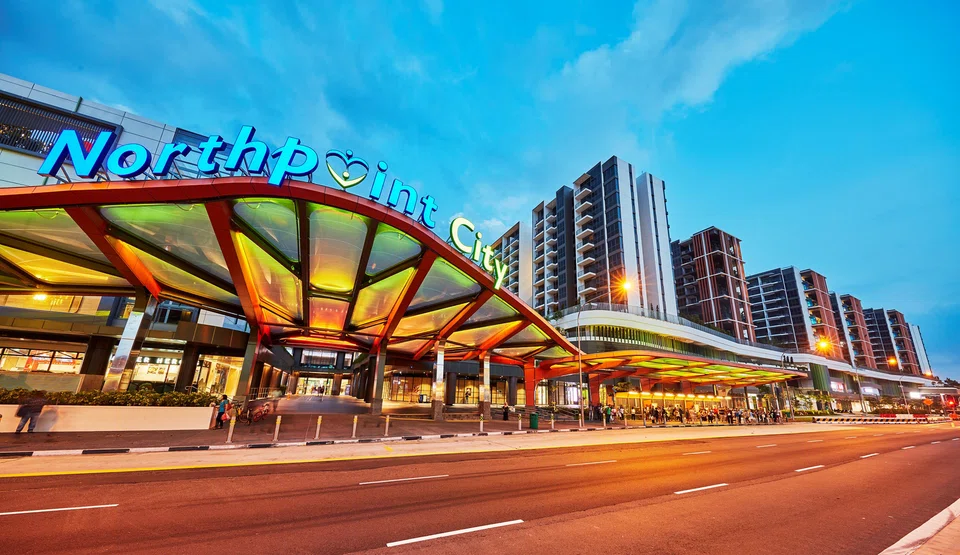
More immediately, FPL can consider distributing possibly half of its stake in (FCT) to its shareholders.
FCT’s portfolio comprises mostly suburban malls in Singapore. Listed in July 2006, FCT has seen its distribution per unit (DPU) grow at a compound annual growth rate of 4.5 per cent from 6.55 Singapore cents in FY07 to 12.085 Singapore cents in FY21.
For H1 FY22, FCT’s DPU rose 2.3 per cent year on year as revenue and net property income grew. Occupancy rose quarter on quarter, and the group saw positive rental reversion in H1 FY22. With Singapore lifting many Covid-related restrictions earlier this year, FCT’s malls should thrive — provided rising inflation does not eat into the trust’s profit margin or cause patrons to cut back sharply on shopping and dining.
As at Mar 31, 2022, FPL held a stake in FCT of 41.1 per cent. This is higher than its stakes in FHT and Frasers Logistics & Commercial Trust of 25.8 per cent and 21.5 per cent, respectively.
Units of FCT closed at S$2.31 on May 17, roughly on par with its book value. FPL’s shareholders may therefore be happy to hold units of FCT directly instead of via FPL.
Should FPL distribute around half its stake in FCT, a shareholder of FPL can receive about 85-90 units of FCT for every 1,000 FPL shares held. That works out to nearly S$210 in value (of FCT) for S$1,080 worth of FPL shares.
Early this year, in response to a shareholder query on what will be done to improve share price and trading liquidity, FPL’s board had said: “As share price movements and trading liquidity are subject to market forces beyond our control, our focus remains on laying the foundation for a future-ready business”.
Indeed, share price movements are subject to many external forces. But FPL’s board and management can do more to unlock value of this deeply-discounted stock for the benefit of all shareholders, such as undertaking a corporate restructuring or a distribution in specie of units in FCT.
The writer holds shares in FPL and FCT.

