Giving citizens a stake in Forward Singapore
GIVEN the string of past national conversations, it might be easy for cynics to dismiss Forward Singapore as just another refreshed, feel-good exercise in public consultation.
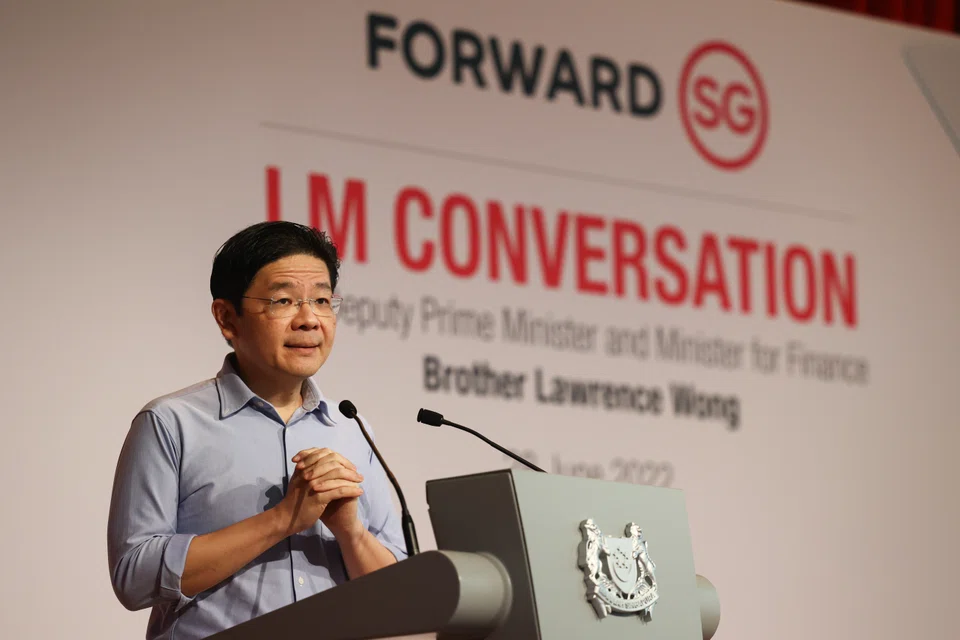
Of course, it is prudent to reserve judgement until it’s clearer how the conversation develops, as well as the eventual policy recommendations. For now, Forward Singapore is perhaps most interesting as a glimpse of the fourth generation leadership’s own views, with hints of this in Deputy Prime Minister Lawrence Wong’s speech at the launch on Tuesday.
One aspect is a “more open and compassionate meritocracy”, as Wong put it. In the past, the focus tended to be on helping low-income workers get “better” jobs. Even while upholding the pursuit of improvement, however, Wong makes a case for valuing “every worker in every profession and every field”.
The goal is not just to enable workers to move up from lower-income jobs. It is for society to respect those who remain in such jobs and, crucially, “pay them well”. Rather than a meritocracy premised on rising to the top, this is “a society and a system that benefits many, not a few”.
Another aspect – perhaps the most fundamental idea in Forward Singapore – is that of shared responsibility.
The previous such exercise, Our Singapore Conversation, was about the “desired future” of the country. In contrast, Forward Singapore is framed as a renewal of the social compact: not about dreams and desires, but roles and responsibilities.
It is not just about what the government should do, but employers and the community too; about “our obligations as individuals to one another and to society at large”, as Wong said.
This is made explicit in the last of Forward Singapore’s six pillars: “Unite”, which includes “our sense of mutual responsibility towards each other”.
What form might this take? Part of it is undoubtedly fiscal.
In his speech, Wong said that the government is looking at “how we can do more to help our workers tide over difficult times” and how to better provide for seniors – then swiftly noted that “all this will require more resources”.
The question is not just how much more the government should spend, and on what, but “how much more our people are prepared to pay to fund this spending”, he said.
It is easy to dream about a society with more safety nets or a more generous government. It is harder to convince taxpayers – even those as lightly-taxed as Singaporeans are, relative to citizens of other developed countries – that they must contribute to making this happen.
Yet moral exhortation will not suffice to convince Singaporeans that they are equal participants in building a future.
The government must give citizens the freedom and opportunity to shape their country – not just within the confines of official exercises such as Forward Singapore, but in civil society more broadly.