Going green will starve poor countries of greenbacks
The hype of solar and wind powers denies poor African, Asian and Latin American countries economic opportunities, chance for higher standards of living.
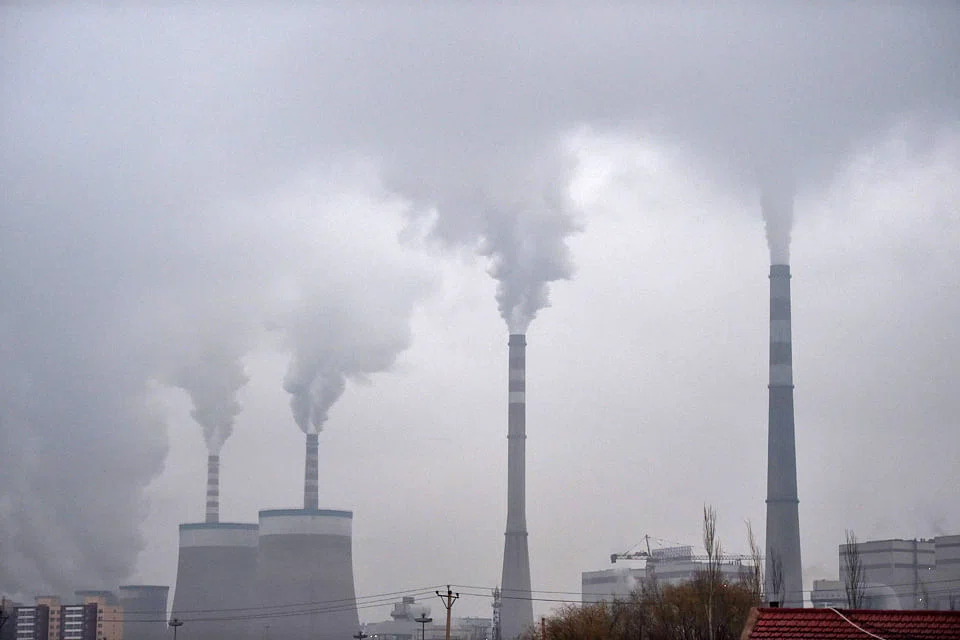
IN January this year, The Straits Times ran a story about how Singapore's three leading banks were financing coal power plant projects despite climate change risks. These banks provided over US$2 billion to fund 21 coal power projects since 2012, mainly in Indonesia and Vietnam.
Not long after the article was published, a coalition of environmental non-government organisations (NGOs) including Greenpeace and Friends Of The Earth called on the banks to "end financing of the highly polluting coal-fired power stations in South-east Asia".
EcoBusiness, the region's leading environment and business media organisation, headlined its article on the issue Funding Coal In Southeast Asia Is 'Collective Suicide', Say Experts.
In a further escalation of the issue, the matter was raised in Parliament last week where the Prime Minister was asked whether the financing of coal power plants in South-east Asia by the local banks had any impact on Singapore's commitments to the Paris Agreement. The issue has gained even greater significance given the government's declaration of 2018 as "the year of climate action" and having announced details on the carbon tax in its recent Budget statement.
HIGH STAKES
As Singapore is the region's leading financial hub, the stakes in the outcome of this debate are high.
The attack on "dirty fossil fuel technology" has been cast as an obvious solution by environmental NGOs which cite the rapidly-improving outlook for "green" alternatives such as wind and solar power - widely promoted in the mainstream media as viable alternatives to large-scale commercial power plants fuelled by coal and natural gas. Yet, beyond the hype, little is borne out in such claims.
In the global outlook published by the International Energy Agency (IEA), wind energy provides a paltry 0.5 per cent of global energy demand while solar photovoltaic power accounts for a vanishingly small 0.1 per cent. This is despite decades of financial support in many OECD countries such as Spain, Germany, the UK and the US.
The world will spend an estimated US$125 billion on wind and solar subsidies this year, and more than US$3 trillion is expected to be spent on subsidies on these two technologies over the next 25 years.
According to the IEA outlook, wind and solar will provide 1.9 per cent and 1 per cent, respectively, of the world's total energy supply in 2040. These estimates are derived for its "optimistic" scenario which assumes that the more than 200 signatory countries fully meet their Paris Agreement promises with no free-riding or backsliding.
According to BP's long-run outlook, all renewables (which includes wind, solar, geothermal, biomass and biofuels) will together account for 14 per cent of global energy supply in 2040, up from 4 per cent in 2016. Fossil fuels (coal, oil and natural gas), which accounted for 85 per cent of total energy supply in 2016, will still contribute 74 per cent in 2040.
Solar and wind powers resemble a "band-aid" approach to alleviating the critical electricity shortages in countries such as Indonesia and Vietnam, where many rural communities have little or no access to reliable energy supply.
We are continually informed that wind and solar powers are already competitive with fossil fuels, and an endless stream of "green-tech" success stories pervade the media. Yet this begs the question: Why is the Paris Agreement needed in the first place if this is true, since all countries would already then go all out to end dependence on "expensive" fossil fuels and replace "dirty technologies" with cheaper wind and solar powers.
It would be a "free lunch" on a global scale. No climate change finance and large-scale transfers of funds from developed to developing countries would be needed, and contentious debates in the UN's Framework Convention on Climate Change forums would be unnecessary.
The hype too often associated with the outlook for solar and wind powers has real consequences. It imposes the views of affluent developed country activists on mostly poor Africans, Asians and Latin Americans. It denies them economic opportunities, the chance for higher standards of living and the right to rid their countries of diseases and poverty that were banished long ago in Europe and the US.
Arvind Subramaniam, chief economic advisor to the Indian government, argued that India should not allow the West's narrative of "carbon imperialism" to block realistic planning, and that a pragmatic and flexible approach to energy planning in developing countries would include the use of cheap coal for power generation with best practice technologies while promoting cleaner fossil fuels such as natural gas wherever viable.
In pragmatic energy planning, the hidden costs of intermittency in wind and solar power would be fully recognised. As the well-documented experiences of California and Germany have shown, the difficulties of integrating intermittent technologies into existing grids are not to be discounted.
NEGATIVE INFLUENCE
Among the most egregious examples of the negative influence of environmental NGOs in developing countries is one that relates to the Narmada Dam project in India.
The project would have supplied electricity to 5,000 villages and clean drinking water and irrigation water for an estimated 35 million people. The project was cancelled by the intense pressure brought about by the Friends Of The Earth and other activist NGOs on the World Bank, the development funding institution.
Another example is the worldwide ban on pesticide DDT brought on by the publication of Rachel Carson's Silent Spring and relentless pressure from the environmental NGOs. Nearly half of the world's population is at risk of malaria.
In 2015, there were over 200 million malaria cases and some 429,000 malaria deaths, primarily in Sub-Saharan Africa. According to Richard Tren, president of Africa Fighting Malaria, "In the 60 years since DDT was first introduced, not a single scientific paper has been able to replicate even one case of actual human harm from its use."
Perhaps it is time for Singapore's leading banks to point out their constructive role in promoting economic development in the region and claim the moral high ground. Appeasing the virtue-signalling environmental NGOs with radical agendas is not the way to go.