Greater global response needed to win battle against pandemic
Unless world leaders act with extreme urgency, the crisis will overwhelm health services in many nations in the next few weeks.
 Add BT as a preferred source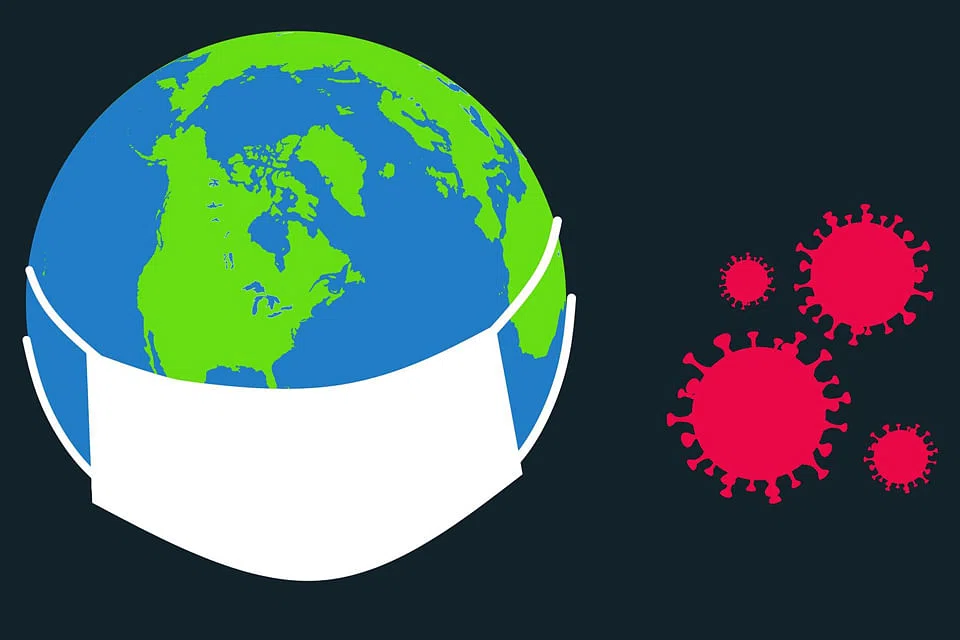
DeeperDive is a beta AI feature. Refer to full articles for the facts.
WHILE financial markets and many people in industrialised countries appear to believe that the pandemic is over, it is accelerating globally with the worst potentially yet to come, as the tragedy in India underlines.
World leaders were warned again at the weekend, including by World Health Organization (WHO) director-general Tedros Adhanom Ghebreyesus plus other health experts and scientists, that unless they act with extreme urgency, the crisis will overwhelm health services in many nations in Latin America, Asia, and Africa over the next few weeks. Only billions in aid and massive exports of vaccines may be able to halt a humanitarian catastrophe now unfolding, including Brazil which last week became the second country to pass the grim milestone of 400,000 deaths after the United States.
The officially recorded death toll from the crisis passed 3 million in April, and has now killed more people than most other viral epidemics of the 20th and 21st centuries. While countries including Israel, the US and United Kingdom may now be over the worst following the pace of their vaccination programmes, WHO data in the first half of April showed that the number of new cases per week has nearly doubled globally over the past two months, approaching the highest rate seen so far during the pandemic.
Dr Tedros therefore pulled no punches in April when he asserted that confusion and complacency means that the pandemic is growing "exponentially" and is a long way from over, but that it can still be brought under control in months with proven public health measures. Aside from vaccine take-up, he called for measures including wearing masks and maintaining physical distancing to be applied to reverse the trajectory of the crisis, noting that after around two months of weekly rising infections "intensive care units in many countries are overflowing and people are dying - and it's totally avoidable".
Take the example of Brazil whose vaccination programme has been put at risk by people failing to show up for their second shot, with 1.5 million missing appointments for the follow-up dose, the health ministry has said. This is particularly concerning after a recent study from Chile found that the Sinovac Biotech vaccine, which has accounted for some 80 per cent of Brazil's programme, is just 16 per cent effective after one shot.
Central to the WHO's recent warnings are that a greater global response is needed. The key element in this is improving the equity in vaccine distribution. Around a million vaccine doses have now been administered globally, but around four-fifths have gone to high or upper middle-income countries, while low-income countries have received less than 0.5 per cent.
Navigate Asia in
a new global order
Get the insights delivered to your inbox.
Some countries have started moving on this agenda. The US said last week it will start to share up to 60 million doses of vaccine with other countries in coming months as the Biden team is increasingly confident that the country has enough vaccine supply for its own population.
This remaining imbalance, however, has been highlighted by Jeremy Farrar, director of the Wellcome Trust, when he called over the weekend for industrialised countries, including the UK, that have bought up most of the vaccine supply to "urgently . . . start sharing these doses with the rest of the world", alongside national roll-outs in their own countries. As Mr Farrar highlighted, London can lead the world on this agenda in 2021, through its presidency of the G-7, given that more than half the UK population has been vaccinated already, including those who are most at risk from the virus. To translate this to the global picture, the UK has given almost as many doses to its own citizens than the Covid-19 Vaccines Global Access (Covax) programme has been able to ship to 120 countries in dire need of jabs.
The current situation is not just socially unjust, it may well prove to be self-defeating given the prospect of mutations such as that evidenced in India recently. One of the reasons why India last month overtook Brazil to become the nation with the second highest number of infections worldwide after the US, as it battles a massive second wave, is because of mutations, including the B.1.617 variant.
The second element to the crisis is financial given the devastating impact on economies since the pandemic struck last year. On this agenda, UN Secretary-General Antonio Guterres has urged governments to impose a "solidarity or wealth tax" on the wealthiest people who profited during the pandemic to help slash extreme inequality. Here he has noted that "latest reports indicate that there has been a US$5 trillion surge in the wealth of the world's richest in the past year".
TAX HIKE PLANS
While the likelihood of a global tax appears unlikely, several countries are planning tax rises. For instance, the Biden administration is planning the first major federal tax hike in the US for more almost 30 years, which is set to include higher taxes on those earning more than US$400,000, while Argentina has already agreed to introduce a one-off levy on the wealthy.
The other related area of action is US efforts to change how global companies are taxed - in effect, a global minimum corporation tax rate. This is a matter of urgency for the Biden administration, because it is planning to raise corporate taxes at home and would prefer not to see more tax revenues leaking to other countries.
US Treasury Secretary Janet Yellen has suggested a 21 per cent minimum global corporation tax rate and said "we are working with G-20 nations to agree to a global minimum corporate tax rate that can stop the race to the bottom. Together we can use a global minimum tax to make sure the global economy thrives based on a more level playing field in the taxation of multinational corporations".
The Biden proposals have reinvigorated work led by the Organization for Economic Co-operation and Development. It began a project known as Base Erosion and Profit Shifting in 2013, which aims to mitigate tax loopholes that allow companies to shift profits from higher tax countries to lower tax ones like Ireland.
The Biden team's leadership of this agenda now needs to be replicated with vaccines too so that there is an increasingly global response to that challenge too. The more policymakers act on a key lesson of the pandemic that no one is safe until everyone is safe, the faster the crisis may pass and the world moves into the 'new normal' that comes next.
- The writer is an associate at LSE IDEAS at the London School of Economics
Decoding Asia newsletter: your guide to navigating Asia in a new global order. Sign up here to get Decoding Asia newsletter. Delivered to your inbox. Free.
Share with us your feedback on BT's products and services