How globally connected is S'pore?
Correcting misperceptions about the depth of globalisation is important because greater depth is associated with faster economic growth.
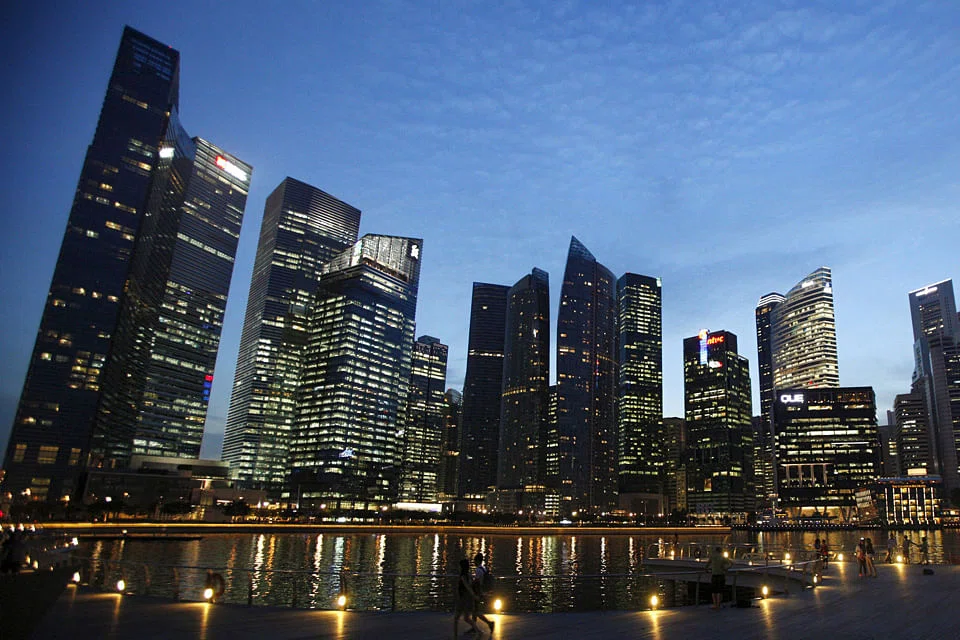
A 2014 Time magazine article claimed that compared to Singapore, "no other place on earth has so engineered itself to prosper from globalisation - and succeeded at it". The DHL Global Connectedness Index, which we first released in 2011 and have since updated regularly, confirms the Lion City to be a leader on several aspects of globalisation, but also identifies gaps in Singapore's globality.
We measure globalisation on the DHL Global Connectedness Index based on hard data tracking countries' international trade, capital, information, and people flows. For a country to attain a high score, its international flows must both be large relative to the size of its domestic economy (what we call depth) and be distributed globally around the world rather than concentrated with a few partner countries (breadth).
Singapore's strong suit is depth, on which it ranks second, behind only Hong Kong. Placing Hong Kong aside due to its status as a Special Administrative Region of China, no independent country has larger international flows relative to the size of its domestic economy than Singapore. Not only does Singapore trade more intensively than any other country, it also receives the most phone call minutes per capita and has the highest ratio of inward foreign direct investment stock to GDP.
Part of Singapore's success on our depth metrics can be chalked up to the general pattern that countries with structural characteristics like Singapore's tend to be deeply globalised. Small countries naturally have a larger proportion of their activity crossing national borders than large ones. Rich countries have stronger international connections than poor countries. An ocean port, a population fluent in the languages of international commerce, and a location near major markets are all associated with deeper global connectedness.
More impressive, however, is that even after we control statistically for these structural advantages, Singapore still outperforms on our depth metrics. In fact, only four economies beat expectations on depth of global connectedness by more than Singapore does, and they are all neighbours: Malaysia, Vietnam, Cambodia, and Hong Kong. Singapore's outperformance is greatest in the area of trade, but it is also a significant outperformer on the depth of its capital, people, and information flows.
While Singapore's deep global connections are something to be celebrated, we would be remiss if we did not recognise the worries that many Singaporeans have about globalisation, especially when they focus on immigration. Migration (both inward and outward) is one of the people flows we track on the DHL Global Connectedness Index, along with tourism and international education.
Immigration provides a good example to illustrate how fears about globalisation in many countries (unfortunately, we don't have Singapore data on this) are often stirred up by exaggerated perceptions of globalisation - "globaloney". While migration is on a rising trend, many are shocked to learn that only 3 per cent of people around the world live outside the country where they were born - basically the same proportion as in 1910.
OVERESTIMATING
On average, across 19 countries, people estimate that immigrants comprise four times as high a share of their country's population as is actually the case. In Japan and South Korea, the two Asian countries where global market research company Ipsos has gathered such data, respondents overestimated immigration by five times. This matters because (at least based on data from Western countries) simply telling people the actual proportion of their country's population made up of immigrants cuts the proportion of respondents who feel there are too many of them by one-third to one-half.
Correcting such misperceptions about the depth of globalisation is important because greater depth (at least as we measure it on the DHL Global Connectedness Index) is associated with faster economic growth. Note that our index focuses on aspects of globalisation where the benefits are generally viewed, in the aggregate, as outweighing associated costs or risks. It excludes, for example, international debt flows due to the danger of high levels of international indebtedness.
Turning to breadth, the dimension of globalisation on which Singapore is not a world leader, there is no general pattern that higher breadth is better than lower. Singapore ranks 24th out of 140 countries on the breadth of its international interactions, which are highly regionalised. More than 70 per cent of Singapore's exports are destined to countries within East Asia and the Pacific, as are 66 per cent of its outward foreign direct investment stocks, 52 per cent of its outbound international phone call minutes, and 61 per cent of its emigrants. Immigration into Singapore is even more regionalised, with 82 per cent of immigrants hailing from the East Asia and Pacific region.
It is normal for a country to interact more with its neighbours than with distant countries. The majority of the world's international interactions take place within rather than between roughly continent-sized regions. There are efficiencies associated with interacting over shorter distances that extend beyond obvious savings in shipping and travel costs: close-by countries are more likely than distant ones to speak a common language, to be linked by a free trade agreement, and to share a host of other commonalities that ease trade, capital, information, and people flows.
REGIONALISED
Singapore's exports are about one-third more regionalised than the world average, but that does not necessarily imply that Singapore is excessively focused on its own region. The world's economic centre of gravity is shifting closer to Singapore, making a focus on connecting Southeast, East, and South Asia first to each other and second to the world a very favourable positioning.
Taking into account both depth and breadth, Singapore ranked third on the 2014 DHL Global Connectedness Index, trailing only the Netherlands and Ireland. Singapore was the only non-European country to enter the top 10 (Hong Kong ranked 11th - its high depth offset by low breadth due to its focus on flows into and out of mainland China).
Globalisation, as the politics of immigration in Singapore illustrates, does spark controversies. We aim to strengthen the globalisation debate by tracking the relevant data to make it a well-informed one. In the words of the late Daniel Patrick Moynihan, "everyone is entitled to his own opinion, but not to his own facts".