

India's North-east eyes S-E Asia as trading partner via Myanmar
India's Seven Sisters - Arunachal Pradesh, Assam, Manipur, Meghalaya, Mizoram, Nagaland and Tripura - and the State of Sikkim are ready to trade across borders through Myanmar with Asean states.
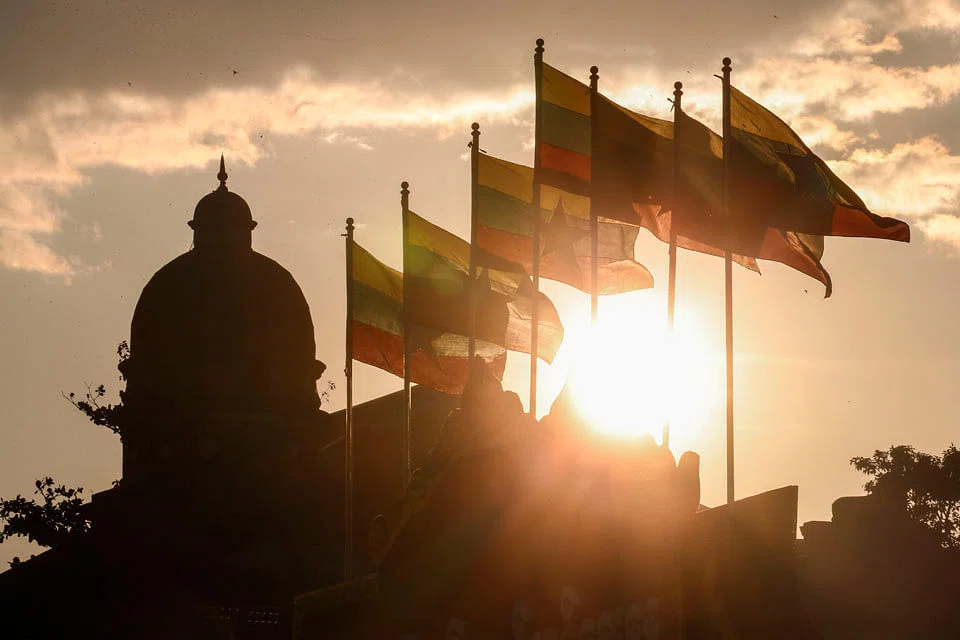
THE new age, homegrown brands of the "Seven Sisters" of India's North-east and the state of Sikkim - He Man 9000 Beer, Freshy Sauces, Elrhino dung paper, made from rhino droppings, and a bevy of online startups - are looking at integrating with their neighbours in South-east Asia, as the region of mountains and forests shakes off militant insurgencies, and ethnic and political turmoil.
The seven sister states - Arunachal Pradesh, Assam, Manipur, Meghalaya, Mizoram, Nagaland and Tripura - are witnessing a mushrooming of new companies that are keen to trade across their long land border with Myanmar, which serves as a natural land-bridge to South-east Asia.
The logic of geography dictates that the seven sisters, and Sikkim, should boost their trade with Southeast Asia from the current levels because the North-east region shares 98 per cent of its border with the neighbouring countries and merely two per cent with mainland India. The seven sisters have four international borders - with China, Myanmar, Bangladesh and Bhutan - and trade is progressing well with all of them.
The North-east states are the home of major resources such as hydrocarbons (oil and gas), coal, limestone, tea, bamboo, fruits and other agricultural products, and their people have higher literacy than the rest of India
The seven states have more than 200,000 micro, small and medium enterprises (MSMEs), and 800,000 service sector units (retail trade, repair and maintenance shops, and small transport operators), according to a report by the International Finance Corporation.
Twenty per cent of the enterprises are in manufacturing, while the dominant 80 per cent are in services. Due to an abundance of natural resources, the MSMEs are mostly involved in handloom, handicrafts, food processing, tourism and sericulture (silk production).
In his article, A Winning Strategy for India's North East, in the Jindal Journal of International Affairs, Akshay Mathur explains that the border crossing points at Moreh (in Manipur) with Myanmar, and at Akhaura (in Tripura) with Bangladesh, are examples of expanding the land-border trade. According to reports, the official annual trade between Tripura and Bangladesh, through Akhaura, grew from 40 crore rupees (S$7.8 million) in 2006-07 to 75 crore rupees in 2010-11. Another report shows that the informal annual trade at the border point of Moreh with Myanmar is close to US$447 million.
Yet, these are just examples of informal trade conducted cross-border in small farmers' markets. After modern trading infrastructure is built, and as larger traders move in, the volumes will skyrocket.
In an article in a journal of the Observer Research Foundation, the Indian diplomat Ashok Sajjanhar notes that Myanmar holds the key position in "India's matrix of ties with Asean" as it is contiguous to India's North-east, sharing a land boundary of 1,700 km with the four states of Manipur, Mizoram, Nagaland and Arunachal Pradesh.
Both the International Finance Corporation of the World Bank and the Asian Development Bank are involved in a range of projects to improve road connectivity. The India-Myanmar-Thailand Trilateral Highway can prove to be "a game changer" to connect the North-east with Asean, Mr Sajjanhar explains. The ambitious Trans-Asian railway project is also billed as an important development, although progress has been sluggish because of the weak political will of the participants, and differences in alignment of the rail network among participating countries.
IMPROVING INFRASTRUCTURE
As the physical infrastructure develops, a large demand for loans and financial services is emerging across the North-east, and new banks are coming up in the remote areas of the region. In June 2018, the region's first small bank, the North East Small Finance bank (NESFB), started its services. Tata Trust chairman Ratan Tata and Assam's finance minister Himanta Biswa Sarma launched the first 28 branches of the bank.
Through his investment arm, RNT Associates, Mr Tata has invested 40 crore rupees in the bank. "If India has to grow as a prosperous place, we need to create opportunities and entrepreneurship," he said.
The Indian Ministry of Development of the North East Region (MDONER) has drafted a Vision 2020 document for the region, arguing that at independence in 1947, the North-east was among the most prosperous regions of India, but now it is lagging far behind the rest of the country in growth.
Vision 2020 aims "to return the North-east to the position of national economic eminence it held till a few decades ago; to so fashion the development process that growth springs from and spreads out to the grassroots; and to ensure that the Region plays the arrow-head role it must play in the vanguard of the country's Look East Policy".
The world-class products of the North-east will soon find better access to roads and to markets in South-east Asia. The Yuksom Breweries - a successful medium-size enterprise located in Sikkim, founded by the Indian Bollywood star, Danny Denzongpa, and others - produces brands such as Dansberg Red, Jungle King 12000, Dansberg Blue, Denzong 9000, Dansberg 16000, besides He Man 9000, using the purest form of water sourced from Himalayan mountain springs for its brews and a modern plant that runs on German technology.
One historic company with a major role to play is the 180-year-old Assam Company India Limited, involved in tea plantations, exploration of oil and gas and development of infrastructure, employing more than 33,000 workers. It was the first company to be conferred the Royal Charter by Queen Victoria.
The SM Group of Assam owns one of the most famous food brands of the North-east - Freshy Sauces, pickles, jams and jellies made from the freshest of fruits and vegetables available in North-east India.
In a new trend, many pharmaceutical enterprises are setting up in the North-east because of the tax benefits offered under the North East Industry and Investments Promotion Policy, such as income tax exemption, deduction in excise duty and deduction in capital investment. Sikkim, in particular, has attracted units of Cipla, Sun Pharma, Alkeim Labs, Torrent Pharma, and Unichem that have invested more than US$400 million in recent years.
The Elrhino paper company of Assam produces handcrafted paper from the dung of the one-horned rhinoceros and the Indian elephant. The company - managed by a father-daughter duo, Mahesh and Nisha Bora - aims to preserve the forests and animals of Assam.
It can realistically be expected that the goals of Vision 2020 will miss the deadline by a mile, but the North-east's companies will themselves integrate with South-east Asia and increase their trade.
TRENDING NOW

Olivia Lum, ex-CFO not giving evidence in their Hyflux trial

Bank on AI-resilient Singapore property via deep-value listed property groups
Positive pivot or premature? Analysts split on Keppel Reit’s S$610.9 million buy
Once staunchly pro-China, Malaysian Chinese businesses are now distancing themselves from Beijing

