

Is COE auction system broken?
Suggestions on revamping it fall short; sky-high prices could mean it's merely doing what it's designed to do
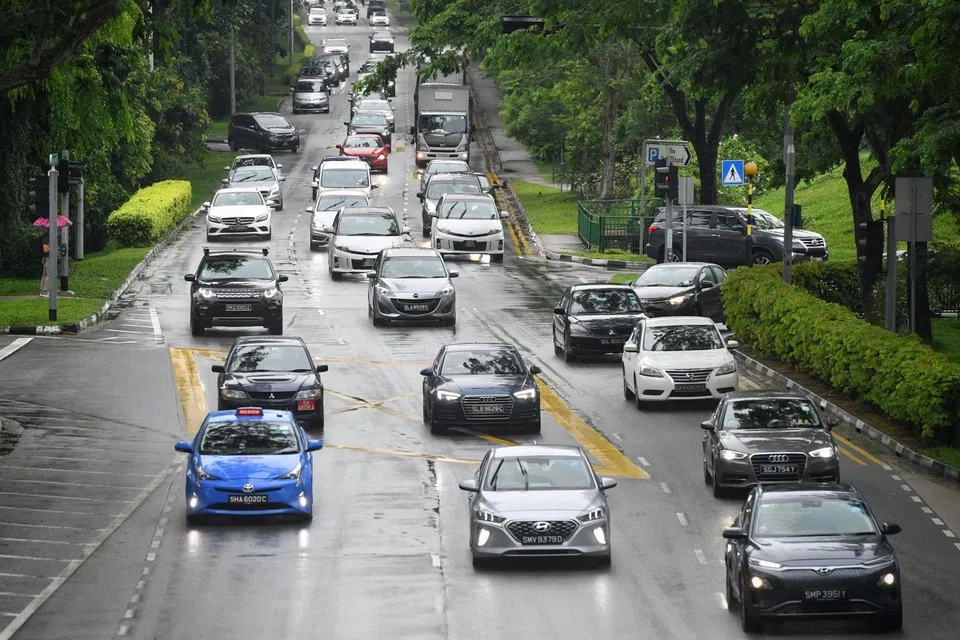
Singapore
IF the people who buy and sell cars in Singapore have little fondness for one another, they at least have a common enemy: Certificates of Entitlement (COEs). These give someone the right to car ownership for 10 years - and it is a right that seems to be particularly prized at the moment.
Last week, COE premiums hit their highest levels in half a decade, with some in the car industry projecting more pain to come.
To be precise, when the hammer fell at the last COE auction, prices for both kinds of passenger car certificate ended up at S$49,460 and S$61,190. Don't be surprised to see S$70,000 COEs soon, if public predictions by the motor trade are anything to go by.
Forecasts like that tend to make car dealers the face of the COE system, so it is no surprise that whenever COEs become expensive enough to make car buyers want to punch someone in the mouth, they immediately take aim at the trade. Yet, the reality of the Singapore car market is that dealers want low COE prices as much as anyone else.
For clarity's sake, it is worth pointing out that while the Land Transport Authority (LTA) issues COEs and makes the rules about how they are used, it does not actually set prices. That is down to simple demand and supply; the LTA merely concerns itself with the latter by figuring out how many COEs to put up for auction. Bidders take care of the demand side.
That leads some people down the wrong path in the quest for whom to blame for high prices, as seen by recent letters to the local media.
Overwhelmingly, car dealers here bid for COEs on their customers' behalf, which leads people to assume that they are the villains of the story. If only they would bid sensibly, prices would be, well, more sensible.
The problem with that idea is that buying a new car here actually involves purchasing the car itself and a COE - which makes it something of a futures contract. And as with all futures trading, there is plenty of risk involved.
Essentially, a car dealer accepts a price for a car-and-COE bundle, then bids for a COE to complete the sale. This means he actually has to set prices without knowing his cost. It also means that he is incentivised to get the COE as cheaply as possible. If you sold someone a tuna sandwich for S$10 with the knowledge that the tuna cost you S$5, would you want the bread to be as cheap or expensive as possible?
The idea that car dealers prefer it when COEs are cheaper is borne out by how carefully they bid in last week's auction. LTA figures show that around 97 per cent of bids for the Category A COE (for cars with less than 130hp and engines up to 1.6 litres in capacity) were less than 5 per cent above the final price.
Much the same is true for the Category B COE (for cars more powerful than 130hp or with engines bigger than 1.6 litres); the vast majority of bids, or more than 90 per cent, were less than 5 per cent above the final closing price. Dealers simply are not in the habit of making kamikaze bids to hoard COEs.
But high prices tend to raise the volume on COE reform - and whenever that happens, predictable suggestions tend to ring out loud.
One typical idea is to ban car dealers from bidding on behalf of customers. That ignores the fact that dealers are disinclined to bid aggressively in the first place, and anyway it does nothing to address the reality that COE bids are fuelled by willingness and ability to pay. In other words, it would still leave a Toyota buyer to fish from the same COE pond as someone who wants to add Bentley's new Flying Spur to his collection.
The same thing applies to the idea that car buyers should not be allowed to finance their COEs, but should have to pay for them in cash. That would merely prune the less well-heeled from the market, and in any case, it would open a secondary market for a cash-rich party to buy a car on someone's behalf, and re-sell it (COE and all) to them with a financing package.
That brings us to another area of consternation with COEs - which is the idea that the system foments social inequality. Why should someone with children to drive around have less claim on the right to own a car than, say, an investment banker eyeing a two-seater Ferrari?
That has led to suggestions that people should pay extra for a COE if it is for a second car, the same way Additional Buyers' Stamp Duty (ABSD) is meant to dampen demand in the property market. That might well cause some people to think long and hard about the need for an extra car. But car ownership here is still low - at roughly one-in-10 in terms of population size - so even if a would-be buyer leaves the market, there is no shortage of people to take his place. Anyway, between company cars, using leasing to work around the restriction, or having extra people in a given household whose names can be used to register a car and so on, an ABSD for cars would be easy to work around. One husband and one wife would do it; people who want three cars or more could probably afford to pay extra without wincing.
Some have proposed that COEs should be allocated by lottery, the way vehicle licence plates in Beijing are distributed. That would simply lead to a black market for them, and people would still have to pay through the nose to acquire a car. They would merely be paying a lucky lottery winner instead of the LTA.
The pricing mechanism may be a harsh way to allocate scarce goods, but if it is acceptable for Rolexes and condominiums, then why not for cars? While it is admirable to want the system to feel fairer, calls to make it more inclusive run counter to the original purpose of COEs - which is to exclude people from car ownership, not include them. With prices now painfully high and expected to climb higher, is the COE system broken, or is it merely doing what it was designed to do?






