

It pays to realise your full brand potential
On a purely financial basis, brand value represents 50 per cent of total enterprise value (over US$70 trillion) around the world, according to 2016 research by BrandFinance.
Think about this statistic. On a purely financial basis, brand value represents 50 per cent of total enterprise value (over US$70 trillion) around the world, according to 2016 research by BrandFinance. Yet, time and again, too many organisations and their leaders fail to do the deliberate hard work necessary to realise their potential across the four brand value dimensions:
Instead, impatience - and even a wilful disregard for supporting the agility and perseverance required to test and refine brand-building ideas - often short-circuits promising efforts.
Consider these examples of how Asian companies are enhancing their value across the four brand dimensions.
REPUTATIONAL VALUE
Reputation is trust. The absence of trust means that all other dimensions of value are worthless.
In most Asian cultures, trust at the individual level is built through elaborate interpersonal and professional practices and routines which - over time - demonstrate that a person is genuine and reliable.
At the company level, trust is generated when customers gain more than they expect from the performance of the offerings that they buy. This includes an expectation that the company operates responsibly towards their workers and contributes meaningfully to the communities that it serves.
As the Reputation Institute's report 2017 Global RepTrak 100 summarises: "Companies that are more open, more genuine and communicate more often have far stronger reputations."
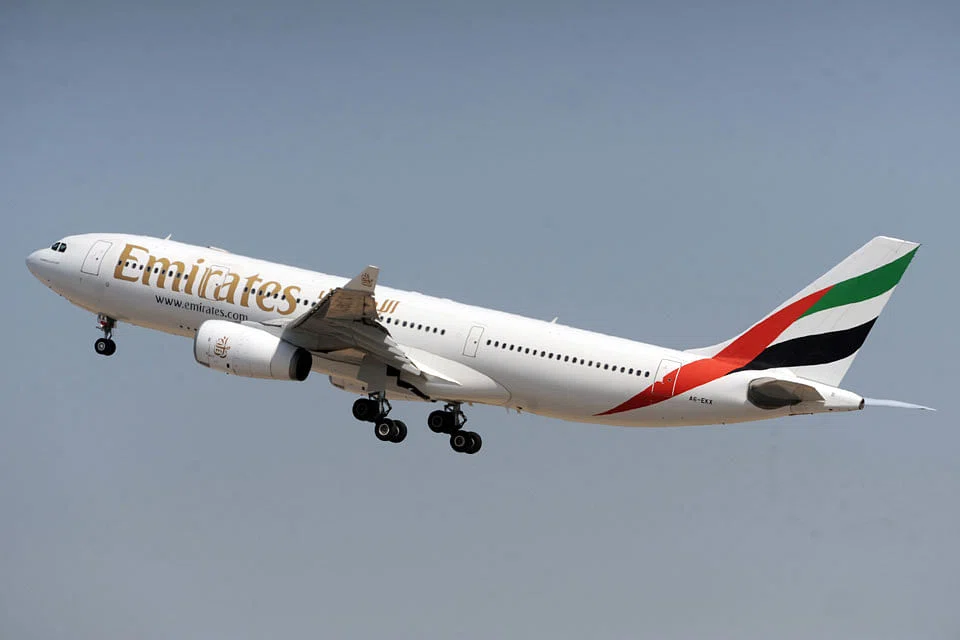
Look no further than Emirates Airlines and the remarkably consistent positive feedback from its customers. Emirates has grown quickly to attain reputational success, and has been named World's Best Airline four times since the awards were first introduced in 2001, most recently in 2016, and has won World's Best Inflight Entertainment for 13 consecutive years, including 2017.
Emirates' success is not from clever marketing programmes and beguiling advertising messages. Rather, it has built trust over its corporate life through a conscientious investment in service excellence (whether digital or in-person), product quality (from lounges to aircraft), and commitment to follow through (from punctual flights to quick baggage delivery to resolving customer problems efficiently and effectively).
ORGANISATIONAL VALUE
This is internal, and is an indicator that employees feel that they are part of something special and connected to a larger cause. Such belief inspires discretionary effort. In effect, people will work better and more effectively if they believe that their work matters and are aligned to the organisation's values.
Shinhan Bank of Korea has garnered recognition for being one of Asia's top places to work, a remarkable turnaround from 2010 when the bank suffered from internal corruption scandals. To overcome the negative implications from the scandals, Shinhan had to restore trust and confidence with employees and customers. Han Dong Woo took over as chief executive and chairman from 2011 to March 2017, and embarked on an employee- and customer-centric set of programmes to strengthen ethical management, inspire a culture of mutual respect and work-life balance, and contribute to the development of local communities. In 2017, Shinhan rose to number one in the Best Workplaces in Asia rankings. As global organisational research and training consultancy Great Place to Work states: "These workplaces are distinguished by their extraordinary levels of trust, pride, and camaraderie."
SOCIETAL VALUE
The 2017 Global RepTrak 100 survey shows that citizenship (defined as a positive influence on society) is among the top three factors that matter to customers. This is about societal value.
Consider an example of societal value from the perspective of a nation. Singapore has long been recognised as one of the world's nation-building success stories. With just over 5.6 million people, Singapore clearly punches above its weight in global rankings. The country has all the right ingredients to further accelerate its global impact, and a new organisation called SGInnovate is designed to do just that. SGInnovate is a private limited company, wholly owned by the Singapore government. SGInnovate was launched in 2016, and its purpose is to enable ambitious and capable individuals and teams to imagine, start, build and scale globally relevant technologies.
Steve Leonard, SGInnovate's founding chief executive, is an experienced industry leader and tech executive in Asia. He fervently believes that Singapore has all the resources and capabilities needed to tackle "hard problems" that matter to people around the world. As Mr Leonard said: "We are not an accelerator, an incubator or any other specific bracket of the ecosystem. Our focus as an organisation is on backing these founders through equity-based investments, access to talent, and support in building customer traction. What I'd like to see in the next few years is more people in Singapore believing that they can build something that can solve society's most pressing challenges. SGInnovate's objectives are consistent with Singapore's ambitions since its independence in 1965 to develop a model society."
FINANCIAL VALUE
Full realisation of reputational, organisational and societal values then leads to financial value, which is a by-product of doing well in the other three. Emirates is ranked number two for brand value in the Middle East at just over US$6 billion, and is the fastest growing airline in the world by passengers carried, compared to its 2012 brand value of US$3.7 billion.
Shinhan Bank had revenues of over US$14 billion in 2016, a market cap of US$20 billion and, according to Brand Finance, a brand value of US$5.7 billion (an increase from US$1.26 billion in 2011). SGInnovate invests in companies from the pre-seed to Series A stage. While financial figures are not released, it has Temasek Holdings (Singapore's largest investment fund) and GIC (another leading fund with US$100 billion in assets under management) on its board and, by extension, access to their vast networks.
ASIA TELLS THE STORY
These examples highlight how different Asian leaders and their organisations are eager to show the world that they have become the benchmark for how businesses will build brands and create meaningful value around the world. If you are a steward of your organisation's brand in any capacity, then I encourage you to apply some of the best practices from the above stories.






