

Keeping Singapore's status as Asia-Pacific's global Reit hub
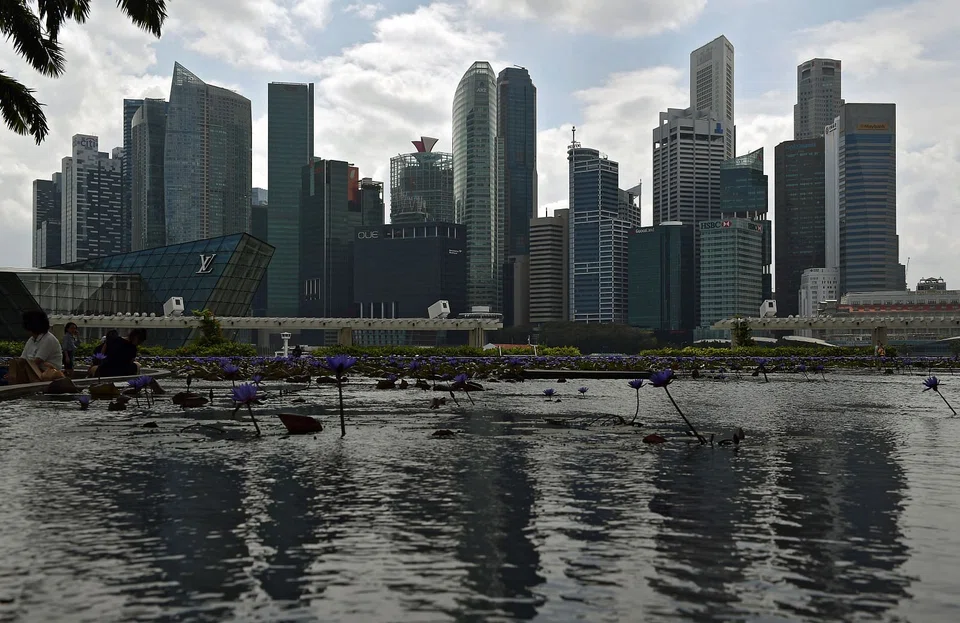
SINGAPORE is often dubbed one of Asia-Pacific's largest real estate investment trust (Reit) platforms. With the successful listing of 2 new Reits in November and December 2021, there are currently 44 Singapore-listed Reits and property trusts (S-Reits) with a combined market capitalisation of over S$110 billion.
Historically, 1 unique aspect of the S-Reit market has been the dominance of cross-border listings. In contrast to other Asia-Pacific jurisdictions which have predominantly local assets, over 85 per cent of S-Reits have overseas assets: an overall 45 per cent of their combined portfolio value consists of assets outside Singapore. The 2 Reits listed in 2021 also have overseas sponsors, and all their properties are located outside Singapore, further cementing the unique cross-border characteristic of our Reit market.
By most measures, Singapore continues to maintain its leadership as a Reit hub for global sponsors and investors. However, with 11 other Asia-Pacific markets continuing their rapid rise, industry stakeholders are beginning to wonder if Singapore will be able to maintain its success. Specifically, there are some concerns as to whether future sponsors with assets in their local markets would demonstrate a stronger preference for domestic listings, rather than opt for cross-border structures in Singapore.
Understanding the competition
In a joint report recently published by Deloitte and REITAS, we assessed the potential of serious competition that 11 Asia-Pacific Reit markets pose to Singapore. We concluded that Singapore's most notable regional competitors are the 3 markets of Hong Kong, Mainland China, and India. In this section, we take a brief look at the dynamics that they bring to the competitive landscape.
Hong Kong
Although 1 of the world's top initial public offering (IPO) markets, Hong Kong's Reit market capitalisation currently remains less than half that of Singapore's. However, given its vibrant capital market, it has the potential to attract both global and Mainland China Reit sponsors. Indeed, a palpable push towards internationalisation can already be observed: 3 Reits, including 2 with the largest market capitalisation, have acquired assets in Australia and/or UK.
Mainland China
Following the recent launch of Mainland China's infrastructure Reit regime in May 2020, 9 Reits have commenced trading on the Shanghai Stock Exchange and Shenzhen Stock Exchange. Looking ahead, many sponsors with Chinese assets are likely to prefer a domestic listing. They will, however, need to contend with more stringent requirements - including leverage ratios, and criteria pertaining to the sector and geographic location of underlying assets - relative to other regional regimes.
India
Since its first Reit listing in 2019, India has seen 1 Reit listing a year, bringing its total number of Reits to 3 in 2021. Although a relatively nascent market, several developments, such as ongoing tax reforms, may result in domestic listings becoming more competitive than offshore listings in jurisdictions such as Singapore. However, India
Reits continue to face restrictions regarding the ownership of foreign assets.
Sharpening the edge of S-Reits
To gain a better understanding of Singapore's competitive advantage and the ways in which it can be sharpened in the face of growing competition, we conducted a series of interviews with CEOs of S-Reit managers and other industry stakeholders.
What we found was that while the considerations behind each Reit's listing destination were varied, several success factors were consistently cited as contributing to Singapore's position as a global Reit hub:
Strong governance: Strong governance and a transparent regulatory environment are enduring deciding factors even in the best of times. But the true test lies in a crisis, and the competence demonstrated by regulators in managing the financial repercussions of Covid-19 - such as the move by the Monetary Authority of Singapore (MAS) to increase leverage limits - have solidified the trust of S-Reits and investors.
International investor base: With an appetite for diversified global portfolios, Singapore's investor base, comprising well-represented global institutional investors and knowledgeable retail investors, are appealing to Reits with global ambitions.
Vibrant secondary capital market: For Reits trading on the Singapore Exchange (SGX), the listing is only the beginning. With a vibrant secondary capital market, S-Reits can tap into further fundraising and merger and acquisition (M&A) opportunities, and benefit from the continued injection of assets into their portfolios.
Yet, while these factors have contributed to Singapore's success thus far, more can be done. Specifically, industry stakeholders have suggested several adjustments that Singapore should consider in its bid to expand into more diversified overseas assets:
Regulation: While Singapore's well-regulated Reit regime has facilitated its success, industry stakeholders have cautioned that too much regulation could stifle growth. A streamlined and even-handed approach to reviewing listing applications - in particular with respect to reporting and filing requirements - is needed to attract quality sponsors.
Loan-to-value (LTV) ratio: In terms of asset acquisition, Reits find it difficult to compete with private equity and real estate funds, as these players are able to borrow at higher LTV ratios of more than 50 per cent; in comparison, the average ratio registered by
S-Reits was only 37.4 per cent as at November 2021.
To enable S-Reits to better maximise returns, a higher LTV ratio is therefore required, especially for income-producing assets - which are typically high quality, stable assets with predictable cash flows.
Environmental, social, and governance (ESG) integration: S-Reits have been active in issuing green bonds and securing sustainability-linked loans. However, industry stakeholders believe the time has come for a broader sustainability framework, one that includes other aspects such as climate change and carbon assessments.
As ESG considerations increasingly become a "must-have", rather than a "good-to-have", industry stakeholders also reiterated the importance of having a standardised set of ESG reporting requirements and regulatory standards.
Not a zero-sum game
At this juncture, it is worthwhile noting that while industry stakeholders believe that staying ahead of the competition is important, they also recognise that competition is not a zero-sum game. Indeed, the rise of other Asia-Pacific Reit markets may also bring direct and indirect benefits to Singapore in the long run.
For instance, if an overseas regional market were to expand its coverage of Reit asset types, sponsors wishing to become more regional or global in scope may seek out potential listings in a global Reit hub like Singapore. Sponsors may also consider a secondary listing outside their domestic market, in which case Singapore could be positioned as a potential destination.
A strong position as a global, cross-border Reit regime will be essential for Singapore to reap these benefits. But whether or not we will be able to maintain and strengthen this position ultimately hinges on our collective ability to get the fundamentals consistently right, and provide our investor base with S-Reits of their desired size, asset class - and most importantly, levels of growth.
Jeremy Toh is real estate audit leader at Deloitte Southeast Asia, where Tay Hwee Ling is disruptive events advisory leader. Nupur Joshi is CEO of REIT Association of Singapore (REITAS)
TRENDING NOW

AEM tumbles 11% along with Singapore and regional peers following Alphabet’s record plunge

If Europe goes to war, the fallout will be felt in East Asia

Singapore Q3 retrenchments rise to 4,800; resident unemployment edges up to 3%: flash data

FTI Consulting, WongPartnership among seven members on specialist panel for haze probes

