Lai see, taxis and the future of cash
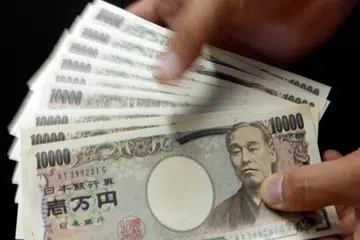
AS THE Chinese New Year (CNY) approaches, Hong Kong residents join patient queues at bank branches across the city. In accordance with time-honoured tradition, they are seeking fresh, crisp and newly-printed banknotes to give as lai see in red envelopes, bringing the recipient good fortune for the lunar year ahead.
The origins of giving banknotes at CNY are shrouded in the mists of time. But while the tradition of red envelopes - or hongbao - endures in mainland China, those envelopes have become digitised, are paid into mobile wallets and sent via Tenpay and Alipay.
This digital takeover of an old custom reflects the broader abandonment of cash in the Chinese mainland, where paper money originated as long ago as the seventh century. More than 92 per cent of the population in big cities use mobile wallets as their main means of payment, making digital payments so prevalent for every type of purchase that the authorities have felt the need to uphold the role of cash.
At the end of last year, the People's Bank of China (PBOC) expressed concern that payments for basic services such as medical treatment and utilities had moved online, warning that the exclusion of cash payments could create "gaps of digitalisation".
The PBOC reinforced that "yuan cash is the most basic means of payment; entities or individuals cannot refuse to accept it".
A QUESTION OF PREFERENCE
Back in Hong Kong, though, it is difficult to pay with anything other than cash or cheques for many products and services. Market stallholders selling fruit and vegetables in Hong Kong rarely accept anything but cash - and nor do taxi drivers. Indeed, Hong Kong has some 18,000 licensed taxis, but only a handful accept cards or digital payments.
Even recent attempts to curb the spread of Covid-19 in the city by limiting the use of cash for taxi fares have run into resistance, with drivers citing high transaction fees and delayed payments as their reasons.
Others point out that the end of cash payments would also bring about the end of tipping, which can be a useful supplement to a driver's earnings.
Hong Kong has one of the world's highest Internet penetration rates at 92 per cent, as well as a sophisticated digital payments infrastructure in the form of the Faster Payments system. So the continued attachment to cash is a question of preference - especially for older generations and certain businesses - rather than a matter of necessity.
There is no argument for putting people under pressure to abandon their preferences or cultural traditions, though. People should be free to pay with cash - or not.
Hong Kong people who feel more comfortable or secure using cash - for lai see or for taxis - should be able to continue doing so for as long as they wish. It is harder to use cash for online purchases for obvious reasons, but they should not be excluded from any part of the offline economy.
By the same token, policymakers should also strive to ensure that anyone who wishes to pay digitally for any service can do so. Denying a grandmother in rural Gansu the right to use cash to buy groceries is unfair.
So too is insisting that a millennial in Hong Kong who lives their life on their phone has to use cash to pay for a taxi ride when any smartphone owner - which is 91.5 per cent of the population - has a potential point-of-sale terminal in their pocket.
The younger generation of Hong Kongers is embracing the convenience of mobile payments and their integration with the digital platforms that are used in every aspect of their lives. Just witness the success of PayMe by HSBC, which has over two million users in a city of under eight million people. Businesses that fail to keep up with this trend will lose out to those that keep pace with it.
TRUE EQUIVALENCE
Traditional red envelopes may endure for longer in Hong Kong than they do on the mainland, but cash will inevitably give way to digital payments for everyday purposes over the next decade. In the meantime, there should be true equivalence between cash and non-cash forms of payment.
So true financial inclusion in the Year of the Ox and beyond should mean the freedom to use cash or pay with your phone in any situation where either could be accepted. For businesses that exclude one or the other, it is time to make a New Year's resolution to do better.
- The writer is chief executive officer of fintech firm Episode Six