

Making Asean the next global power-house
From designing Smart Cities to unlocking the benefits from Industry 4.0, power is the key to achieving many of the regional grouping's big ambitions.
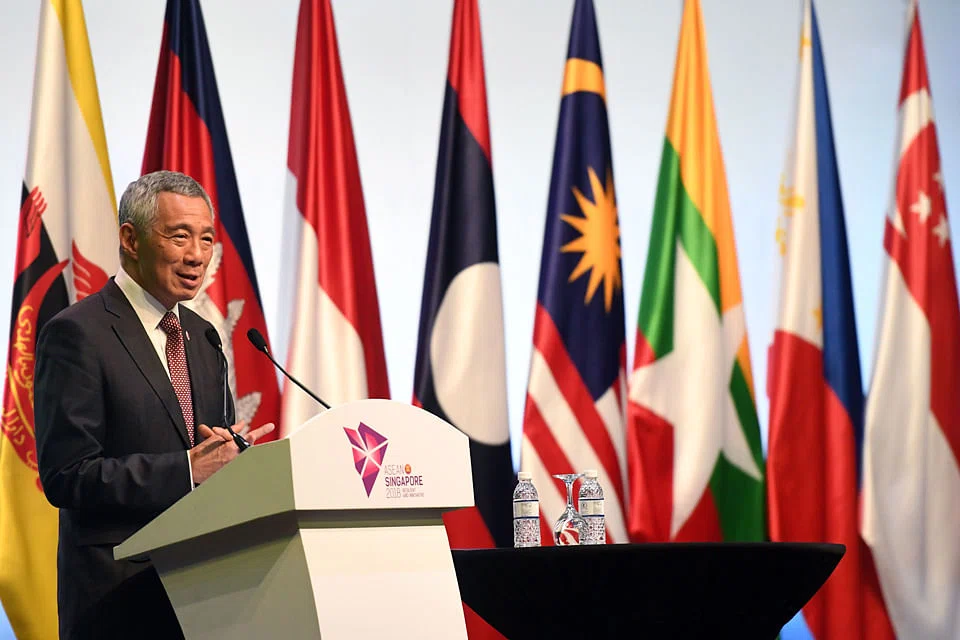
ALL eyes are on Asean as the region of 650 million sets its sights on becoming the world's fourth-largest economy by 2050. As economic and digital integration accelerate, it becomes increasingly apparent that power will be the underlying force that will hypercharge the region's growth.
Everyone recognises the priorities. With the Asean Economic Community 2025 Blueprint laying out the targets for energy intensity reduction, renewable energy adoption and multilateral electricity trading, it's time for Asean to re-examine its relationship with power.
DIVERSE ENERGY LANDSCAPE
The demand for energy is only set to increase as Asean races towards its growth targets. Energy demand is expected to grow two-thirds by 2040, emphasising the need for greener infrastructure and policies that are efficient enough to ensure that such growth is sustainable - economically and from an environmental standpoint.
Initiatives such as the Asean Free Trade Area and the upcoming Regional Comprehensive Economic Partnership have been a boon for companies looking to expand across the region. Nevertheless, businesses will need to pay attention to their power solutions, which are critical in helping them connect and communicate effectively across time zones and distant locales.
From highly urbanised and connected populations to rural agricultural communities, Asean is an incredibly diverse region with many different power needs and challenges. Organisations need to adapt to the markets they choose to enter - whether it is designing reliable power supply systems in emerging markets to deal with an unstable power supply that can cause sudden surges and outages, or planning infrastructure for future power needs in developed ones.
EQUATORIAL SMART CITIES AND TROPICAL DATA CENTRES
Singapore's world-class infrastructure and high Internet penetration have helped the island-state earn the title of Asean's undisputed business capital. Along with its business-friendly environment and connection to global subsea cable networks, the country is a role model for others in the region pursuing their own Smart Nation initiatives.
Today, 50 per cent of Asean's data centres are housed in Singapore. The backbone of any organisation's digital operations, data centres are expected to account for 12 per cent of the country's total energy demand by 2030. Elsewhere, the South-east Asia data centre market growth is white hot, with a predicted compound annual growth rate of 14 per cent between 2017 and 2021, as the region embraces cloud-based services, data analytics and the Internet of Things. To lighten the energy demand that its data centres put on the power grid, Singapore is pioneering tropical data centre architecture that is capable of functioning optimally in high temperatures and humid environments. This concept will be significant for neighbours Thailand, Malaysia and Indonesia, who are each eyeing a slice of the data centre pie.
Adding an extra layer of complexity is the growing use of renewable energy to power data centres. Renewables can spark off blackouts and frequency variations if production and load demand cannot be balanced, which is not ideal for power grids. The downtime can be devastating for businesses whose data centres depend on a reliable and steady source of energy - even more so in Asia which accounted for nearly two-thirds of the world's new renewable capacity last year. Businesses and energy providers will need to be more prudent with their power solutions, and look to technologies that are already being pioneered elsewhere in the world, such as UPS-as-a-Reserve to manage the volatility of the power supply, while supporting the adoption of renewable energy.
ASEAN 4.0
Asean, with its young and connected workforce, is well poised to reap the benefits from the fourth industrial revolution. Member states such as Indonesia, Thailand and Malaysia have already begun developing frameworks to transform individual sectors. According to McKinsey, manufacturing in Asean alone could capture productivity gains between US$216 billion and US$627 billion as a result of new technologies like 3D printing, machine learning and advanced analytics. Globally, the automotive and allied industry has already taken the first plunge, accounting for over half the global industrial robotics sales.
Despite regional optimism about the prospects of these digital technologies, only 13 per cent have embarked on an Industry 4.0 transformation. Businesses must be armed with a clear understanding of the needs when adopting such technologies, especially with regard to power. They must consider the limitations of existing infrastructure, while also planning for future demands as new technologies are incorporated.
Transportation is one among many sectors whose progress could be impacted by power or a lack thereof. As Asean cities set emissions reduction goals and businesses seek to reduce the carbon footprint of their fleets, the right infrastructure needs to be in place to support electric vehicle (EV) adoption.
While governments in the region have been eager to push the manufacture and sale of EVs, building a region-wide charging network today would likely cause grid failure, and possibly blackouts if ageing power grids are unable to meet the sudden demand for power. Many solutions can be implemented, from extending grid infrastructure to DC microgrids and even battery energy storage, each with their own sets of pros and cons. Automotive manufacturers in the region can do their part by working with the right eMobility specialists to ensure safety of both the passengers and the grid. This includes equipping vehicles with the right power monitoring solutions, predictive analytics and advanced circuit protections.
Addressing the power issue today lays the groundwork for the future, so up-and-coming technologies beyond EVs, such as autonomous vehicles and drones, can someday fill the roads and skies of Asean cities.
The adoption of new technologies and having the power to enable them go hand-in-hand. With all of Asean's possibilities for development and economic growth, there is a need to address potential power management issues before they become roadblocks to scaling up regionally. In order to unlock the full capacity of their digital initiatives, businesses need to work with the right technology partners and power management experts that are knowledgeable about the region's diverse power landscape.
Developing smarter solutions for powering Asean will, in turn, enable technology to accelerate regional growth. The benefits are two-fold as well: businesses and governments have the opportunity to work together to increase the adoption of renewable energy sources, while bringing electricity and connectivity to the 100 million people in South-east Asia that still lack access, helping make the things that matter, work.
TRENDING NOW

Singapore expects all parties to honour commitments, says PM Wong after Indonesia cuts gas exports

Gas Supply may pursue remedies if contract breached following Indonesia’s export cuts: Tan See Leng

SoftBank’s Son plans US$50 billion Malaysia tech outlay: Anwar Ibrahim

Is Manila Asia’s new dining hot spot?

