

MAS can give much needed boost to Singapore equity markets
The Singapore Exchange faces structural headwinds as well as a lack of liquidity. MAS-based equity investments can help revitalise it amid intensifying competition from regional rivals.
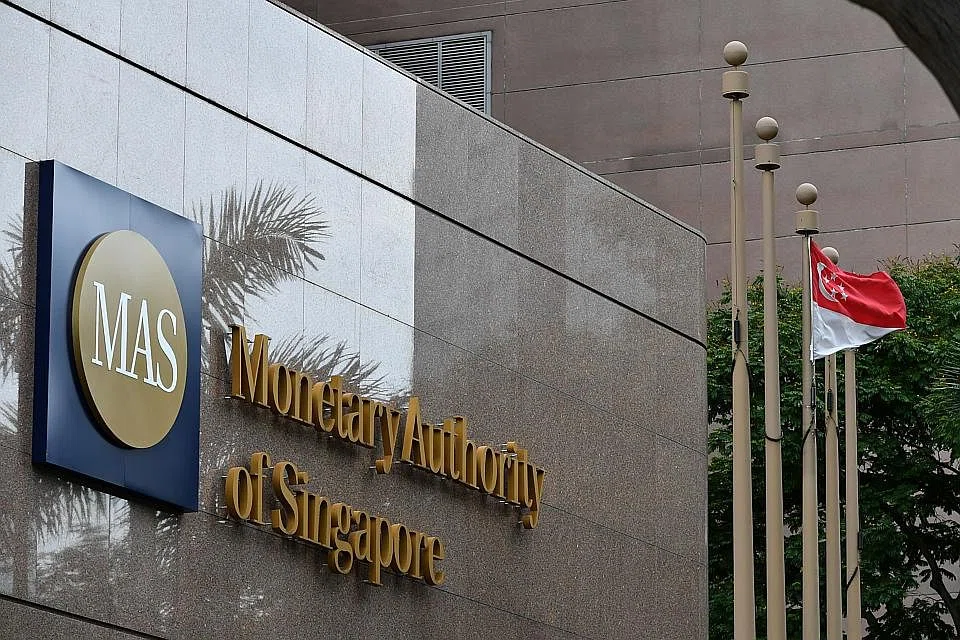
THE Monetary Authority of Singapore (MAS) should consider emulating the equity investment strategies of the Bank of Japan (BOJ) and Swiss National Bank if it seeks to revitalise Singapore's troubled equity capital markets, amid concerns about their future.
Since the global financial collapse of 2008, both central banks have aggressively pursued equity investment strategies to stimulate their economies. In the BOJ's case, since 2010 it has purchased beneficiary interests in exchange-traded funds (ETFs), corporate bonds, foreign mutual funds and real estate securities.
The BOJ appoints trust banks, which establish a money trust that subsequently purchases ETFs and other investment securities at a volume-weighted average price. Due to the broad indices and themes mandates, this permits the capture of the market at large. This policy has had the effect of underwriting liquidity in Tokyo's capital markets, as well as spurring the growth of Japan's ETF universe.
While Singapore possesses more constrained public markets from an investor's risk-reward perspective, as well as structural headwinds that result in a moribund securities market which limits access to capital, MAS-based equity investments could revitalise the equity markets of the Singapore Exchange (SGX) amid intensifying competition that is likely to dominate regional and global capital markets in the coming years.
SINGAPORE'S EQUITY LANDSCAPE
The SGX has faced structural headwinds, with illiquid markets that cannot currently compete with the bourses of regional rivals such as Hong Kong, Tokyo or Sydney. Singapore's small domestic economy, which limits the proliferation of large local enterprises (LLEs), also inhibits large primary listings by local firms. However, robust derivatives and debt capital marketplaces have evolved.
Overall, the Singapore market urgently needs a boost in investor confidence and liquidity. 2018 marks the year when the Indonesia Exchange (IDX) surpassed the SGX in initial public offer (IPO) volume, while Vietnam's stock market displaced it in terms of IPO proceeds.
Despite the challenges, Singapore remains the largest Reit market in Asia ex-Japan, with a real estate cluster larger than that of the London Stock Exchange as at November 2018. Meanwhile, the Boston Consulting Group predicts the city-state could become the largest cross-border financial centre in the world by 2028. In fact, 2017 saw liquidity on the SGX improving, until the momentum of this recovery was disrupted by market turbulence arising from the US-China trade frictions.
The SGX has built an east-west corridor via co-listing partnerships with the Nasdaq, Tel Aviv Stock Exchange and New Zealand Exchange and is arguably the most international bourse in the region, with an estimated 40 per cent of its listings being foreign issuers. While Hong Kong, Tokyo, Seoul and Shanghai may offer deeper and more liquid markets, they are also highly insular. An investor universe with a strong domestic bias, coupled with gaps in economic, cultural, regulatory and language affinities, can inhibit foreign issuers from accessing liquidity, unless they possess strong mindshare among investors.
As an international financial centre, Singapore has effective net inflows, low levels of corruption and significant ease of doing business. It is also home to Temasek Holdings, a highly experienced technology investor. It also has the world's ninth largest pool of pension assets, estimated at US$268.4 billion by the OECD in 2018.
Additionally, a 2016 report by economist Alex Frino of the University of Wollongong, "The efficiency in pricing of initial public offerings : A comparison of SG and US markets", determined that IPO sales for small and mid-cap firms in Singapore were more lucrative than listings in US stock markets, with IPOs in Singapore able to raise more capital due to less underpricing. Fundamentally, this suggests greater efficiency in Singapore's capital markets for small and mid-cap enterprises.
However, unlike the stock markets of New York, Sydney, Seoul, Tokyo and elsewhere, pension assets do not underwrite Singapore's stock market. Much of this is locked up in property - government statistics indicate real estate accounts for 44 per cent of household assets - with stocks and securities accounting for 9.6 per cent of household assets in Singapore, compared to 48 per cent in the US.
Substantial business scholarship highlights how pension funds and other large institutional investors play key roles in spurring capital market growth. They also play key roles in underwriting the depth and liquidity of a bourse through their investments. However, Singapore's public sector institutional investors allocate funds abroad rather than locally, a fact foreign institutional money managers are cognisant of.
The SGX has the virtues to attract high-quality listings but is unable to leverage them due to a lack of confidence and liquidity, lagging behind the Australian Securities Exchange (ASX) and Hong Kong Exchange (HKEx). On the basis of its cyclically adjusted P/E ratio (CAPE ratio), the SGX is ranked among the most undervalued stock markets globally by StarCapital AG.
Despite its indirect stake in the SGX, Temasek Holdings, with assets under management (AUM) of US$235 billion as at 2018, has done little to support local equity market liquidity. Meanwhile, GIC - ranked as the third most influential and powerful asset owner globally by the publication CIO, with an AUM estimated between US$359 billion and US$398 billion in 2018 - continues to allocate its own capital and Singapore's pension assets to equities abroad.
An earlier commentary, "It's time to consider injecting CPF capital into the Singapore bourse" (BT, Nov 30, 2018) noted that AUM by Singapore's Ministry of Finance and its affiliates are conservatively estimated at US$1.1 trillion.
The MAS reported US$287.67 billion in total official foreign reserves and total reserves of US$392.095 billion as at December 2018. As a percentage of Singapore's nominal GDP in 2018, estimated at US$349.7 billion by the International Monetary Fund (IMF), the official foreign reserves held by MAS are valued at around 82.3 per cent of Singapore's GDP. With proper implementation, funds can be allocated from this abundant capital pool to rehabilitate the local equity market and permit a more level playing field.
MAS-BACKED EQUITY INVESTMENTS
Despite potential concerns regarding its impact on corporate governance, the use of MAS assets minimises the potential political friction arising from the injection of pension assets in the SGX.
Freddy Lim, chief investment officer of automated digital wealth manager StashAway, observes: "It is important to distinguish trading liquidity on an exchange from liquidity provision used in monetary policy to stimulate the economy. Trading liquidity is the ease of getting in and out of listed securities on an exchange. It is a two-way traffic and cannot be improved by simply having a buyer standing on one side of the market (eg central banks asset purchase programme).
"Ultimately, trading liquidity will improve when there are more innovations and when we see an increase in the number of differentiated products being made accessible to investors. For instance, greater use of ETFs to improve access to a larger variety of asset classes not previously available."
Still, Mr Lim advises caution: "In the case of central bank's liquidity provision, direct asset purchases are still considered unconventional and should be used with care as they can distort the proper functioning of markets."
Critics of the BOJs' ETF purchasing programme argue about its effectiveness and claim these investments distort corporate governance. Conversely, advocates maintain this is a misconception, with asset managers managing the proxy voting rights for the ETFs where the BOJ has a beneficiary interest.
Mr Lim further points out: "ETFs allow investors to gain exposure to an entire market (eg a broad market index). Due to their broadbased effect, they are highly effective instruments for a central bank to add to its tool kit for monetary policy. As ETFs do not allow investors to pick individual securities, using them as policy instruments also address the optics of preferential treatment typically associated with the direct purchase of specific securities.
"In the context of Singapore, the monetary policy framework is managed via the exchange rate complemented by money market operations to smooth short-term fluctuations in banking liquidity. At present, money market tools include foreign exchange swaps, interbank lending or borrowing, and sales or purchases of government bonds. ETFs can be another complement to the aforementioned money market tools."
Indeed, MAS could emulate the BOJ, establishing money trusts with Singapore banks to purchase beneficiary interests in index-linked mutual funds and ETFs. Alternatively, it could establish a joint fund with Temasek and GIC, issuing capital to fund managers and ETF issuers with mandates to invest in Singapore equities.
To illustrate, mandates for ETFs can emphasise small and mid-cap segments, or sectoral themes such as telecommunications, technology and healthcare. This would drive greater liquidity through increased stock turnover, deepening the market and creating a virtuous circle that would see more investment.
With the significant reserves of MAS, an allocation of S$6 billion to S$12 billion per annum - daily securities trading volumes on the SGX averages S$1 billion - could be granted for purchasing beneficiary interests in index-tracking mutual funds and ETFs. Local ETFs require a minimum capital commitment of S$20 million to be listed, but need an AUM of between S$100 million and S$150 million for ETF issuers to break even.
This would reinforce the securities market and could spur the growth of Singapore's ETF cluster. Additionally, the positive signal it sends to institutional investors could arouse greater investor interest in Singapore's securities market. With institutional mandates typically mandated to recognised indices, companies included in an index can extend their investment reach domestically and globally as its index weight increases.
Moves to grow Singapore's capital market ecosystem are not without precedents. In 2012, Temasek committed $100 million to Dymon Asia Capital via its unit, Heliconia Capital Management, as a limited partner in a private equity fund focused on Singapore's small and medium-size enterprises (SMEs). In 2014, Temasek allocated a further US$500 million to Dymon Asia Capital in a bid to spur the growth of hedge funds.
More recently, in November 2018, MAS launched a US$5 billion fund targeting private equity and infrastructure fund managers as part of its private markets programme, while January 2019 saw it announce a S$75 million enterprise financing scheme meant to defray listing costs and boost the pool of equity research analysts in the city-state.
If pursued, MAS equity investments can be recalibrated during the biannual reviews of Singapore's monetary policy in April and October, reflecting the effects of growth and inflation on returns, as well as the response of the overall market environment.
An additional S$500 million to S$1 billion injected into the SGX on a monthly basis, distributed across sectoral themes and broad indices, can strengthen the market. A studied approach could reinforce local equities without adversely distorting share prices, as has been the case in Japan.
In the past, the SGX outperformed as a regional hub for IPOs but now faces structural headwinds. Market liquidity is a critical success factor that is influenced by regulators, as well as the support of central banks and pension funds. Singapore's public sector has historically been an investor and catalyst for economic development and innovation in the city-state. Without the public agencies stepping in to revitalise the local equity market, the SGX and its surrounding ecosystem could become further marginalised, with detrimental effects to the city-state's status as an international financial centre.
TRENDING NOW

Knight Frank’s Tan Tee Khoon leaves firm, Nicholas Keong takes over auction business
Keppel Energy, Sembcorp Utilities and Tuas Power to supply biomethane in pilot project

GovTech retrenches another 38 staff in second round of layoffs
Take-up of new private homes dives 45% in Q3 as prices accelerate with 1.4% rise

