

MAS scores, sets benchmark for others

Michelle Quah
Singapore
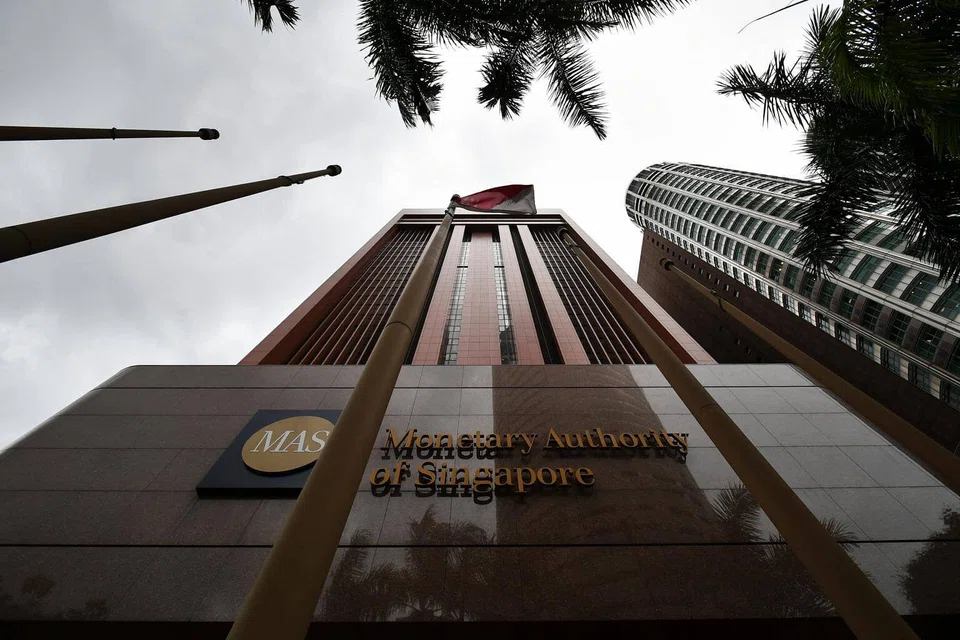
THE Monetary Authority of Singapore's (MAS) first-ever enforcement report lifts the veil on certain key aspects of how it polices the financial markets under its charge, and is a welcome indicator of the greater openness the market has long sought.
The report provides a rare glimpse into how MAS pursues suspected cases of regulatory breach - proffering never before published statistics on the time it takes for reviews and investigations into different types of cases, as well as key enforcement outcomes, ie. the actions it takes on proven cases of law-breaking, ranging from reprimands to fines to criminal convictions. It also outlines the types of misconduct MAS is continuing to investigate and its enforcement priorities in the near future.
The report, which in this iteration covers the period of July 2017 to December 2018, will continue to be published every 18 months - offering an ongoing insight into this area of MAS' work.
Such openness and transparency will go a long way in improving the accountability of the country's regulators, and the understanding and trust in the country's financial markets. It also sends a clear message as to just how serious MAS is, and how effective it will be, in pursuing possible breaches of the law under its purview.
For these reasons, one hopes that such an effort by MAS and the regime will not just stop on this high note. Going forward, MAS - and Singapore's regulatory regime as a whole - could afford to be even more forthcoming with (non-sensitive) information on how it carries out its enforcement work.
Here are a couple of ways the regime could elevate an already excellent beginning: for one, MAS could, in subsequent enforcement reports, provide greater insight into how it tackles some other types of corporate misconduct; for another, Singapore's other regulatory agencies should also publish similar statistics of their own enforcement work.
In its inaugural enforcement report, MAS' focus is on the three key areas of market abuse, financial services misconduct, and money laundering-related control breaches. For each of these areas, MAS gave brief statistics relating to each type of offence in these areas, examples of real-life cases that it investigated, and key initiatives undertaken in its enforcement approach.
The details provide much insight into how certain actions constitute a breach of the law and the approach MAS takes in each specific case or area - enabling a better understanding of how such crimes are handled, sometimes with the cooperation of other domestic regulatory agencies, as well as foreign ones.
Corporate governance advocate Mak Yuen Teen, who was among the first, if not the first, to ask for this particular level of disclosure from Singapore's market regulators in his commentary (BT, July 11, 2018, "Regulatory enforcement is key to rebuilding trust in market"), on Wednesday applauded MAS' efforts, saying he was pleased the regulator "is transparent about what it's doing".
Prof Mak did add, however, that while MAS' focus on financial institutions and market abuse cases such as insider trading, was warranted, given their importance, he was also appreciative that corporate disclosure issues - such as those involving false or misleading statements and continuous disclosure - are under investigation and a priority for MAS, since these are also critical for investor protection.
MAS has said, in this first enforcement report, that its enforcement priorities for the period ahead will include the timely and adequate disclosure of corporate information. It also said that, as at Dec 31, 2018, cases of misconduct involving corporate disclosures stand at 8, or 22 per cent of the outstanding market abuse cases that it is looking into.
It would be enlightening and educational to gain further insight into how these cases are handled in MAS' subsequent enforcement report - insight which would also serve, hopefully, as a deterrent to those inclined to play fast and loose with their corporate disclosures.
As Prof Mak said in his July 11, 2018, commentary: "Given the unavailability of contingency-based class actions here, ordinary shareholders stand little chance in enforcing their rights ... (which is where) public enforcement becomes particularly important."
Singapore's other regulatory agencies ought to also take MAS' cue and set about publishing details - statistics, at the very least - of their enforcement work. In Singapore's regulatory eco-system, each regulator seldom works on its own, and often relies on the support and aid of one or more of the other regulators to carry out its work.
MAS has acknowledged this in its enforcement report, mentioning its partnership with the Attorney-General's Chambers, the Commercial Affairs Department, the Singapore Exchange, the Corrupt Practices Investigation Bureau and the Accounting and Corporate Regulatory Authority in its work. There are also mentions of cases it had referred to other agencies and vice versa.
Greater insight into how these other agencies handle enforcement action would only enhance the effort begun by MAS - by providing a more holistic understanding of how the regime enforces the regulations it has put in place to maintain law and order, given the interconnectedness of their work and actions.
Providing such illumination on all aspects of enforcement action - such as by understanding how a case would move from one agency to another, or involve the input of others - would lead to the public's greater appreciation of the complexities of the work involved, and greater patience on their part when some of these investigations run into difficulties or take longer than expected.
The man-in-the-street would also gain a better appreciation of the particular roles and responsibilities of each agency, and a better understanding of his place and the avenues of assistance available to him in this eco-system.
The threat of corporate and financial misconduct, and its repercussions, will only grow as Singapore's markets expand and develop. Effective enforcement, along with a greater awareness of such efficacy, is needed to bring about that combination of deterrence and trust that would sustain their integrity.
READ MORE: MAS out to identify cases of tardy corporate disclosure
TRENDING NOW

8 public officers referred to police over property buys near unannounced MRT stations: Chan Chun Sing
DBS tops trades in smaller board lots on debut of revised SGX framework

Grab CEO’s wife Chloe Tong on life with Anthony Tan and finding her purpose

Retrenched PMETs who return on lower pay see median 25% wage cut

