Merkel's weakness at home exposes shaky French liaison
Paris
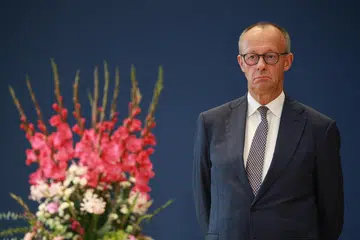
GERMAN Chancellor Angela Merkel is caught in a tangle over refugees and euro area finance that resembles the plight of vessels stranded in the Sargasso Sea. Like a ship becalmed in the legendary seaweed-strewn stretch of the North Atlantic, Mrs Merkel is bereft of forward propulsion. Every manoeuvre results in countervailing forces that increase the sense of drift and isolation.
This is bad news for French President Emmanuel Macron. After years in the doldrums, Mr Macron has brought new élan into Franco-German relations with a pro-European spirit and economic restructuring at home to help lower the widening competitiveness gap between the two countries. However, Mrs Merkel's problems first in assembling and then holding together a workable coalition following September's inconclusive general election have undermined the French president almost as much as the German chancellor.
Without a fully functioning German government able to implement joint European action, not least on economic and monetary union, Mr Macron's own drive will falter. This could expose him to fresh electoral vulnerability at the hands of anti-European parties on the right and left. German policymakers are keenly aware that lack of resolve in Berlin could fatally damage Mr Macron. The adage of former West German Chancellor Willy Brandt holds true: not a strong but a weak Germany is the main danger to European stability.
Sunday's 'mini-summit' in Brussels, which failed in its aim of helping Mrs Merkel forge bilateral migration deals to neutralise a domestic political crisis, provided a foretaste of still more bitter exchanges in coming months. The linkage between immigration and euro reform will be on public and possibly acrimonious display at the June 28-29 European Union summit in Brussels.
Mutual recriminations over euro area rescue packages have abounded during the 2010-15 upheavals, with debtors criticising creditors' stringency and the creditors castigating debtors' ingratitude. These fault lines are now resurfacing over migration.
Europe's debtor nations, led by Italy and Greece, which have suffered most from long-running difficulties, bear the brunt of seaborne migration from trouble-torn areas of the Middle East and Africa. The creditor nations, led by Germany, represent the ultimate goal for many migrants, but they also attract resentment - and demands for funding - from frontline EU states that claim the rest of Europe has ignored their predicament.
Mrs Merkel and Mr Macron have outlined plans for a breakthrough this week on measures to strengthen the euro, including transforming the European Stability Mechanism into a European Monetary Fund, build a funding backstop to help wind up problem banks, and establish an investment budget for EMU members. Worryingly for some top French officials, the measures contain a proposed mechanism for restructuring sovereign debt within the euro area that could directly affect the credit standing of overburdened countries such as Italy.
POLITICAL DILEMMA
French officials believe this contains some of the hallmarks of the celebrated October 2010 acceptance by Mrs Merkel and then President Nicholas Sarkozy of private sector involvement in Greek debt restructuring in 2010. This move, according to leading officials such as Jean-Claude Trichet, then European Central Bank president, precipitated the European debt crisis.
The Franco-German measures make considerable sense. French policymakers rightly say EMU needs more solid institutional underpinning to prevent the ECB again being called upon as a lender of last resort when the next financial crisis emerges, which could lead to still more central bank government financing that Germans find abhorrent. But, in view of Mrs Merkel's diminishing political hold, pushing ambitious integrationist proposals through the German parliament is becoming increasingly arduous. German voters are interested above all in Mrs Merkel negotiating effective restraints on migrants entering the country, even though numbers have greatly declined since 2015. Extending the ESM, or agreeing an investment budget for EMU countries, brings Mrs Merkel no positive headlines at home.
Most seriously, Mrs Merkel's Christian Social Union (CSU) has called for migrants who have claimed asylum in another EU country to be rejected at Germany's borders. She has given herself a short deadline to negotiate bilateral deals to achieve this, although the idea was publicly torpedoed on Sunday by Guiseppe Conte, the Italian prime minister, who launched a 10-point plan to rewrite 25-years of EU asylum policy. Mrs Merkel's dilemma is that any concessions she agrees with the CSU will be anathema to the southern European states, and vice versa.
This time round, the southern states may have the upper hand. The paradoxical effects of Mrs Merkel's weakness are not lost on Alexis Tsipras, the Greek prime minister. Asked in London on June 26 about the German chancellor's political position, Mr Tsipras said political leaders had sometimes to suffer 'political costs' in the cause of Europe - just as he did in 2015 by electing to keep Greece in the euro. OMFIF