

'One Planet' summit aims to inject dose of optimism in battle against global warming
The prospect of a global carbon trading market, with Asia-Pacific leading the charge, could be a game-changer in fight to tackle climate change.
FRENCH President Emmanuel Macron co-hosts on Sunday the "One Planet" Summit at the United Nations in New York. The landmark event, which will see both government and private sector leaders in attendance, is intended to give a jolt of optimism at a time when there is growing pessimism about the battle to tackle climate change.
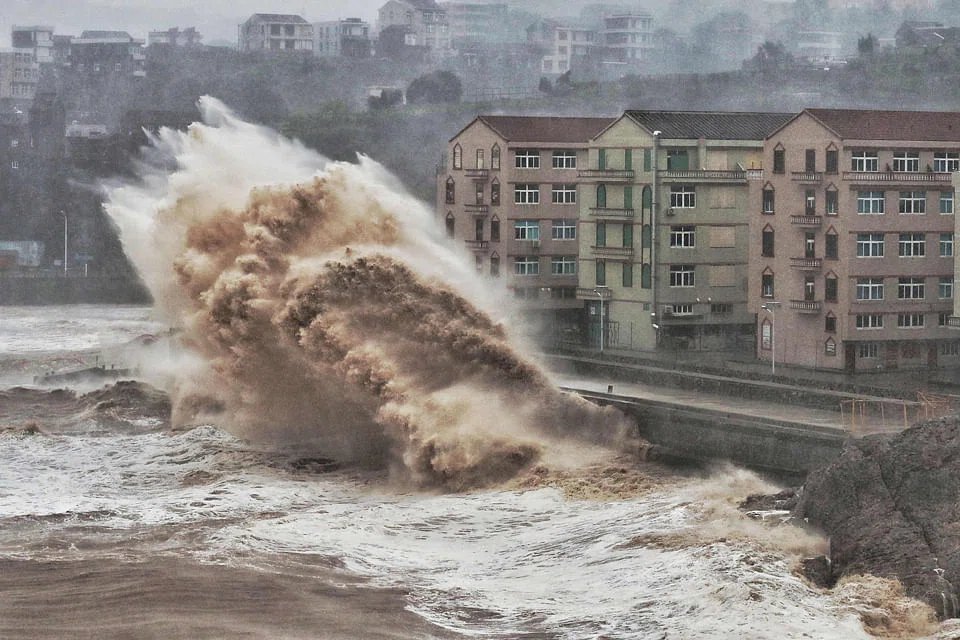
There is not just the ongoing tragedy of increased deforestation in the Amazon. In addition, more and more data is alarming climate scientists such as Professor Sir David King, who asserted on Monday that extreme events linked to global warming are occurring sooner than forecast and that resulting weather phenomenon are "scary".
Sunday's summit - which is co-hosted by UN Secretary-General António Guterres; President of the World Bank Group Jim Yong Kim; and UN Special Envoy for Climate Action Michael Bloomberg - comes around the fourth anniversary of the landmark agreement of the Paris climate change treaty. That accord was ratified in almost record time for such a comprehensive, international pact.
Much attention in recent months has focused on backlash to Paris from populist leaders like US President Donald Trump and Brazilian President Jair Bolsonaro, but they are clearly fighting a rearguard battle, albeit one which has the potential to significantly retard efforts to tackle global warming.
One manifestation of changing attitudes about climate change is the growth of domestic climate legislation and regulation adopted by nations, as regular studies published by the Grantham Research Institute at the London School of Economics reveal.
Seen in the big picture of the period since the Kyoto Protocol was agreed in 1997, the number of global warming laws and policies in the approximately 100 countries under review by the Grantham Institute has grown from 54 to over 800, and there are also very important climate measures in place in key sub-national areas, including cities.
One of the consequences of this is the growing possibility of what may ultimately become a truly global carbon trading market, a potentially game-changing economic and political development, on which Asia-Pacific is leading the charge.
Already, more than three dozen countries and more than 20 cities, states and provinces across the world use carbon pricing mechanisms or are planning to do so. Such carbon pricing mechanisms around the world raise tens of billions of US dollars in schemes covering more than 20 per cent of global emissions.
While much attention inevitably focuses on the 28-country EU scheme, currently the largest in the world, there is fast-paced action right across the world. In Asia-Pacific, for instance, the Paris deal was signed into law as early as 2016 by multiple key countries including Australia, Bangladesh, China, India, Indonesia, Japan, Kazakhstan, Malaysia, New Zealand, South Korea, Singapore, Sri Lanka, Thailand and Vietnam.
The fact that Asia-Pacific is helping lead the way in this area is underlined by China's planned national emissions trading system, which will probably eventually surpass the size of that in the EU. However, China is far from alone in moving in this direction of travel. For instance, Kazakhstan introduced a carbon trading scheme in 2012, becoming the first Asian country to do so. Moreover, Vietnam has its own carbon market scheme, and so does South Korea.
LEADING THE AGENDA
And this all comes in the context of China's own moves toward a carbon trading scheme. In 2014, Beijing embraced a National Plan for Tackling Climate Change, which includes a target to, by 2020, cut carbon emissions per unit of GDP by between 40-45 per cent from 2005 levels.
This is an ambitious goal at a time of continuing industrialisation, and may not be fully realised. However, in order to maintain social cohesion, Beijing recognises growth must increasingly be sustainable given the country's vulnerability to some of the worst impacts of global warming.
Indeed, with Mr Trump's election, China and other players including the EU are increasingly assuming global leadership of this climate agenda.
China prizes its status as a global climate leader, given its aspiration of becoming a clean energy superpower by leading in renewable energy technology such as wind and solar power, and its planned investment in the green economy is staggering.
As these examples underline, at the heart of these promising developments is a growing belief that carbon trading is the most economically efficient way to meet the political ambition of reducing emissions of greenhouse gases. Along with other countries in the region like New Zealand, Thailand, and Indonesia, this represents what could become an Asia-Pacific carbon trading hub in the battle against global warming.
Going forward, this system may in turn be linked with the EU scheme, which has been widely studied by international policymakers, including in Beijing, as they consider the design of their own programmes. With a view to maintaining its lead on the climate change agenda, the EU system is currently being reformed as part of Europe's targets to reduce greenhouse gas emissions by at least 40 per cent by 2030.
By linking Europe and Asia-Pacific in this way, this potentially game-changing economic and political development of a nascent global carbon trading hub is also being driven elsewhere too, and it is possible to envisage a wider scheme with the Americas and other regions too. This includes the Middle East where the Paris deal was signed into law as early in 2016 by key countries including the UAE, Jordan, Saudi Arabia, and Palestine.
Countries in the Americas that have ratified Paris include Argentina, Canada, Mexico, Peru and Uruguay, while the United States and Brazil also did so before Mr Trump and Mr Bolsonaro took power and who are now seeking to roll those commitments back.
A global carbon hub linking continents from Europe to Asia-Pacific with the Americas could include state-level schemes in the US, including in California, and the Regional Greenhouse Gas initiative in North-eastern US states, plus the scheme in Quebec and potentially other future Canadian initiatives.
Taken overall, at a time of growing pessimism in the climate change debate, the Paris deal has bolstered prospects of a global carbon market emerging, from Asia-Pacific to the Americas. This has potential to become a game-changing development in the fight against global warming.
TRENDING NOW

He built the Vingroup empire. Now South-east Asia’s richest man is handing some key roles to his sons

Quarter of Singtel special discounted shares sold ahead of CPF Board transfer

Why Tan Aik Keong of digital solutions specialist Agmo wants to make himself less indispensable

Asia needs new energy security architecture

