

Powell vs Putin: US Fed faces the great geo-economic transformation
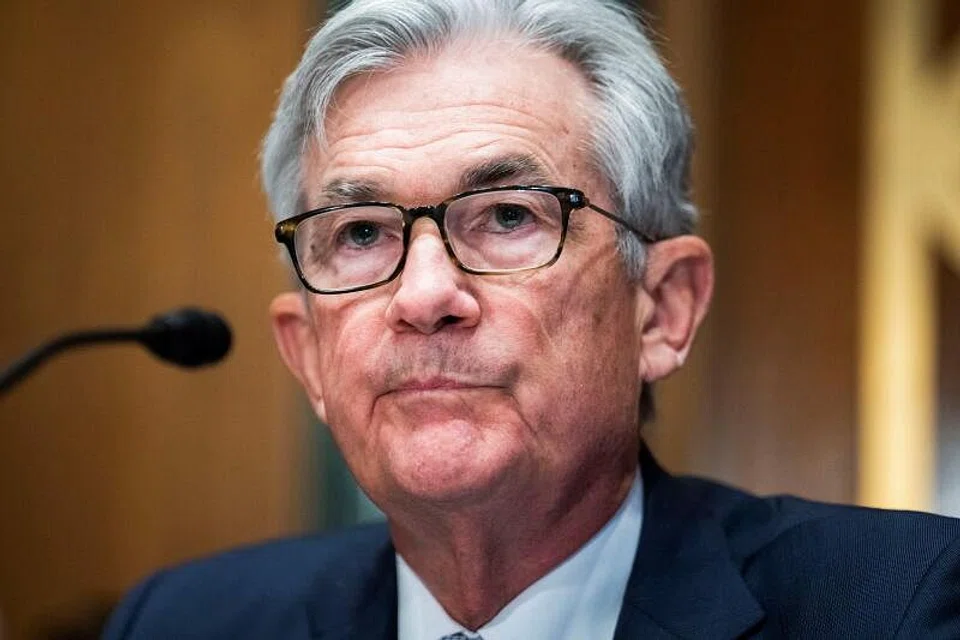
[WASHINGTON, D.C.] Washington - It has become a cliché to insist that the chair of the US Federal Reserve, like other central bankers in the West, is an apolitical public servant, and that his colleagues at the Fed are "technocrats" whose decisions should not be influenced by political considerations like an approaching presidential election.
While that makes sense on some level, we all understand that central bankers read newspapers and watch television and are aware of what is happening around them, including the political reality, and have to take that into consideration.
Hence, current Fed Chair Jerome Powell understood that both Republican and Democratic administrations and Congress had no choice but to respond to the deadly global pandemic by spending trillions of US dollars and that he had to join their efforts by turning on the financial spigots. The public interest overrode real concerns that all of those steps would ignite inflation, exactly what the US central bank is supposed to prevent from happening.
In the aftermath of Vladimir Putin's invasion of Ukraine and ensuing global economic sanctions that have been imposed on Russia, Powell's decisions - and more specifically whether to raise interest rates, which should be driven by assessments of the monetary conditions by cool-headed apolitical technocrats - would have to factor in a dramatically changed geopolitical reality that is also transforming the global economy.
The growing trade and military tensions between the United States and China, coupled with the rise of nationalism and the risks posed by the coronavirus to global supply chains, had started eroding the foundations of globalisation even before the war unleashed by the Russian president.
That marked the beginning of the end of an era in economic history that followed the end of the Cold War that saw the tighter integration of financial and trade flows, under which the Fed has been making its decisions since the 90s.
The ongoing conflict between Beijing and Washington, and US decisions to limit the flow of high-tech goods to China and to impose tariffs on Chinese imports, have led to talk about the "decoupling" of the American and Chinese economies.
And now with the US, Europe, Britain and Japan uniting to punish Russia with unprecedented economic sanctions, some predict the international system - and in that context the global economy - would be split between two blocs, one headed by the US facing and the other, by Moscow.
It may too early to make such predictions. But what has become clear is that while the economic sanctions imposed on Russia have delivered major blows to its central bank, commercial banks, business and political leaders, they are also having devastating effects on the rest of the global economy.
The impact of this economic warfare is becoming evident every day: It is driving up manufacturing costs for food, consumer goods and machinery and leading to rising consumer prices. Things are about to get worse, now that the US administration and Congress are on a path to ban US imports of Russian oil, which is expected to raise global energy prices to new highs.
Most significant, perhaps from the perspective of the Fed, banning Russian imports to punish President Putin for invading Ukraine, in addition to the other efforts to isolate the Russian economy, threaten even more inflation.
This would is happening after the Biden administration and the US central bank have been facing criticism for months over the inflation levels that have reached a 40-year high and have been trying unsuccessfully to tame rising consumer prices, with oil, gas and other commodity prices soaring to the highest levels in years - and which was already happening before the Russian assault on Ukraine.
Russia is the world's third-largest oil producer, providing around 10 per cent of global supply; restricting its flow risks higher energy prices in general, and at the pump in particular.
The impact of these developments on the global financial system as they ripple through it is expected to be massive, not unlike the impact of the 1973 Arab oil embargo, and could take the form of chain reactions that could overwhelm Western financial institutions in unforeseen ways, recalling the 1998 collapse of Long-Term Capital Management.
The Fed would be aware of these and other risks and recognises that the American economy (and in particular, the labour markets) were overheating and fostering inflation before the Ukraine crisis, and are now facing the threat of rising inflationary pressures.
So whether Powell likes it or not, the US central bank has now become a hostage of political decisions being made in Moscow, Berlin and Beijing, over which it has no control.
But at the same time, the monetary policy decisions he will be making in the coming months could directly affect the American and global economy, in the process turning him into a player in this geo-strategic and geo-economic rivalry.
He made it clear that he understood this during an appearance before the US Senate Banking Committee last Thursday, suggesting that against the backdrop of the war in Ukraine, "we are going to see upward pressure on inflation at least for a while".
The Fed, Powell he said, would have to be "alert and nimble as we make decisions in what is quite a difficult environment" - "difficult" being the understatement of the past week.
But he was very explicit when it came to outlining the central bank's policy actions, noting that he would propose a quarter-percentage point interest-rate increase at the coming central bank's meeting, and that he would follow that initial rate rise with a series of increases this year.
He admitted during his congressional testimony that in "this very sensitive time at the moment, it's important for us to be careful in the way we conduct policy because things are so uncertain, and we don't want to add to that uncertainty".
To put it in concrete terms, if the Fed succeeds in taming inflation in the coming months, it would strengthen the resolve of the American people and their leaders to continue mounting the economic pressure on Putin and perhaps force him to end his aggression in Ukraine.
A failure on that front, however, would play directly into Putin's hands.
TRENDING NOW

Far East Organization’s The Serra Residences sells less than a quarter of units released at average S$3,460 psf
A bumpy road ahead for some of Singapore’s fresh graduates in their job search

Philippine power giant First Gen rebuffs foreign offers, plans up to US$2.6 billion in expansion

No chicken feed: How Malayan Flour Mills built an empire from flour to fowl

