Power liberalisation: User experience is key
The Open Electricity Market creates tons of opportunities for energy providers to offer bundled packages of services to consumers, but these need to be easy to understand.
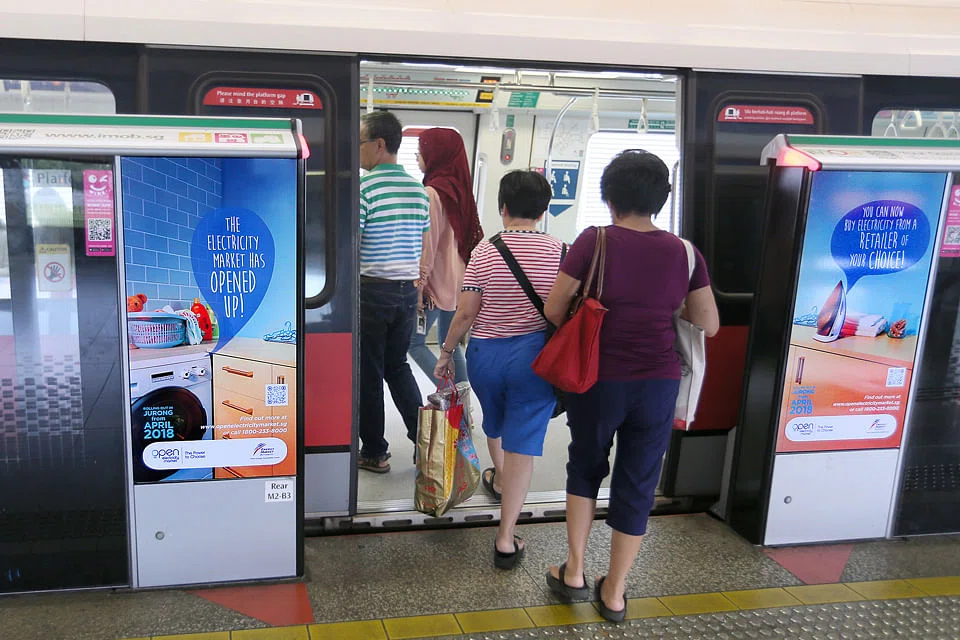
In the final quarter of 2018, Singapore will take the final step in its Open Electricity Market (OEM) journey, which began in 2001, to fully liberalise the energy market for all customers. For the first time, consumers in Singapore can decide on the electricity provider that best meets their needs.
In the soft launch in April, some 108,000 households and 9,500 businesses in Jurong had the option of buying electricity from a retailer of their choice. SP Group will continue to operate the national power grid, and customers can therefore expect uninterrupted and reliable electricity supply regardless of the provider.
Providing each Singaporean potential commercial benefits, this move is likely to create tremendous opportunities for cross-sector collaboration in consumer services.
This is driven both by customers wanting more than commodity services from their providers and by the continuous quest from providers to improve their reach, value proposition and relevance.
Since the Jurong pilot, we have witnessed retailers doing just that. DBS opened an energy marketplace to allow its clients to choose a provider and make payments seamlessly. M1 announced a partnership with Keppel Electric to provide discounts on handsets or data plans through bundled offers.
With 14 energy retailers vying for consumer attention in our city state, these alliances will need to evolve to demonstrate the value they bring, in place of highly commoditised piecemeal packages.
As we go through this market evolution, a potential extended ecosystem may emerge in several areas.
Continuous web scraping, combined with insights on individuals' consumption patterns, will enable these marketplaces to optimise choices and even go a step further in proceeding autonomously with the supplier switch when savings reach predefined levels. There are successful examples of players in this space with the likes of Flipper in the UK.
These independent marketplaces could also become the preferred platforms for other industry players (such as banks, FMCG companies, telcos and insurance players) to offer more exciting bundled offers, spanning a bigger wallet share of a typical residential consumer.
The rapid drop of photovoltaic and storage prices will make it more profitable for energy providers to sell home-generation and storage equipment. This model also addresses an area of concern that has broad implications on sustainability as citizens and businesses become more carbon-conscious. This is likely to be an extension of their existing lines of business and leads to a better energy consumption pattern. European markets offer good insights into this model with players like Edison in Italy offering choice to customers to understand feasibility, analysis and installation services.
For example, when customers understand off-peak electricity prices might help them save more, they might shift day chores to the evening, such as doing the laundry, which requires high-energy-consuming washing machines. This desire to better manage and monitor energy usage in appliances will encourage more households to adopt smart, connected devices, from lamps to refrigerators to thermostats and air conditioners. This has already been on trial for the last few years, but more education and offers are needed for clients to really benefit from this. In many countries, even telecom operators have ventured into the areas of smart homes.
These are the opportunities that lie in wait for energy retailers and the broader consumer industry. The liberalisation of the energy market will introduce a level of sophistication in the utilities space for consumer-service providers to leverage and form ecosystems that give options to customers.
The immediate challenge today is for energy retailers to provide the best all-in-one place to shop. Competitive pricing alone will not do it. Even as banks, telcos and utilities services upgrade their infrastructures to address the digital landscape, more can be done to enhance how consumers purchase these products and subscribe to all manner of services.
The partnerships we now see are far from the unified, simplified, digital experience that users need - in other words: direct, easy to understand, and a mobile app click away.
The opportunities brought about by these partnerships require that companies work together to transform and forge a digitalised infrastructure to simplify the complexities of such partnerships and streamline costs related to marketing, operations, and billing across different organisations.
In this idyllic landscape, consumers enjoy greater discounts and rewards as they select and subscribe to the services they need in one neat package, complete with integrated billing. To get there, industry ecosystem players need to start planning this journey, one aligned to and ultimately part of improving the real customer experience.