

Prepping Singapore firms for life after Covid-19
There are three scenarios for how the pandemic can affect the way businesses are run in the aftermath. Acting accordingly is key.
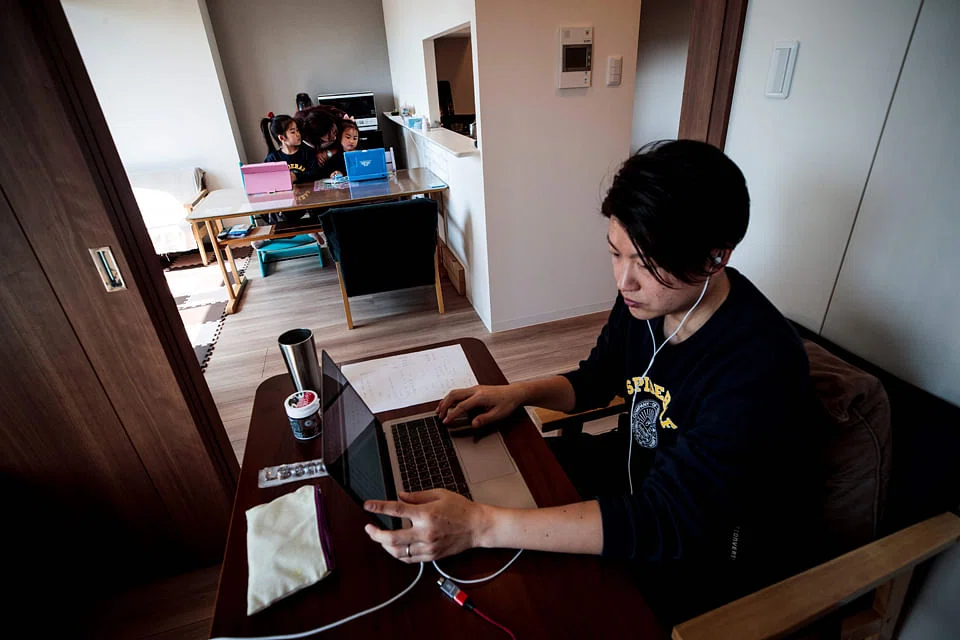
WITH almost half of humanity under some sort of restriction or lockdown, companies are scrambling to continue their operations remotely, even as economies appear to be in free fall. Employees are worried about what the crisis would mean for their jobs, while strategists and management teams - whether from firms small or large - are evaluating how their companies should adapt to the changing world.
We lay out three scenarios for how the consequences of the pandemic may affect businesses in Singapore, and offer suggestions on how best to adapt to them.
In the first scenario, which we call a Thunderstorm, both the pandemic and the associated shutdowns globally are temporary, ranging from a few weeks to a couple of months. There will be a significant economic impact, including a sharp but brief recession; however, economic activity post-crisis will resemble the pre-crisis era.
Firms' internal and external environments will remain mostly unaltered. Business models do not fundamentally change, and firms will resume operations more or less like they used to. This is like hunkering down in a thunderstorm: people do not leave their homes until the storm passes, but they remain fairly confident that the storm will pass relatively quickly and once the storm passes, life as it was will resume.
China provides an early indication, being ahead of the global curve in terms of its shock and recovery. In the first country to face the health crisis, economic indicators along a range of parameters - including traffic, energy production, and domestic flights - fell sharply between January and February, but are already showing signs of recovery, with firms having ramped back up to an estimated 80 to 90 per cent of pre-Covid capacity. In prior pandemics over the last hundred years, such so-called "V-shaped" recoveries have typically been the norm.
In our second scenario, which we dub Muddling Through, firms will face many frictions (but not true disruptions) during the crisis, which will exert a long-lasting impact on their internal practices and processes. Inevitably, there will be maturing of technologies and operational changes as companies cope with different ways of doing business.
However, the firm's external environment will remain similar to the pre-crisis era. The recovery in output, although prolonged, will follow a "U" shape. Thus, while firms will make changes as a response to the restrictions, they do not fundamentally alter their business models.
Firms' relationships with customers and clients, suppliers, vendors and other stakeholders will remain similar to the pre-crisis era, but they will rely on different channels to meet their goals. Remote working will be institutionalised for the vast majority of firms, but the substantive nature of employees' jobs remains unchanged. For example, TV hosts will record their episodes remotely more often, but continue to package their shows as they always did and rely on the same advertisers and viewers. Schools will provide an option for online learning as the norm, but the basic business model for education - recruiting students, charging tuition, offering classes - will remain the same as the pre-crisis times. Manufacturing companies will diversify their supply chains but continue to emphasise the cost-quality-value tradeoff, as they previously did.
In our third Metamorphosis scenario, we should expect conspicuous and relatively abrupt change in both firms' internal and external environments. Following a long-term shutdown accompanied by a deep and extended recession, there will be a recalibration of companies' as well as individuals' needs and attitudes toward risk. Unemployment rises to unprecedented levels, and gross incomes follow a dreaded "L" shape. National stockpiles run low and shortages hit consumers. Due to its duration, governments do not possess the resources to engage in continued fiscal support, and the initial round of handouts to support companies and people through this crisis evaporate.
Issues of international travel and geographic distance become magnified as airline connectivity becomes questionable and countries impose greater border controls. There is a risk of a global food crisis as migrant labour can no longer reach farms on time. Agricultural harvest is delayed while concerns about the next sowing cycle rise. The wider scope of the crisis justifies the adoption of greater and more intrusive surveillance. As a consequence, governments become more powerful, with little indication of when or how emergency powers will be rolled back. The de-globalisation trends of the last few years intensify dramatically, and we are pushed back several decades in the scale and scope of cross-border activity. In such a scenario, companies have to not only deal with changes in their internal processes, but also face a dramatically different external environment. It calls for a recalibration of firms' fundamental business models.
How should firms in Singapore prepare themselves?
Rather than asking which scenario is likely to prevail, firms should examine a range of possible futures. In particular, managers should ask themselves what the implications of each scenario are for their specific companies. Importantly, these need not necessarily be detrimental; a healthcare or medical products firm, for instance, would face a very different set of demands for their products, even in the third scenario, relative to a corporation in the hospitality or entertainment industry.
Nevertheless, managers should:
This final point is crucial, because governments are themselves facing a novel environment, and would benefit from feedback regarding economic conditions on the ground.
Small and medium-sized enterprises, in particular, should be proactive in tapping the large amount of government financial support for businesses in Singapore - amounting to more than S$20 billion across the Unity, Resilience, and Solidarity Budgets - to retain employees and assist their bottom lines.
Just as important, there needs to be active feedback to the government about the main financial challenges their businesses face, so as to better ensure that fiscal resources are deployed to relieve their most binding constraints.
Ultimately, while businesses may be hoping to ride out the relatively innocuous Thunderstorm scenario, prudence requires managers and chief executives to prepare for the Metamorphosis outcome. The key, in our view, will be to watch out for early indicators or first signs that will differentiate scenarios, to remain flexible in adapting the developments as they arise, and to be keenly aware of the need to work hand-in-hand with the government to navigate the post-Covid-19 future.
TRENDING NOW

Good Class Bungalow market activity picks up pace on ‘realistic’ pricing
Indonesia imposes US$116 million in fines over manipulation of Sinar Mas, Prajogo-linked stocks
Singapore identifies 7 firms responsible for haze fires, notices issued urging action: Grace Fu

Once staunchly pro-China, Malaysian Chinese businesses are now distancing themselves from Beijing

