Private stocks poised to dethrone public
As unlisted securities become more attractive to investors and companies, they pose a growing challenge to the dominance of public stock exchanges.
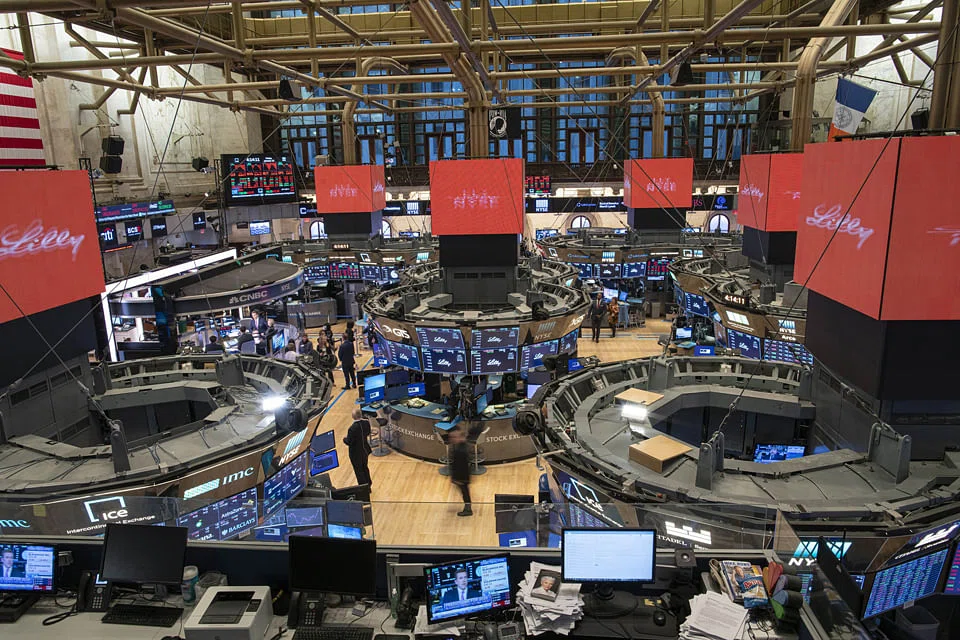
PUBLIC stock exchanges have been around for centuries, with initial public offerings (IPOs) long marking the holy grail for companies and their investors. Not only are IPOs traditionally revered as a symbol of triumph for companies, they pave the way for king-sized fundraising through the mass issuance of company shares.
In recent years, however, a different breed of stock exchanges has been growing in traction, and is even tipped to challenge the dominance of and need for public stock exchanges entirely. They are the private stock exchanges, which are platforms for investors and private companies to buy and sell those companies' shares.
Known as unlisted securities, shares of privately-held companies are becoming an increasingly attractive, accessible asset to investors. Take the Nasdaq Private Market, one of the world's largest private exchanges. In 2018, it recorded US$12 billion in transaction volume, nearly quadruple that of the US$3.2 billion recorded in 2017 - a testament to investor demand and value in its offerings.
What is driving the boom in the volume and popularity of unlisted securities?
Staying private for longer
Firstly, more companies are choosing to stay private for a longer period of time. As these companies scale, many employees will come and go; a number of them will get granted equity and some may eventually want to sell their shares. Simultaneously, venture capitalists who put money into these companies bank on a liquidity event to realise gains and return capital to limited partners (LPs). Both activities contribute to the growing availability of unlisted securities in the market.
The decision by companies to remain privately-held is spurred by a variety of reasons. For one, companies have tremendous access to capital today, owing to the pervasiveness of venture capital and private equity funds. This eliminates the need to raise money through an IPO - typically an expensive, long-drawn process.
The global volume of private capital dry powder has in fact hit a record US$2.5 trillion, according to financial data company Preqin. In 2018, Asia-focused dry powder accounted for 18 per cent of the world's dry powder, up from 9 per cent in 2006, Preqin found.
Other motivations for companies to stay private include a desire to elude the complex auditing and compliance requirements imposed on listed companies, as well as to preserve control over business decisions and focus on long-term business goals as opposed to short-term gains for shareholder reporting.
Invest in unicorns for cheap
Secondly, unicorns (private companies worth at least US$1 billion) and decacorns (US$10 billion) are proliferating globally. Their mighty valuations and disruptive solutions are fuelling a desire among investors to put money in these companies with the hope of massive gains in the event of their exits.
And how better to get in on these companies than through the secondary market? On private stock exchanges, investors can acquire a private company's shares at a discounted rate by virtue of an illiquidity discount. A company valued at US$10 billion, for instance, can have its shares sold based on a valuation of US$8 billion or less, making for an attractive deal to investors.
Data from financial database PitchBook affirms this. In a 2018 report, PitchBook detailed that secondary deals have in the last few years been growing in traction among venture capital firms - more of these firms now purchase shares through secondary stock sales rather than injecting fresh capital into private companies.
Rise of private stock exchanges
Thirdly, private stock exchanges are steadily establishing their foothold around the world, providing more investors with convenient access to unlisted securities. These modern alternatives leverage data and technology to replicate what the world's most successful public stock exchanges have established at a fraction of the resources for the private market.
Hg Exchange - South-east Asia's first member-driven private stock exchange - is one of the handful of private exchanges in Singapore, perched steadily in the country's financial landscape as more start-ups set up shop in the region and explore new ways of fundraising, and as investors become more sophisticated and search for alternative assets.
Beat herd mentality
As they are a riskier asset, unlisted securities have until recently been marketed to only ultra-high-net-worth individuals or accredited investors. The larger group of investors find it challenging to discern good deals as there is little information on these assets and they lack experience in investing in early-stage companies. There exists among them a herd mentality, resulting in many of them investing in this asset class without individual decision-making or downside protection.
However, this scenario is now changing with enhanced investor interest and education, and platforms that curate and facilitate secondary share transactions. Platforms owe it to investors to conduct due diligence on deals before syndicating them, hence offering investors only a vetted, appraised group of opportunities.
Even so, investors should remember that while there is no distinction between the advice one should heed when making an investment listed or unlisted, there are common pitfalls that have devastated private market investors, particularly biasedness. A desire to seek the one revolutionary solution for the world's largest problem could cause investors to dive headfirst into any company that boasts this competency without careful evaluation of their claims.
How then can private market investors practise good judgement? The tip is to always perform their own due diligence and ask the following questions:
Strike while the iron is hot
Today, as more companies delay their pursuit of an IPO, they would, at their pivotal point, have yielded significant revenue. Simultaneously, valuation optimisation and price discovery would have unfolded from the first institutional investor round (Series A) to pre-IPO rounds. Public market investors who enter belatedly - at the point of IPO - are less likely to experience a price appreciation. Private market investors, on the other hand, will realise gains because the lion's share of value has been captured in the private rounds.
Risks notwithstanding, investing in unlisted securities is a worthwhile pursuit for investors looking to diversify their portfolios, or chase alpha. Private stock exchanges will only multiply - and the impact on public stock exchanges will be one to watch.