
Re-engineering government digital infrastructure to lock in digitalisation gains
 Add BT as a preferred source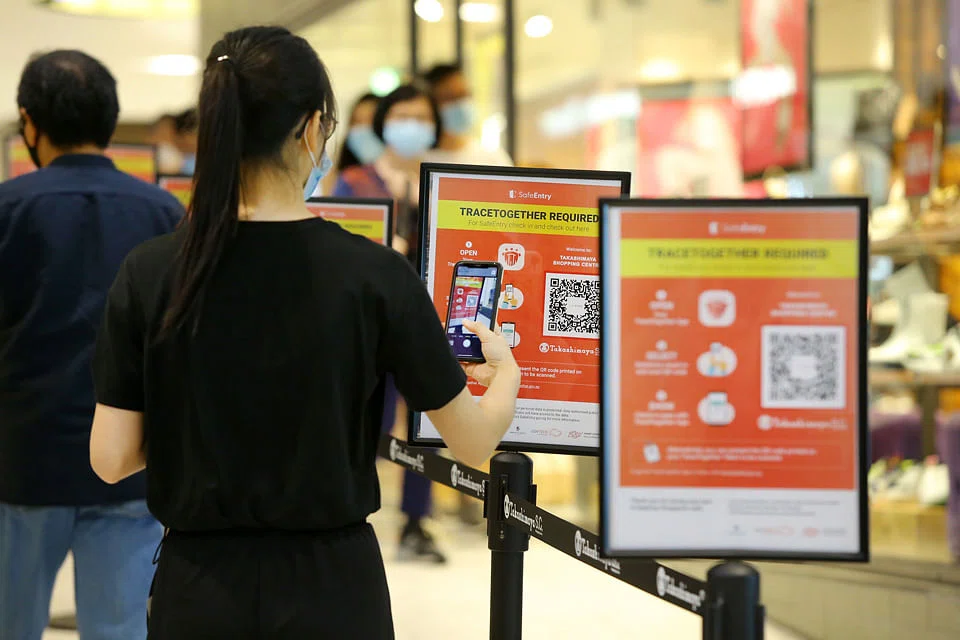
DIGITAL technology has played a significant role in Singapore's ongoing fight against Covid-19. Our investment in re-engineering the government's digital infrastructure has paid off in enabling a swift response to the pandemic.
In short order, we managed to roll out the Gov.sg WhatsApp channel, GoWhere websites, SafeEntry, and the TraceTogether app and token, among others.
As we are now in the second year of the pandemic, the "new normal" has simply become "the normal". This "normal" is now far more tech-driven.
People's relationships with technology have deepened as larger segments of the population come to rely on digital connections for work, education, healthcare, daily commercial transactions and essential social interactions. We are getting into a "tele-everything" world.
Digitalisation gains
It is imperative that we sustain our efforts to re-engineer our digital infrastructure to lock in the digitalisation gains.
Navigate Asia in
a new global order
Get the insights delivered to your inbox.
The government announced in June this year that an estimated S$3.8 billion in information & communications technology (ICT) contracts will be available in FY2021. This is a 10 per cent increase from FY2020, which itself saw a 30 per cent hike from S$2.7 billion in FY2019.
Seventy per cent, or S$2.7 billion, will be directed to over 250 projects to improve digital services for citizens and businesses.
These projects include the LifeSG app, which gives users access to over 40 government services and guides them step by step through transactions in key moments of life such as the birth of a child or the purchase of a property.
The app will be updated with new features such as the LifeSG Inbox, which provides personalised notifications on key announcements and enables users to make, view and edit appointments with various public agencies in a single place.
Businesses can also look forward to using an improved GoBusiness platform to gather information on business matters, apply for licences and make payment for their applications.
These efforts are aimed at making transactions between businesses and the government simpler, better and faster.
These projects will increasingly be built differently in order to accelerate delivery to meet fast changing requirements, while ensuring better levels of security and value for money.
Three shifts are expected in the way we build these applications.
First, we will shift from a reliance on developing on-premise customised applications to the use of standard and interchangeable cloud solutions.
Digital transformation in government needs to be responsive to rapidly evolving user expectations and technologies while managing scale, operational and cost efficiency.
In addition, by adopting cloud-based software-as-a-service solutions, the government is embracing a development philosophy to adapt to the solutions the market provides and not creating unnecessary bespoke solutions instead.
Since the Cloud First policy was announced in 2018, close to 600 government systems have migrated to the cloud.
In a sample study of selected systems, migration has resulted in a three-times faster deployment of IT infrastructure changes to support the introduction of new services, increased uptime of services to deal with unexpected demand, and reduced hosting costs through economies of scale provided by the cloud.
These benefits are part of the reason why we have earmarked over S$1.2 billion in ICT contracts for systems to be developed on the cloud.
Second, we will shift from ground-up development of large monolithic systems to architecting systems with greater reusability built on the SG Technology Stack (SGTS).
By providing a set of reusable components, SGTS improves the agility, speed and experience of application development by reducing the need for agencies to set up extensive digital infrastructure.
Through standardisation, SGTS improves quality and compliance with government policy and cybersecurity standards as technical requirements are "baked into" the common platforms and provide baseline compliance.
Through centralising the handling of common services and demand aggregation, SGTS also helps lower the cost of development and reduces duplication.
SGTS will raise the line of innovation to enable application developers to build less and deliver more.
We are seeing early success in increased agility, lower effort and cost savings from applications using SGTS.
One example is our common code repository and pipeline that supports continual integration and deployment together with an automated testing platform (collectively known as SHIP-HATS, or secure hybrid integration pipeline and hive agile testing solutions).
This platform has helped an agency reduce the time needed to roll out new features for their IT system by 1.5 times.
We will invest more than S$100 million to build and drive the adoption of SGTS as the standard modern application development environment for government systems.
Third, we will shift procurement from agency-specific tenders to whole-of-government bulk tenders of key technology products, services and capabilities to shorten the procurement cycle.
Instead of inviting, evaluating and awarding suppliers for each project, agencies can now tap over 30 whole-of-government bulk tenders to support their digitalisation projects.
With pre-qualified suppliers and a pre-determined schedule of prices, buying from bulk tenders cuts the procurement process from the typical six to nine months, to less than three months.
Bulk tenders to aggregate demand of commoditised ICT infrastructure products and services such as PCs, network connectivity and cybersecurity monitoring are not new.
But as applications are increasingly developed on a standardised environment with greater reusable components, it allows us to also set up bulk tenders for agile development specialist resources and services.
Digitalisation agenda
We now have bulk tenders amounting to more than S$600 million to support agencies in their application development.
These include a co-development tender for agencies to augment their development teams with agile co-development manpower resources from 17 suppliers, and another for the provision of agile application development and user experience design services from five suppliers.
These bulk tenders not only help the government lower costs but ensure a consistent level of technical capabilities among the suppliers.
Dynamic contracting provisions allow us to include new suppliers to meet emerging requirements.
A new bulk tender with forecast demand of more than S$150 million for application development and maintenance will soon be called to support the demands of digital transformation across the government and modernise our partners' application delivery capabilities. This will help to improve responsiveness and speed of execution, service reliability, and security and compliance for agencies, as well as reduce costs.
Our digitalisation agenda is ambitious, and it will require strong partnership between government and the ICT community.
The sustained level of ICT contracts will create many opportunities for suppliers to not just develop for the government, but with our development teams and on the government digital infrastructure.
It will require our suppliers to embrace the use of cloud solutions, be familiar with the SGTS and raise their game in technical capabilities. Together, we can improve the lives of our citizens and businesses through developing better digital services.
- The writer is the chief executive of the Government Technology Agencyof Singapore.
Decoding Asia newsletter: your guide to navigating Asia in a new global order. Sign up here to get Decoding Asia newsletter. Delivered to your inbox. Free.
Share with us your feedback on BT's products and services

