Reits can withstand debt costs resetting to much higher levels

THIS year marks 20 years since real estate investment trusts (Reits) emerged on the Singapore Exchange, with the listing of CapitaMall Trust (now called CapitaLand Integrated Commercial Trust ) and Ascendas Reit (now called CapitaLand Ascendas Reit ) in 2002.
Over two decades, Reits have grown to be a major segment of the local bourse, contributing seven out of the 30 constituents of the benchmark Straits Times Index (STI). But the United States Federal Reserve has wrecked celebrations for Singapore Reits, with its aggressive hiking of interest rates to combat high inflation. The iEdge S-Reit Index as at Nov 11, 2022, is down 19 per cent versus end-2021.
Borrowing costs in Singapore are rising, with the three-month compounded Singapore Overnight Rate Average up by over 240 basis points from the start of the year to about 2.6 per cent per annum as at value date Nov 11, 2022.
The impact of rising debt costs on Reits is somewhat mitigated by trusts keeping gearing levels within stipulated limits and holding a large proportion of their total debt at fixed interest rates.
Higher borrowing costs
Nonetheless, borrowing costs are rising for leading Reits such as STI constituents Mapletree Industrial Trust (MIT) and Mapletree Logistics Trust (MLT). MIT’s weighted average all-in funding cost for the quarter rose from 2.5 per cent as at end-June to 2.9 per cent as at end-September. Over the same period, MLT’s weighted average annualised interest rate rose from 2.3 per cent to 2.5 per cent.
Frasers Centrepoint Trust (FCT) had an average all-in cost of debt of about 2.5 per cent per annum as at end-September. FCT’s manager expects the trust’s average cost of borrowing to rise by at least 50 basis points to above 3 per cent in the financial year ending Sep 30, 2023, which could put a dent on distribution per unit (DPU).
High-quality Reits should have little difficulty accessing credit. But, as fixed interest rate debt matures, refinancing could be at much higher rates. Might borrowing costs of many Reits reset from under 3 per cent per annum today to around 4 per cent over time?
I run a simple simulation where I raise the actual borrowing costs in the latest quarter ended-September of MIT and MLT by 30 per cent and 50 per cent. I assume the higher borrowing costs flow through entirely to lowering the DPU. With 30 per cent higher borrowing costs, the latest quarterly DPU of MIT and MLT would reduce by around 8 per cent and 9 per cent respectively. With 50 per cent higher borrowing costs, the DPU of MIT and MLT are around 13 per cent and 15 per cent lower, respectively.
Based on annualising latest quarterly DPU and unit prices at Nov 11, 2022, MIT and MLT traded at yields of around 5.8 per cent and 5.6 per cent respectively. The said trading yields are around 260 and 240 basis points higher than the five-year Singapore government bond yield of 3.2 per cent per annum as at Nov 11, 2022. The latest issue of the Singapore Savings Bond that is open for application offers an annual average return of 3.47 per cent if held for 10 years.
Put in perspective, MIT can offer a yield that is around 220 basis points and 190 basis points higher than the five-year government bond even if DPU drops by around 8 per cent and 13 per cent respectively. And there are various Reits with different debt profiles, sponsors, sizes and portfolios, which offer superior DPU yields to MIT and MLT.
Book values
Moreover, some high-quality Reits trade at discounts to net asset value (NAV), which implies investors can get fractional ownership of the underlying properties at below their valuations determined by independent valuers. And valuations may be conservative, as Reits have often sold assets at premiums to their latest valuations.
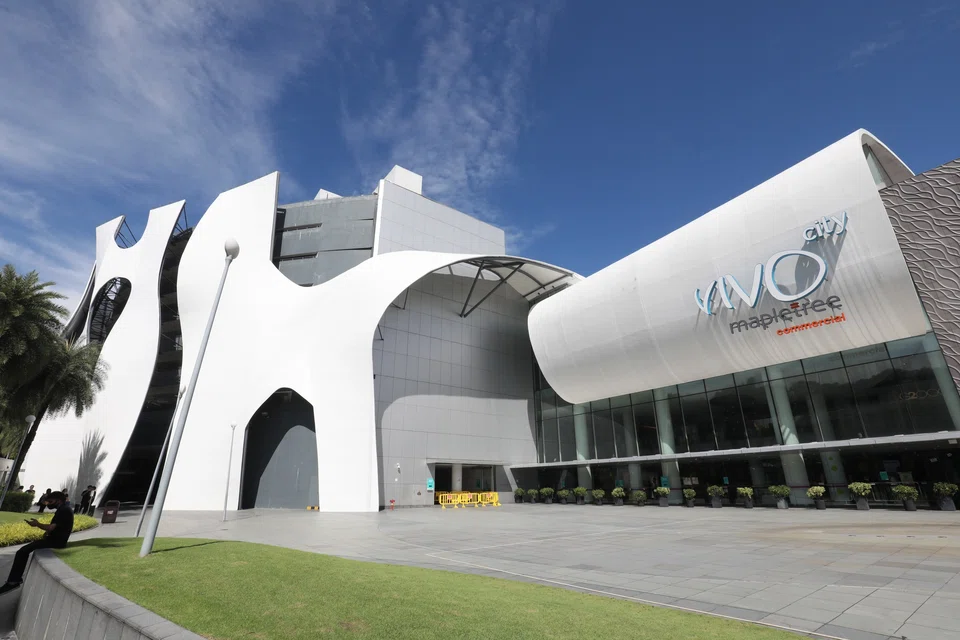
At Nov 11, 2022, Mapletree Pan Asia Commercial Trust (MPACT), which owns premier assets such as VivoCity and Mapletree Business City in Singapore, traded at a discount of 9 per cent to its end-September NAV per unit of S$1.81. FCT, which largely owns various suburban malls here, traded at a discount of 14 per cent to its end-September NAV per unit of S$2.33.
Higher interest rates pose a risk of valuers applying higher capitalisation rates to value properties. In the capitalisation method, the estimated net income is divided by the capitalisation rate, which is meant to capture an appropriate investment yield. All things being equal, using a higher capitalisation rate leads to a lower valuation.
For FCT, the capitalisation rates used to value investment properties have thus far held stable. The capitalisation rates used to value Causeway Point, Northpoint City North Wing and Waterway Point as at Sep 30, 2022, were 4.75 per cent, 4.75 per cent and 4.5 per cent respectively, unchanged from those used as at Sep 30, 2021.
Setting aside the negative impact to equity valuations from the use of higher discount rates, rising interest rates pose twin threats to Reits of higher borrowing costs reducing DPU and higher capitalisation rates lowering NAV. What Reit managers can do to fight these threats is to generate better net income from the assets.
However, growing income from the properties can be challenging. With overseas assets, contributions may be hit by the weakening of foreign currencies. While rental rates of Grade A offices and room rates of hotels in Singapore have risen, slowing economies in many places could damper the prospects for these asset classes. Likewise, while structural drivers for modern warehouses are strong, slowing economic growth can hurt demand.
Amid high interest rates, growth via asset acquisitions will likely take a back seat as volatile equity markets make acquisitions tricky. Expect Reits to focus on ensuring their assets are competitive in meeting the needs of users, thereby outperforming the market in occupancy and rental rates.
Where possible, Reits can do more asset enhancements, such as MPACT’s reconfiguration exercise at VivoCity that involves around 80,000 square feet, including converting part of level one anchor space into a new retail zone. The majority of space has been committed, with progressive opening expected from mid-2023. This initiative aims to deliver estimated return on investment of more than 10 per cent on a stabilised basis.
Exuberant celebrations are hardly in order in marking Singapore’s Reit sector turning 20. But, as long as Reit managers are assiduous and creative, Reit investors can be hopeful.