Revised corporate governance code principle-based
A clearer and more holistic yet succinct revised Code reflects evolving stakeholder expectations. To be truly effective, companies must choose substance over form
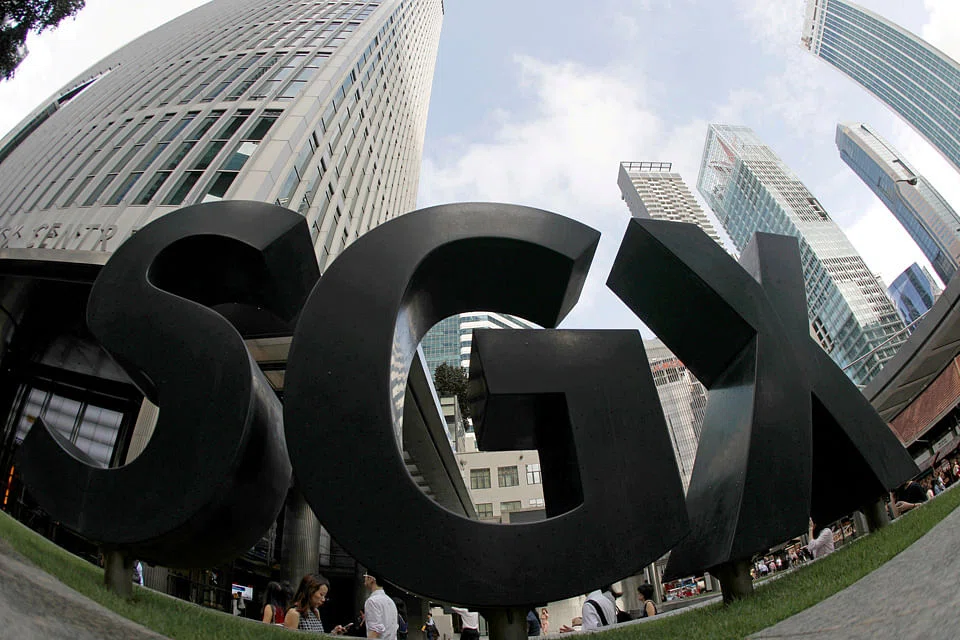
IN August 2018, the Monetary Authority of Singapore issued the revised Code of Corporate Governance (the Code) for companies listed on the Singapore Exchange (SGX). This 2018 version of the Code supersedes earlier versions and will apply to annual reports issued for financial years commencing Jan 1, 2019.
The current edition is a result of an 18-month process. Despite the introduction of new principles and provisions in the 2018 Code, there is an almost 50 per cent reduction in the page count from earlier versions, which most practitioners would welcome.
Strengthening fundamentals
The "comply-or-explain" regime featured in the earlier Codes remains in the 2018 Code. A key change to the 2018 Code is the moving of some guidelines to the SGX-ST Listing Rules (Mainboard) and SGX Listing Rules (Catalist) (collectively, SGX LR) of which the latter requires mandatory compliance and do not operate on a "comply-or-explain" basis like the Code.
The majority of these guidelines involve considerations relating to director matters, which reflects the important role that directors play in ensuring effective corporate governance, as well as the evolving expectations of what the core and fundamental governance standards should be for all listed companies.
As a result, the need for independent directors to make up at least one-third of the board will now become a baseline listing requirement. Likewise, having an effective internal audit function has been recognised as a key component for boards to exercise sufficient oversight on the system of risk management and internal controls maintained by the executive management, and has been proposed for inclusion in the SGX LR.
While many of these proposed additions from the Code to the SGX LR remain unchanged in substance, some have become more stringent.
For instance, the reappointment of independent directors who have served for more than nine years now requires a two-tier shareholder voting process in order to continue serving on the board as an independent director. Notwithstanding, this does not preclude such a director, who has not been voted in as an independent director, to continue to serve on the board as a non-independent director.
A clearer and more holistic Code
The 2018 Code also introduced several additional provisions to enhance governance practices.
It is recommended that non-executive directors make up the majority of the board, so as to help ensure an appropriate balance of objectivity in board deliberations for better business decisions. With regards to shareholder rights and the conduct of general meetings, "bundling" of resolutions is discouraged, and explanations in the notice of meeting are required should such "bundled" resolutions be tabled.
The 2018 Code also works to foster better communication and transparency between the company and shareholders by encouraging companies to establish an investor relations policy as well as a dividend policy that is made known to shareholders.
A principle dedicated to considering the needs and interest of material stakeholders is also included in the 2018 Code. This is in-line with global governance developments for companies to embrace a wider social and ethical mandate rather than narrowly focusing only on its shareholders. This aligns with the SGX's recent drive for companies to adopt sustainability reporting.
In addition, the 2018 Code is clearer. With the removal of areas that are already cited in the SGX LR, it helps to reduce previous confusion caused by repetition.
Greater clarity is also achieved with the creation of the Practice Guidelines as a companion document distinct from the Code - a new feature of the 2018 Code. The Practice Guidelines contain more detailed implementation considerations relating to the principles and provisions of the 2018 Code. Many of these were previously included as guidelines within the previous Code.
For example, guidelines relating to specific remuneration schemes like the use of shares to align the interests of non-executive directors with that of shareholders, or the use of "claw-back" in management employee contracts, no longer feature in the 2018 Code, but are shifted to the Practice Guidelines as a means to illustrate potential ways to align the relationship between remuneration, performance and value creation.
By doing so, the 2018 Code is more principle-based and avoids being overly prescriptive, so as to enable a more flexible and thoughtful application of governance principles.
Governance to what end?
An interesting recommendation arising from the Corporate Governance Council's deliberations is not related to changes in the Code itself, but on enabling the corporate ecosystem to help build better governance practices itself.
The proposal to set up an industry-led Corporate Governance Advisory Committee is a first step towards this direction. While details of the specific mandate and composition have yet to be determined, this initiative could allow for greater positive reinforcement and support, rather than improvements only by threat of the regulatory "whip".
While specific wordings, principles or expected standards may change and develop over time, the core objective of the Code remains the same: to promote the structures and processes necessary for directing the affairs of a company to enhance its long-term value.
The effectiveness of the Code remains dependent on its application by companies. Boards and management should take the opportunity to embrace the spirit of the 2018 Code and capitalise on the potential benefits arising from the recommended practices. Substance is key; it will be near-sighted to merely implement the form of the Code provisions for the sake of compliance.
READ MORE: US bourses can take a leaf from S'pore DCS framework: SEC commissioner