

Set sail with the marine and offshore industry
M&O is a significant contributor to the local economy, the opportunities are vast as the ocean.
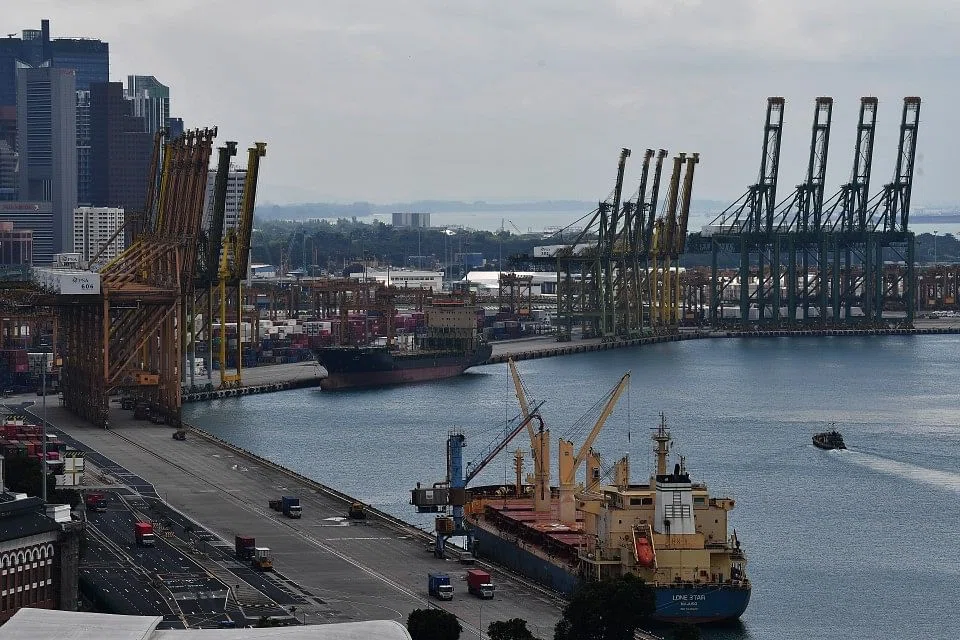
THE marine and offshore (M&O) sector churns out mammoth ships and platforms the size of skyscrapers, which for most people, gives the impression of a traditional industry with a high carbon footprint and heavy reliance on labour.
Yet when you see some of the shipyards in Singapore, you will see gleaming automation such as robotic welding, digitalisation such as smart watches and equipment, the use of solar power to power operations, and even a floating lab to testbed new energy solutions. That is but a microcosm of the industry's drive towards sustainability and digitalisation.
Spearheading the green charge is just one thrilling prospect in M&O. Not many know that Singapore is a leader in many aspects of this global industry. At the same time, M&O is a significant contributor to the local economy. The opportunities are vast as the ocean.
On the green wave of transition
There is an exciting sea change happening in the sector and Singapore is at the forefront. As the world's largest bunkering port serving thousands of ships yearly, we have the unique opportunity to steer unprecedented change for the environment.
Industry leaders such as Keppel Offshore & Marine (Keppel O&M) are contributing to the energy transition by driving the adoption of cleaner fuels. The Singapore company's pivot towards cleaner energy has been in effect for about a decade, starting from Liquefied Natural Gas (LNG).
LNG is a cleaner energy source to power ships in place of traditional fossil fuels and Singapore has been actively developing the infrastructure for LNG bunkering. Keppel O&M is the first to supply LNG to vessels in Singapore through its joint venture, FueLNG. Keppel is also developing Singapore's first comprehensive electric vessel supply chain, which will help decarbonise Singapore's harbour craft industry.
Amid the uncertainty in the oil and gas industry, such energy transition efforts are not only a boon to the planet, but to the prospects of the M&O sector too. Singapore has blazed a trail in this aspect. Extensive research and development on alternative shipping fuels such as ammonia and hydrogen is already being carried out here. Keppel O&M's Floating Living Lab, the first-of-its-kind floating testbed in Singapore, will accelerate such eco-conscious efforts.
The industry is also leveraging its expertise to contribute to the renewables sector. In the past 2 years, Keppel O&M has secured SS$1.3 billion worth of offshore wind projects such as substations and wind turbine installation vessels. A growing demand in places such as Taiwan will continue to propel demand for these projects. The market is expected to contribute 25 per cent of Asia's total market share for offshore wind by 2025.
According to a Rystad Energy report, global offshore wind expenditure is expected to grow at a compound annual growth rate of 11 per cent this decade and the market will be worth US$126 billion by 2030.
As the world evolves, so does the M&O industry. The industry has withstood the ups and downs over the past decades, adapting and continuing to meet the needs of the world. Now, M&O is no longer just about shipbuilding, but supporting the fight against climate change.
Go global
There's literally a whole world of possibilities as more than 80 per cent of global trade volume traverses the sea. Singapore's strategic location means much of this trade goes through our port. The nation's relentless effort to become a global port of call means it is connected to more than 600 ports across 120 countries. In addition, offshore renewable energy is expected to contribute significantly to the world's electricity needs.
With a thriving maritime ecosystem that hosts the world's biggest M&O companies, it is no surprise that the industry can thrive with bright prospects.
Singapore is thus a perfect launchpad for companies to serve global clientele. The M&O sector is a truly global one and our local talent has clinched contracts in the farthest reaches.
Some of Singapore's small-and-medium enterprises are even global leaders in sub-fields such as crew boat building and equipment manufacturing.
Our technology, solutions and know-how have been tested in the most extreme conditions of the North Sea and the Arctic region. If you are looking for the challenge of creating solutions in remote areas, M&O gives you the perfect platform.
As a global industry, there are also plenty of opportunities to work overseas, servicing markets that require local content such as the US and Brazil. For instance, Keppel O&M has a yard in the US building the first Jones Act (built and operated in the US) wind turbine installation vessel.
Unique opportunity
The M&O sector offers a dynamic environment with a wide spectrum of career choices. These include firms that specialise in maritime technology, law, transportation, ship trading and finance, digitalisation and artificial intelligence, classification societies and regulators, and so on. Many people may think of professions in the sector as mainly engineers involved in the construction of vessels, but that is only one aspect of it.
In Singapore, the ecosystem has grown from 4 domestic marine firms 50 years ago to more than 1,000 companies today. In 2019, the sector accounted for S$11.5 billion in total output and employed more than 75,000 workers. Human capital remains the most crucial ingredient.
Industry leaders are highly cognisant of this and many are personally involved in the institutes of higher learning to provide students with the best mentoring.
Initiatives such as the Singapore Institute of Technology's Integrated Work Study Programme, crafted in close partnership with companies including Keppel O&M, give prospective M&O professionals an unparalleled inside look into the industry. The curriculum is regularly updated with cutting-edge developments from the sector as SIT partners with M&O companies in areas such as digitalisation and decarbonisation. Industry leaders also give guest lectures to keep students abreast of the sector's trends.
The increasing use of technology, such as augmented reality, autonomous operations and digital twinning, will further appeal to the young. The launch of the Marine and Offshore Engineering Industry Digital Plan last year will give the industry a boost.
In an engineering industry accustomed to getting on with the job, perhaps it is time to celebrate some of our successes and capture the imagination of the next generation. The sea, after all, can be mesmerising.
- Chris Ong is chief executive of Keppel Offshore & Marine, and Kenneth Low is an associate professor at Singapore Institute of Technology
TRENDING NOW

If Europe goes to war, the fallout will be felt in East Asia

Indonesia stocks suffer worst plunge in nearly 30 years as MSCI proposes standalone status
Keppel seeks US$1 billion for Vietnam investments as it joins country’s international financial centre

Philippines’ FDI slowdown exposes uneven investment prospects across S-E Asia

