Singapore has what it takes to be a fintech hub
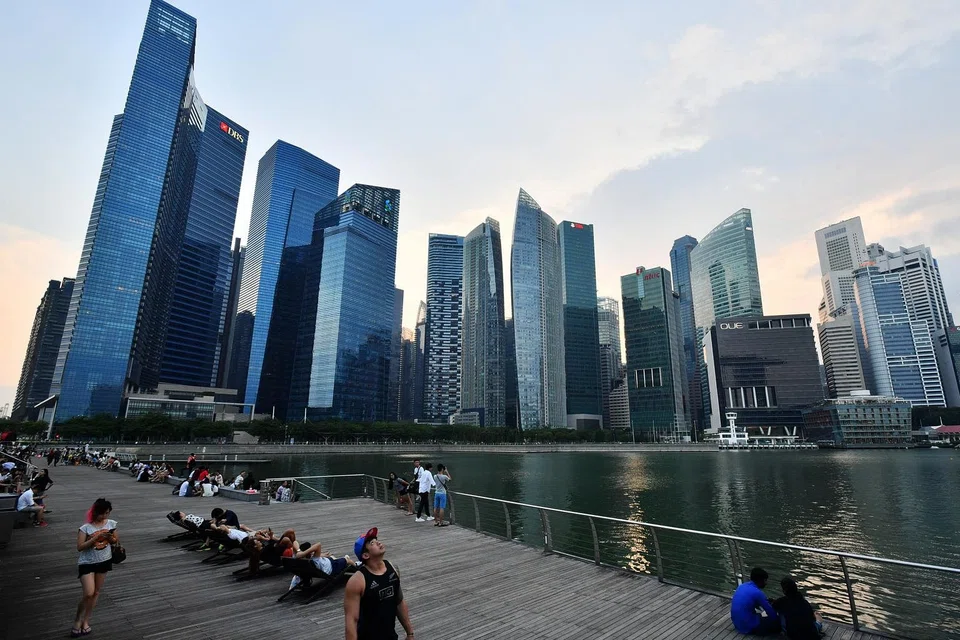
SINGAPORE has long been modelled after Switzerland - a business-friendly, efficient and stable finance hub of Asia. Supported by smart and robust infrastructure, progressive and transparent regulations as well as a productive, English- speaking workforce, the republic has more than pulled its weight in the global finance arena.
Some might suggest that Singapore has been a victim of its own success. Despite efforts to capitalise on regional and Chinese firms looking to establish an international presence, the capital markets and listings landscape has been soft.
Beneath the surface, higher costs of living and tighter manpower controls make hiring talent, particularly specialist technology talent, more challenging. At the same time, advances of digital technology have the potential to bring about a renaissance of trading and investment activity. Digitisation has significantly reduced the cost of trading, access to information has become affordable and the Internet has erased global boundaries. Yet Singapore's capital markets volumes lag far behind its local neighbours as well as Hong Kong and Japan.
Singapore has clear paths forward. Over 8 per cent of the global foreign exchange (FX) volumes flow through Singapore, the third largest single venue behind London and New York. To complement that, the Monetary Authority of Singapore (MAS) has announced initiatives to encourage major FX players to locate and deploy their matching engines in the republic. This is an important and encouraging step. Locating matching engines here reduces latency to level the playing field with other global FX hubs. Already, Standard Chartered and Citibank have announced initiatives to build and locate matching and pricing engines in Singapore.
Consistent support
Alongside these eFX initiatives, support for fintech has been consistent, and seen as complementing rather than disrupting traditional finance. Various initiatives are available to support newly formed incubators and accelerators, with funding, expertise and infrastructure assistance.
This has definitely had a significant impact with the republic gaining a strong standing as a blockchain and cryptocurrency presence in this nascent industry. Even as we grapple with the best uses of disruptive technologies such as blockchain, cryptocurrencies or artificial intelligence (AI), there is undisputed belief in the potential of these technologies.
Indeed, banking and trading have already been significantly disrupted by technology and regulation. Banks are seeing tradition revenue streams erode as upstart firms see new opportunities to leverage technology to drive efficiency.
Trading has seen an even greater transformation. It was only a little over a decade ago that the last cries of floor traders were heard on the Singapore Exchange (SGX) trading floor. Now, trading volumes and liquidity are being handled more and more by higher technology participants.
According to Japan's Tokyo Stock Exchange, 70 per cent of orders in 2017 are estimated to be sent by computer algorithms, compared to 10 per cent in 2010. This facilitates more efficient price discovery even as exchanges seek to reduce tick sizes and bid-ask spreads.
Change is a constant
But change in trading is a constant. As the speed of trading shrinks to nano-seconds, the largest trading firms are turning to new technologies such as AI and machine learning to gain an edge.
Meanwhile, the widespread adoption of technology across sectors has created a grab for talent. Skilled developers are perhaps now the most sought after job category in the world - capable of joining diverse organisations from Google to Goldman Sachs or a Singapore-supported fintech startup. In our own trading firm, more than half of our employees are coders, technologists and quants.
Singapore is well placed to thrive in this new technology-driven environment if it is able to satisfy the demand for technology talent. Supported by a progressive yet appropriately prudent approach by the MAS, Singapore has the ambition and potential to be the preeminent digital trading and financial services hub for Asia.