Singapore’s energy transition promises both opportunities and challenges ahead
Barring carbon capture technology becoming viable, the journey to net zero will require an early and complete move out of fossil fuels.

WHAT do the Industrial Bank of Japan, Exxon, IBM and Toyota have in common? They were all among the most valuable companies in the world – 30 years ago.
While the heydays of each of them have long passed, it is not because they were in sunset industries. In the financial sector, IBJ’s place at the top has been displaced by Visa, Exxon’s in energy by Saudi Aramco, IBM’s in IT by Apple among others, and Toyota’s in cars by Tesla.
A combination of technological change and geopolitical developments has brought this churn, not just once but multiple times over the last 3 decades. Expect the next 30 years to be even more brutal. This means that companies flourishing today must prepare for radical change to stay on top, while new and emerging ones will have ample opportunities to best them.
This will certainly be the case for companies in the energy sector globally and in Singapore. As part of the Energy 2050 Committee’s work, we explored the future energy trends and pathways towards net zero emissions, and laid out the landscape ahead for Singapore’s power sector in the form of scenarios.
The power sector is key to Singapore’s transition towards net zero emissions because it makes up the second largest share of Singapore’s emissions today (40 per cent), but is likely to grow further going forward.
As an export-oriented manufacturer and services hub, Singapore uses more energy per capita than other countries whose economies have less manufacturing or are more domestically focused. This is because the UNFCCC system accounts for carbon emissions where energy, rather than its end products, is consumed.
'%3e%3cpath%20d='M12.1475%2025.5262C13.7713%2025.4295%2014.94%2023.913%2014.94%2021.8832C14.94%2019.5359%2013.474%2018.093%2011.5917%2018.093C11.3745%2018.093%2010.9582%2018.093%2010.8393%2018.1413V25.2086L11.8891%2025.5745C11.8891%2025.5745%2012.207%2025.5262%2012.1475%2025.5262ZM11.4934%2017.6281C13.2567%2017.6281%2014.3843%2016.4292%2014.3843%2014.4501C14.3843%2012.372%2013.275%2011.2973%2011.4339%2011.2973H10.8393V17.6305H11.4934V17.6281ZM6.66078%2025.6482L7.39265%2025.5492C8.02617%2025.4502%208.26403%2025.3053%208.26403%2025.1097V11.6149C8.26403%2011.4193%208.1451%2011.3709%207.23484%2011.249L6.68137%2011.173L6.6219%2010.7588H11.9508C15.7153%2010.7588%2017.0624%2012.0797%2017.0624%2014.1578C17.0624%2015.9666%2015.7748%2017.1909%2013.4969%2017.6305V17.7041C16.111%2017.948%2017.6571%2019.5382%2017.6571%2021.7636C17.6571%2024.3318%2015.8937%2026.0417%2012.1109%2026.0417H6.60132L6.66078%2025.6482Z'%20fill='%232B2B2B'/%3e%3cpath%20d='M20.6287%2025.6505L21.5596%2025.5515C22.1725%2025.4779%2022.4104%2025.3076%2022.4104%2025.112V11.249H21.9346C20.073%2011.3479%2018.982%2013.0095%2018.408%2014.6227L18.1907%2015.5018H17.6555L18.1701%2010.7588H29.3837L29.6421%2015.4787H29.1664L28.9491%2014.6227C28.3728%2012.8645%2027.3047%2011.2743%2025.5002%2011.249H24.9856V25.1856C24.9856%2025.3812%2025.1251%2025.4548%2025.9965%2025.5515L26.7695%2025.6505L26.829%2026.0417H20.5693L20.6287%2025.6505Z'%20fill='%232B2B2B'/%3e%3c/g%3e%3cdefs%3e%3cclipPath%20id='clip0_5242_21648'%3e%3crect%20width='24'%20height='16.8'%20fill='white'%20transform='translate(6%2010)'/%3e%3c/clipPath%3e%3c/defs%3e%3c/svg%3e)
Correspondingly, Singapore has a higher energy per capita than many others, but this is not an indictment as some commentators simplistically assume. However, it does mean that Singapore should aim to be more carbon efficient as a producer of goods and services than its peer competitors.
For the power sector, this is already the case today as Singapore’s grid emission factor, which measures the sector’s carbon intensity, is already among the lowest in Asia as it uses natural gas for most of its power generation.
Barring carbon capture technology becoming viable, its journey to net zero will require an early and complete move out of fossil fuels.
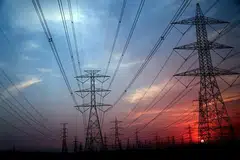
While renewable technologies that are mature today like solar and wind are already price-competitive with fossil fuels, the limited geographic size of Singapore prevents it from attaining net zero using these technologies alone.
Our committee, comprising experts with a mix of technology, business and policymaking experience, concluded that the feasible answer for a net zero power sector lies in a combination of renewable power imports and power generation using hydrogen, supplemented by a short list of emerging technologies that may or may not be mature by 2050.
Why renewable energy imports? Quite simply, it makes perfect economic sense for both Singapore and its neighbours. Academic studies have shown that the South-east Asian region has a significant surplus of renewable energy resources that can more than supply all its future needs.
Developing these resources for the benefit of the region would ensure that all of its parts can move to net zero over time. Singapore’s import market potential as well as its financing prowess would provide the business conditions to kickstart this. This will benefit the neighbouring region by bringing investment, technology-transfer, scale economies and earlier access to renewable power than would otherwise be the case.
Improvements in technology for power transmission over long distances with only modest losses mean that such benefits can also accrue to regions further afield, up to thousands of kilometres away.
While imports are a no-brainer, another viable carbon-free alternative for Singapore is hydrogen. While full development of the global green hydrogen industry to produce transportable fuel for power generation is still at least 10-15 years away, strong momentum will likely carry it there before 2050.
Whether we can tap into it then will depend on our infrastructure, regulatory frameworks and business connections being in place. With a coordinated nationwide strategy that includes advanced policy planning, incentives for early infrastructure development and agile energy companies, hydrogen can become another affordable mainstay for our power sector by 2050 and certainly beyond.
Apart from power imports and hydrogen, there will also be huge opportunities for global enterprises and local companies to participate in many other aspects of the energy transition that the Energy 2050 Committee Report has sketched out.
Local solar energy projects will require continual upgrading to maximise its contribution, changes in grid transmission and distribution architecture as well as its digitalisation will push the envelope for district level optimisation of energy, and energy efficiency will need to be enhanced at enterprise and precinct levels.
Apart from this, the longer-term potential for other energy technologies like geothermal, nuclear and carbon capture, as well as services like carbon trading, certification and energy-as-a-service offerings present exciting new business opportunities for startups and local companies looking to go regional or global. Those who want to venture into this sector can be assured of an exhilarating ride.
The writer is director and CEO of the ISEAS-Yusof Ishak Institute, and chairman of the Energy 2050 Committee. The committee’s report can be downloaded at www.ema.gov.sg/energy-2050-committee-report.aspx
Decoding Asia newsletter: your guide to navigating Asia in a new global order. Sign up here to get Decoding Asia newsletter. Delivered to your inbox. Free.
Share with us your feedback on BT's products and services