

Stop slaughtering F&B as the sacrificial lamb
How does cutting restaurant capacity help slow dorm, wet market or bus interchange numbers?
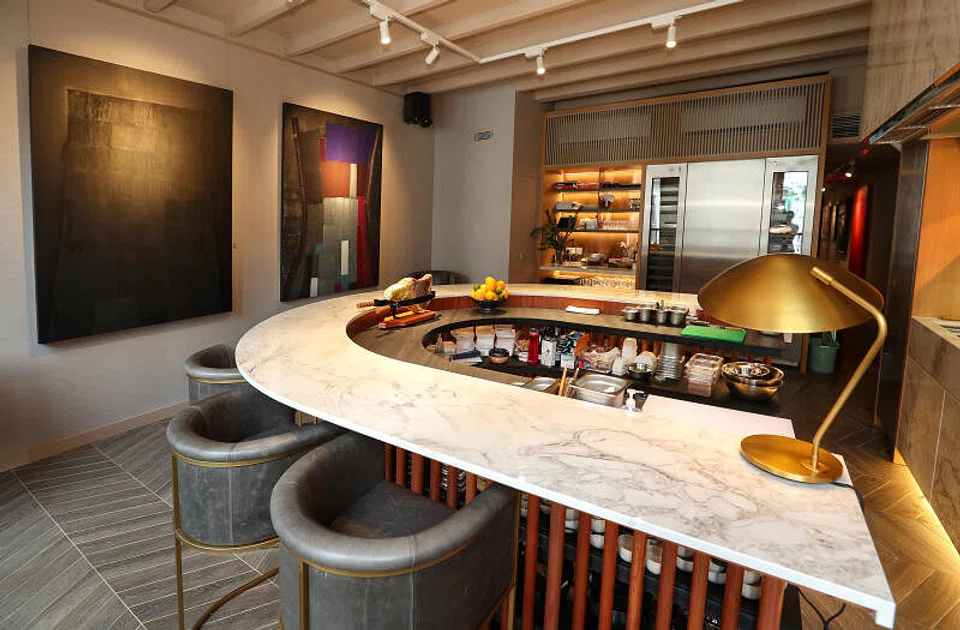
RESTAURANTS occupy an interesting space in the fabric of society. On the one hand, you can argue they are increasingly dispensable. People can cook or order home delivery.
Restaurants are costly to run, burdensome and volatile, performing roles that may soon become automated. It's a risky business, for sure.
Then again, restaurants serve as some of our last communal and social spaces, designed with the purpose of hosting and serving people under the guise of food and beverage service. Whichever way you slice it, a restaurant is first and foremost a place of people, by people and for people.
For the F&B industry, Covid-19 highlights a paradox that if left unanswered, could prove fatal: How does a business designed to bring people together around two of the most basic of human acts - mingling and eating - survive a time that requires us to stay away from one another?
I've never envied the job of public officials. Running a restaurant, I find the responsibility of making decisions that impact my small universe difficult enough. Reading the news, seeing the state of the world, but more particularly, the rise in cases locally and the uncertain future ahead, it is clear that resisting this new normal is futile. "Biting the bullet", as Finance Minister Lawrence Wong said a few days ago, is something we all must learn to do.
Fully cognisant of the fact that it isn't my role to question the merit of governmental strategy as a whole, the latest announcements last Friday have left us wondering if we are heading in the right direction.
A quick look at the daily Covid case reports would show that restaurants have very little to do with the current spike in cases, yet reducing our dining capacity - again - implies that we are indeed linked to the latest numbers and the increased risk to the healthcare sector.
But how would a decrease in restaurant capacity contribute actively to a slowdown in dormitory, wet market or bus interchange numbers?
Or are we - again - the sacrificial lamb aimed at appeasing the current mood? And is appeasement what we really need to move forward?
We lost while pivoting from dine-in to delivery models and lost again when pivoting back... We lost to delivery platforms and their commissions. And lost yet again when landlords and their rental rebates didn't come, weren't mandated, or were too low or slow.
It may only be a matter of time before a case or a cluster takes shape around a restaurant, like it did with Samy's Curry Restaurant earlier this July. When that happens, it will likely be the result of lapses that took place outside, not inside, the walls of your favorite eatery. Furthermore, when cases are found in retail shops or hawker centres, the response has always been targeted - not all malls close, no further restrictions are experienced.
As it stands, for those of us who have fought tooth and nail to preserve our livelihoods while walking the necessary line drawn by our leaders, it is important to acknowledge that it has never been this hard to run a restaurant.
Things weren't pretty even before all hell broke loose - the hours, the thin margins, and the mere impossibility of finding, hiring or keeping staff. But in comparison to the situation today - those were good days for us restaurant workers and owners.
In these last 18 months, we have at times collectively lost close to 80 per cent of revenue, while navigating seating capacity curbs, music and alcohol bans. Music restrictions, as an example, aren't even listed when new announcements are made, but impact revenue and the fulfilment of our function tremendously.
Scrambling to determine who was fit to dine and in what configuration, we emerged from three long and arduous lockdowns only to find more structural hardship on the other end.
We lost while pivoting from dine-in to delivery models and lost again when pivoting back, generating waste and accumulating costly take-away material. We lost to delivery platforms and their commissions. We lost while witnessing unmanaged KTV businesses and wet markets turn into clusters. And lost yet again when landlords and their rental rebates didn't come, weren't mandated, or were too low or slow to make a difference.
And while we all worked and laughed together through the challenge of making sense of it all, we discovered that for many of us, help wasn't coming. Locally owned and operated businesses stomached decreasing financial support that excluded tax paying, levy paying foreign workers. People who comprise almost 40 per cent of the labour force of any restaurant, are not adequately accounted for and supported. A hit that hurt both businesses and workers.
While help from the Job Support Scheme, rental rebates, grants and low interest rate loans have protected some businesses from going under, they have also been a drop of water in a parched land for many of us, and the lack of industry consultation and involvement in the process leading up to these decisions makes me wonder if we wouldn't be better off working together?
Simple things like determining the rate of disbursement for grants and relief can impact a cash business tremendously and be the difference between life and death for a small and medium-sized enterprise.
The sector has consistently acquiesced and done its best to support every government initiative - being both waiter and police, cook and Covid test supervisor, working longer and harder than ever before. One can only wonder if the onus isn't unnecessarily harsh, especially when compared to what's actually happening on the ground. While we all are prepared to work hard at it and to bite the bullet, not all bullets are made equal.
Ivan Brehm is the chef-owner of the one Michelin-starred restaurant Nouri and Appetite
READ MORE:
- F&B, retail outlets in Singapore's CBD hurt by work-from-home measures
- Dine-in, social gathering sizes cut to 2 for a month from Sept 27 amid exponential case surge
- S$650 million more to help sectors hit by renewed tightening of measures
- Singapore restaurant mogul says industry will be forever changed by Covid
TRENDING NOW

Looking beyond looming CEO succession, should UOB potentially pursue a transformative merger?

Once staunchly pro-China, Malaysian Chinese businesses are now distancing themselves from Beijing

Family offices ‘kept captive’ by relationship managers turn to independent advisers, direct deals
MAS holds monetary policy settings, pausing after two straight tightenings

