

Sustainability: the rise of green agendas
Singapore's financial services leadership must incorporate green finance to tackle existing issues and pave the way for a sustainable future.
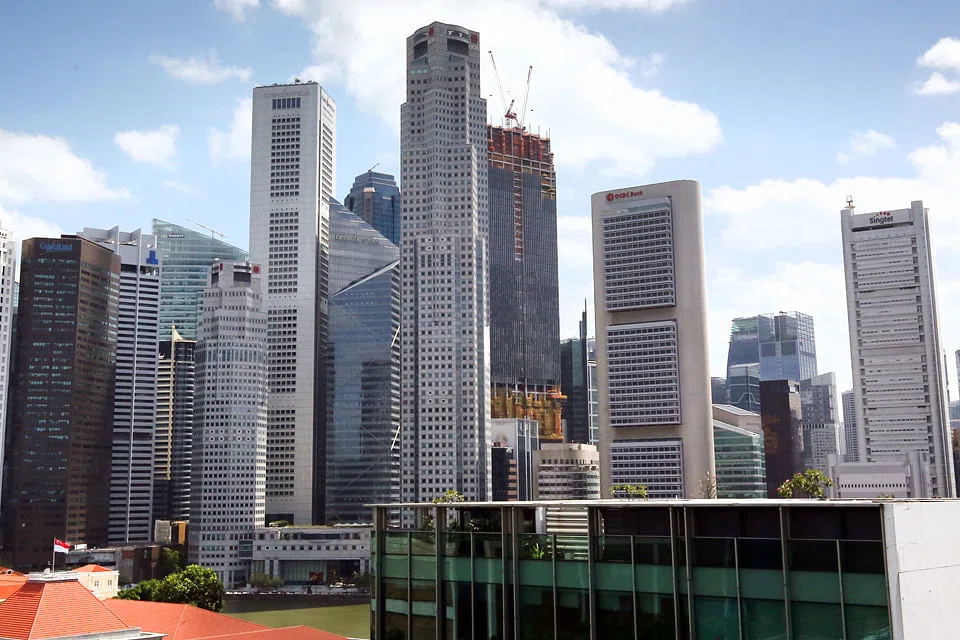
SINGAPORE is showing strong international leadership on its sustainability drive, with ambitious and concrete targets as part of a new initiative called the Singapore Green Plan 2030.
Unveiled at the start of February, the plan is spearheaded by Minister for Sustainability and the Environment Grace Fu, and is seeking input from citizens, businesses, and communities.
One of Singapore's key strengths has always lain in its financial services sector, which is world-leading and has helped establish the city-state as a global financial hub over many decades.
As it happens, with the world's focus turning to everything environmental, social, and governance (ESG)- related, financial institutions will have a key role to play in the sustainability push of the next decade.
This is about more than just the international move away from financing fossil fuel projects, namely coal.
Instead, banks, asset managers, stock exchanges, clearing houses, and brokers all have an opportunity now to leverage "greener" technologies across a whole range of areas.
USING GREEN TECH TO SOLVE A 50-YEAR-OLD PROBLEM
One of the most pressing problems in capital markets today is around trade settlement, as demonstrated so clearly in February when US-based broker Robinhood failed to meet its capital requirements with its clearing house.
This resulted in customers on the platform being unable to purchase shares of GameStop and some other volatile equities that were being driven up by a Reddit-led short squeeze.
Within 24 hours or so, Robinhood had raised an additional US$1 billion, which it summarily deposited with the clearing house to meet its capital obligations.
However, limits were still placed on customers' ability to buy GameStop shares, sparking outrage and ultimately leading to the Robinhood CEO (along with many others) testifying before the House Financial Services Committee.
So why did all this happen?
To put it simply, the global financial market's operating model has remained largely the same for the last 50 years, even as we have moved from a paper to digital era.
This means that trades still take at least two days to settle (known as T+2), despite there being the technology to offer same-day or near instantaneous settlements (T+0).
Since the 1970s the capital markets have been fragmented, with institutions operating on different systems and ledgers, and going through a linearly-dependent process where settlements take up to 14 days (depending on the asset class).
This has led to a situation whereby US$800 billion of capital is being locked up every single day in the international clearing system, including right here in Singapore.
On top of that, due to multiple layers of processing, nearly US$300 billion is being spent on transaction costs in a model that one would be hard-pressed to argue is efficient any more. In Europe alone, about 6 per cent of trades fail to settle, resulting in 35 billion euros in penalties annually.
This is all wastage - wasted time, wasted money, wasted carbon footprints - that we need to start addressing if we are to think seriously about a green and sustainable future for finance. Singapore needs to be involved in this discussion at a local as well as regional and international level.
The Robinhood-GameStop fallout was just the latest jolt to an old system, but it has made institutions sit up and again recognise the problem.
Perhaps unsurprisingly, they have all come to the same conclusion: blockchain technology, or distributed ledger technology (DLT) as it is also known, is an obvious solution.
Having run a large international financial institution here in Singapore, I know all too well about these challenges.
I am pleased to report that there are already companies in Singapore implementing these new blockchain technologies in commercial operations: the likes of PwC Singapore, Deutsche Bank, Eastspring Investments, BNP Paribas Securities Services, and Bursa Malaysia, to name just a few.
The Monetary Authority of Singapore (MAS) announced a green bond and loans scheme last year, as well as schemes to support fintechs providing green technology to the financial services sector.
Green finance will deliver more transparency, efficiency, lower carbon footprints, as well as impact monitoring capabilities throughout the financial services supply chain, which is why the regulator is supporting it.
Where DLT comes in is that it can allow financial institutions to employ effective ESG financing with smart contracts, manage usage of proceeds effectively, and have real-time tracking and impact reporting of green assets on a single immutable ledger.
A TURNING POINT
This year really does feel like a major turning point for ESG in finance overall, with the United Nations Climate Change Conference happening in Glasgow in the later part of the year.
We will see more lenders walking away from fossil fuel financing and investing in green alternatives, including the technology underpinning their own operations.
In addition, we will see the advent of a lot of green policies coming out of the back end of Covid as we try to rebuild jobs - already being called "green collar" jobs.
China, too, will approach its Belt and Road Initiative in a more sustainable way once the pandemic is out of the way.
Overall, green agendas in financial institutions are top of mind at the board level, and will start to be driven all the way down the organisation, balanced by wider economy government support.
If blockchain can contribute to rewiring and rebuilding the global financial services infrastructure to make it more efficient, faster, and cheaper - while at the same time making it more ESG-friendly and transparent - then we really ought to consider it as a green force in the future of finance.
- The writer is chairman of fintech firm STACS. He was previously CEO of Standard Chartered Singapore.
TRENDING NOW
Prima to move out of historic Keppel Road flour mill building in 2028

Grab CEO’s wife Chloe Tong on life with Anthony Tan and finding her purpose

OCBC sheds S$8 billion in value as shares close nearly 6% down; analysts cautious on banks
As Asia’s food delivery giants rejig the pie, who will win the market?

