

The impact of Covid-19 on the financial system
The pandemic may inflict long-lasting damage on the global economy while impacting the financial systems in Asia and beyond in both positive and negative ways.
THE Covid-19 pandemic is an unprecedented stress event that has wreaked havoc on businesses and household balance sheets worldwide. According to the IMF's World Economic Outlook (June 2020), global growth is expected to contract by 4.9 per cent in 2020. Of even greater concern is that there may be long-lasting economic damage to the global economy in terms of business investment, supply chains, labour force participation and human capital formation (so-called "economic scarring"). The pandemic has also impacted financial systems in Asia and beyond in both positive and negative ways.
THE GOOD: DIGITAL TRANSFORMATION IN FINANCIAL SERVICES
The containment and lockdown measures globally in response to Covid-19 has given a big impetus to e-payments and digital banking and financial services (lending, remittances, insurance, trade finance, etc) combined with new technologies such as AI, Blockchain and cloud computing. Digital functionality has been vital in ensuring that the financial system has remained resilient and that financial services have operated fairly smoothly in many countries. For instance, in Singapore with financial services having grown 5.9 per cent year-on-year in the first half of 2020, the sector has been one of the few bright spots in an otherwise gloomy economy which contracted 6.7 per cent in the same period.
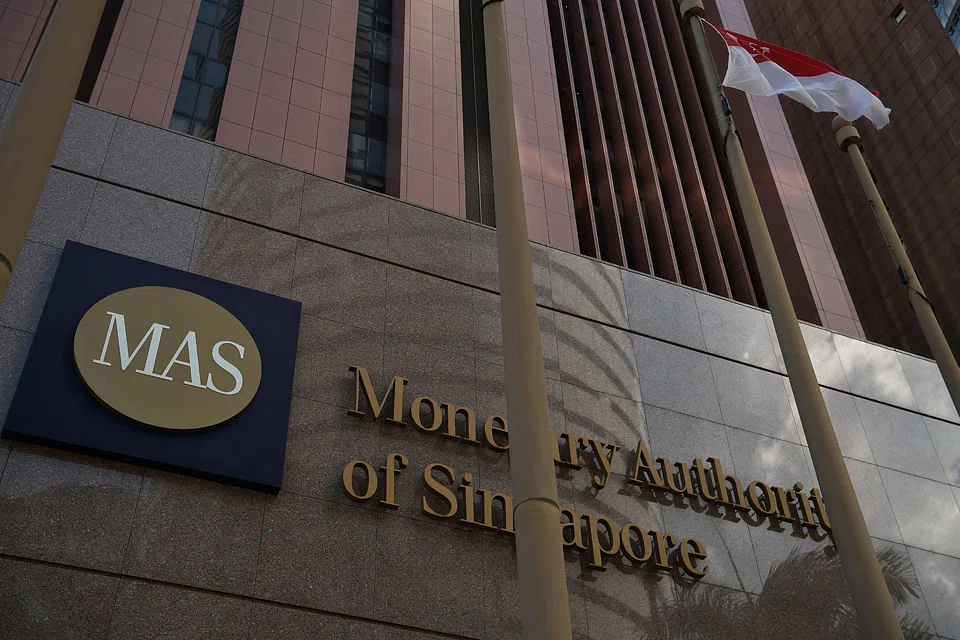
As Covid-19 has been a major catalyst that has caused a massive shift in consumer behaviour towards the digital world which is likely to be permanent, on the supply side the Monetary Authority of Singapore (MAS) has shown a strong commitment to scaling up digital finance in Singapore to prepare for a post-Covid-19 world while taking care to put in place safeguards to ensure the very real risks (such as operational resilience, fraud, money laundering, privacy and data protection violations, cyberattacks) are effectively managed.
For instance, apart from offering attractive Digital Acceleration Grants to promote digital adoption by smaller financial institutions and fintech firms in Singapore, the MAS has established the Asian Institute of Digital Finance (AIDF), which is a joint research institute among the MAS, the National Research Foundation (NRF) and the National University of Singapore (NUS) to promote and augment research and entrepreneurship, and develop and deepen local skills in digital financial services and fintech.
Singapore is also planning on offering up to five virtual banking licences - two full bank licences (DFB) and three wholesale bank licences (DWB). These virtual banks, along with the digital transformation ongoing in more traditional brick-and-mortar banks, ought to give a further impetus to the financial sector.
THE BAD: RISKS TO THE BANKING SYSTEM
On the negative side, the rising bankruptcies among businesses and households could have negative repercussions on the banking and financial system. This is especially so as many central banks around the world have infused massive liquidity to keep their respective financial systems and businesses afloat and have also encouraged financial institutions to offer debt moratoriums and defer loan repayments for individuals and businesses.
In Singapore, the MAS too has offered temporary regulatory forbearance to financial institutions to assist domestic economic recovery. This, along with expected churn of domestic firms and reallocation of labour across sectors, will inevitably lead to bankruptcies and rising loan delinquencies.
Given expected deterioration in asset quality as well as compression in net interest margins, while financial institutions in Singapore will not emerge from Covid-19 distress unscathed, it is generally acknowledged that they have been well-regulated, are resilient with strong capital and liquidity buffers, and are generally better placed than most of their global counterparts to withstand the pandemic-induced shock and accompanying deep recession. In addition, given the fiscal prudence of the government, it has been able to take on most of the risks on loans by domestic banks to SMEs by being willing to accept 90 cents of each dollar of possible loan loss. While this generosity ought to help shield domestic financial institutions from sharp losses, one has to keep an eye on the fiscal consequences of this policy.
Post the Global Financial Crisis (GFC) of 2007-2008, the global banking system has been restructured and is in much healthier shape than it was pre-GFC, with strong capital and liquidity buffers. However, of particular concern are the Asian giants of China and India, both of which entered Covid-19 with concerns regarding corporate governance and underlying malaise in segments of the formal banking system and especially their respective shadow banking systems and non-bank financial institutions (NBFCs).
The Covid-19 crisis has amplified these vulnerabilities and will necessitate painful financial sector restructuring (including recapitalisations and cleaning up non-performing loans) over the next few years once the pandemic is contained and policy stimulus is gradually unwound. Delays in cleaning up the financial sector could act as a severe drag on economic activity. While India is particularly vulnerable given acute lack of fiscal space and the fact that many cities and states in the country continue to struggle to control the coronavirus outbreak, one can never be too confident about China given the opacity of its financial system and possible hidden land mines.
Within Asean, the ratings agency S&P in an April 6, 2020 report has also highlighted financial stability concerns in Indonesia. Indeed, Finance Minister Sri Mulyani Indrawati, who chairs the Financial System Stability Committee (KSSK), has cautioned that given the acute slowdown in the domestic economy and expected deterioration in corporate credit quality and rising bad loans, the "coronavirus poses a serious threat to the economy and also to the financial system stability".
THE UGLY: COMPROMISING LONG-TERM MACROECONOMIC STABILITY
Since the early 1990s, central bank independence had been widely accepted as one of the reasons behind the Great Moderation of non-inflationary global growth which came to an abrupt end with the GFC. The primary goals of central banks in most emerging economies have been to focus on (a) ensuring inflation is kept at the target rate; (b) maintaining financial stability including the smooth functioning of the national payments system; and (c) managing excessive exchange rate volatility. By and large most Asian central banks have done so quite effectively since the 2000s, hence contributing to the economic successes of the region which has led global growth until the last few years.
While unconventional monetary policies during the GFC were limited to advanced economies, many emerging economies have also undertaken massive asset purchases this time around. Some, like Indonesia and the Philippines, have already taken steps towards partial debt monetisation (policymakers in the former prefer using the diplomatic term "burden sharing").
While policy coordination to manage ongoing economic upheavals is positive, there is disquiet in some quarters that if central bank independence is not adequately safeguarded and its goals become subservient to that of the government, a populist government could force the central bank to undertake policies inconsistent with macroeconomic stability such as inflating away the debt. Given the escalating debt problem globally, this is not an implausible concern which would in turn lead to macroeconomic instability, currency crises and prolonged slow growth.
While the nature of the ongoing crisis is unique and some degree of policy unorthodoxy is necessary, it is important that countries in Asia and elsewhere do not forsake the policy and institutional frameworks within which their central banks have successfully operated as this will have a lasting negative impact on the economy well beyond the pandemic.






