

The Putin referendum will affect not just Russia, but the world
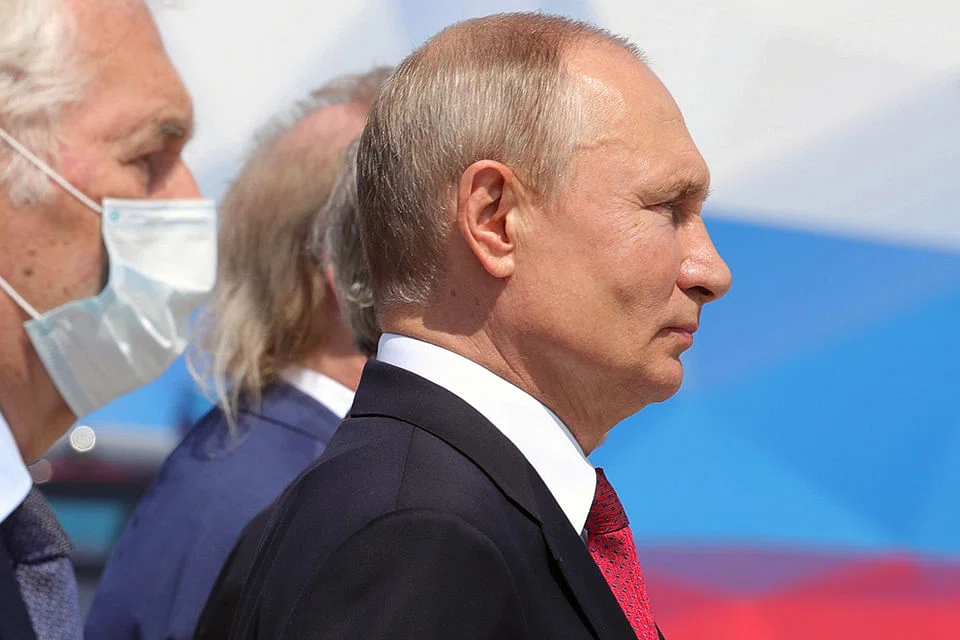
VLADIMIR Putin made his first public appearance over the weekend after more than a month of lockdown asserting that an "absolute majority" of Russians back his controversial plan to change the constitution to extend his term in the Kremlin. While the ballot is primarily being seen through the lens of Russian domestic politics, it could have profound implications for international economics and politics too, especially given his growing closeness to China.
The Russian president is widely criticised abroad, especially in the West, yet he remains popular in much of Russia. Next month's vote could therefore clear the way for him to stay in power till 2036 - much longer than other major leaders currently on the world stage, with the potential exception of Chinese President Xi Jinping who is becoming his closest international ally.
Mr Xi was given a green light to remain in power for life in 2018 after the National People's Congress approved the removal of the two-term limit on the presidency which has been in place since the 1990s. He has therefore amassed political power in his country the likes of which has not been seen since Mao Zedong.
For Mr Putin to stay in power potentially into the 2030s also presumes that he will remain healthy enough to stay in office into his 80s, and that his popularity endures. That is far from a foregone conclusion especially if his political luck finally goes south, fuelled by potential foreign policy misadventure, or domestic economic travails.
Indeed, it is not even certain that he will win next month's referendum. If such a shock does happen, major new uncertainty will be injected into Russia's outlook post-2024.
This is because Mr Putin would, in this scenario, be unlikely to simply step back passively in 2024 and allow free and fair elections. This is not least because any genuinely new administration might ultimately launch significant retrospective probes into his many years of power.
It is therefore possible that should he surprisingly lose the referendum, he would seek to groom a trusted successor to hand over power - potentially under terms which could see him seeking continued influence over power directly or indirectly. One variant of this scenario came in 2008, when he served as prime minister under Dmitry Medvedev's presidency for four years.
Pre-pandemic, the forthcoming referendum was the centrepiece of Mr Putin's political calendar this year, but had to be postponed from April as Covid-19 cases surged. However, he is now doubling down on the July date, and has rescheduled a massive World War II victory anniversary military parade in Red Square, due to be held last month, for June 24 to whip up national pride in the days leading up the ballot.
The constitution currently prohibits any person being elected more than twice consecutively so, as of now, Mr Putin is required to step down at the end of his latest term in 2024. Already his period in office has been extraordinary, with him serving as prime minister or president since 1999, a longer period at the top than all the Soviet Union's supreme leaders, except Joseph Stalin.
The fact that Mr Putin could, plausibly, remain in office well into the 2030s, besting even Stalin's approximately three decades in office, underlines his remarkable grip on power over 20 years after succeeding Boris Yeltsin. In so doing, he has proved skilled in tapping into the post-Cold War national mood by forging a new sense of patriotism fuelled, during much of the period, by a growing economy.
This theme of national unity, and seeking of global respect, is central to his continued appeal. It is no coincidence that he has engineered the referendum soon after the anniversary of the Soviet Union's victory over Nazi Germany. Much of his mission since assuming power has been trying to restore Russia's geopolitical prominence and prestige through gambits like the annexation of Crimea and the Syria intervention.
Yet, while this has - so far - generally played well domestically for him, it has resulted in frostier relations with the West. A key question remains in coming years how the relationship, specifically with the United States, will fare. Here, much may depend on the outcome of November's US presidential election.
Mr Putin and US President Donald Trump had hoped for a warming in relations. Yet events during the first three years of Mr Trump's presidency diminished, at least for the foreseeable future, the window of opportunity that may have existed for this to happen.
Here it is not only the fact that the Trump team had been under significant pressure over the congressional and Federal Bureau of Investigation (FBI) probes into alleged collusion with Moscow during the 2016 US presidential campaign, but also new US sanctions that have made relations trickier. Moreover, there have been significant US-Russia foreign policy tension, including the Middle East.
Take the example of the spike in tension after US missile strikes targeted at Syria in 2017 following an earlier poison gas attack committed by the Damascus regime. Then-US Defence Secretary James Mattis and then-Secretary of State Rex Tillerson were forceful in their criticism of Moscow at the time, with the latter saying that "either Russia has been complicit or simply incompetent" in Syria. The spike in Washington-Moscow tension even saw then-Russian Prime Minister Medvedev saying the two countries were "one step away from war" and had "totally ruined" relations.
With Moscow's relationship with the West so chilly, Mr Putin has increasingly asserted Russian power in other areas of the globe, from the Asia-Pacific to Africa and the Americas. Take the example of the Far East, where he has met frequently with Japanese Prime Minister Shinzo Abe to try to foster joint economic activities in the disputed islands off Japan's northernmost main island of Hokkaido.
Yet, it is Mr Xi with whom the Russian president has formed his strongest international relationship on both economic and political fronts. Here, it is not just growing bilateral warmth driving relations, but also the current frigidness of both of their ties with the US.
In this context, both Beijing and Moscow are therefore working more closely together not just to further bilateral interests but also to hedge against the prospects of a continuing chill in US ties.
This underlines why the implications of the referendum go well beyond the Russian domestic political landscape. With Moscow's ties with Washington and the wider West so frosty, a Putin presidency that extends well beyond 2024 may well see him opting for an even closer economic and political relationship with Beijing, especially given his rapport with Mr Xi.
TRENDING NOW
Far East Organization’s The Serra Residences sells less than a quarter of units released at average S$3,460 psf
A bumpy road ahead for some of Singapore’s fresh graduates in their job search
Philippine power giant First Gen rebuffs foreign offers, plans up to US$2.6 billion in expansion
No chicken feed: How Malayan Flour Mills built an empire from flour to fowl

