

Time for Singapore Savings Bonds to reach a larger audience

Tay Peck Gek

WITH a first-year interest rate of 2 per cent and a 10-year average rate of 3 per cent - a record high - the August tranche of Singapore Savings Bonds (SSBs) will almost certainly be oversubscribed. It is a shame, however, that more Singaporeans aren’t applying for the issues.
The July tranche, with a slightly lower rate of 1.69 per cent for the first year and 2.71 per cent on average over 10 years, received applications to the value of S$1.3 billion for an issue of S$600 million.
Those who applied for S$18,000 or less would have received the amount in full as long as they have not exceeded the S$200,000 limit across tranches. Among those who applied for more, 17 per cent were allotted an additional S$500 on a random basis.
The keen interest in recent tranches of SSBs is understandable. Presently, fixed deposit rates offered by banks for a tenor of 1 year are mostly, if not all, under the rates offered by the July and August savings bonds, making the government security appealing.
Yet, only 120,000 individuals were holding over S$5.7 billion worth of SSBs as at the start of 2022.
Given the rising interest rate environment, it is time that more local investors gained a deeper understanding of this fixed income instrument.
A retired colleague thought this bond was traded, and was concerned about interest rate risks. Bond prices tend to fall as interest rates rise. Meanwhile, my sister and her friends in their 40’s - either university- or polytechnic-educated - knew little about SSBs. They chose to park their holiday funds in a fixed deposit with a bank, waiting to roll it over till their trip next November.
Of course, to each his own. But perhaps more would be interested if they understood the product.
SSBs were launched in 2015 and there is an issuance every month at interest rates pegged to the daily average yields of the Singapore Government Securities the month before.
While the instrument is labelled a bond, SSBs are more similar to savings deposits (not even a fixed deposit, given there is no lock-in period for SSBs) than bonds. The instrument offers interest rates that are specified at the time of application and locked in for 10 years, but investors are free to withdraw or redeem the funds at any time during the 10-year period.
Withdrawals in multiples of S$500 or the entire principal sum before maturity do not see any accrued interest being forfeited, and the remaining funds continue to earn interest.
Because SSBs are not traded, your capital is not affected by interest rate movements.
In fact, investors would need approval from the Monetary Authority of Singapore to transfer it or pledge it as collateral.
While banks here have a very low default risk, the SSBs issuer, the government, has an even better credit profile.
SSBs are not without drawbacks. For one, there is no option for investors to reinvest the accrued interest should they have no need for the interim payouts. Granting this option would better meet the objective of SSBs as a long-term savings product.
Also, redeemed funds are not paid out instantly but by the second business day of the following month.
And, as recent tranches in which applications exceeded issuance size showed, investors don't get to place as much as they would like, even if they are well within their limits of S$200,000 per person across all tranches.
Upon application, the funds would be deducted from one's bank account or earmarked in one's Supplementary Retirement Scheme account - without accruing any interest in the meantime. Any unsuccessful application funds would be refunded after the allotment exercise at the end of the month is completed, constituting an opportunity cost.
One therefore might want to be tactical in the application amount, using the cut-off level of recent issues as a guide, especially since the Monetary Authority of Singapore (MAS) in 2018 stopped announcing the estimated amount it is issuing for the year. That practice would have given investors a guide to pace their placement sums.
Applicants also need to have an individual Central Depository (CDP) securities account to hold the bonds. This might be one of the potential hurdles for investors.
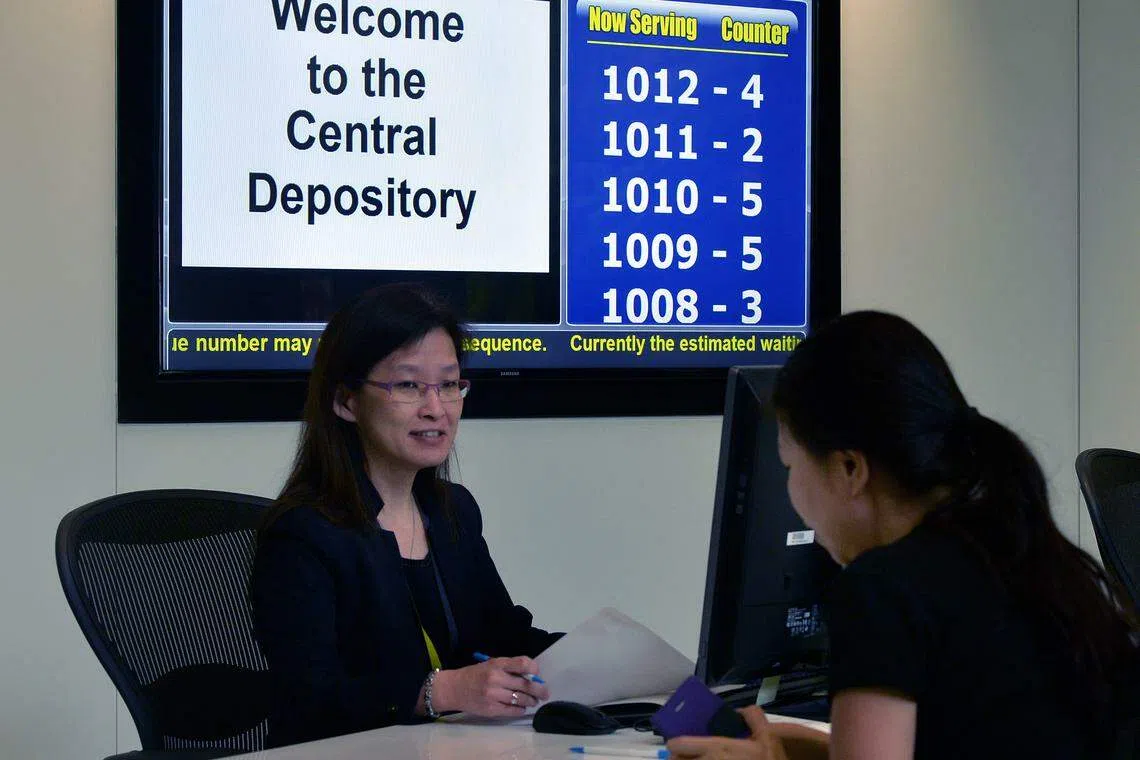
While opening a CDP account is not difficult, a substantial proportion of the public, especially those who are less financially savvy and are seeking to park their funds in a bank deposit account, might be put off by the requirement.
But this group of savers is also the group that SSBs would be useful to. Assuming the profile of the investors and investment sizes has not changed much from what was disclosed in May 2020, the biggest group would be those above 50 years old and nearly half of the total applications for S$10,000 or below.
Ironically, it is somewhat easier for investors to participate in riskier investments such as stocks, unit trusts, exchange-traded funds and traded bonds than in SSBs. This is because many financial institutions allow retail investors to buy these instruments even without a trading or CDP account, and with a very low minimum investment amount.
Perhaps MAS could go on an education drive to promote SSBs and correct any misconceptions there may be, and also use the opportunity to help interested savers open a CDP account on the spot.
Alternatively, waive the requirement for a CDP account. After all, SSBs are neither tradable nor easily transferable. For Singaporean investors who know how to use a browser, they already can use their SingPass to check their holdings on MAS’s My Savings Bonds Portal.
TRENDING NOW

Prima to move out of historic Keppel Road flour mill building in 2028

Temasek-related Azalea, SeaTown, Seviora Capital to merge in 2027
Family offices see more tailored products, leverage ‘collective firepower’ for direct deal access

Singapore room rates soar, but hotels seeing mixed demand from F1 race and events

