

Trump has sold off America's credibility for his personal gain
From China to Ukraine, the US president has acted at odds with American foreign policy. Imagine what other American interests he could trade away with four more years.
 Add BT as a preferred source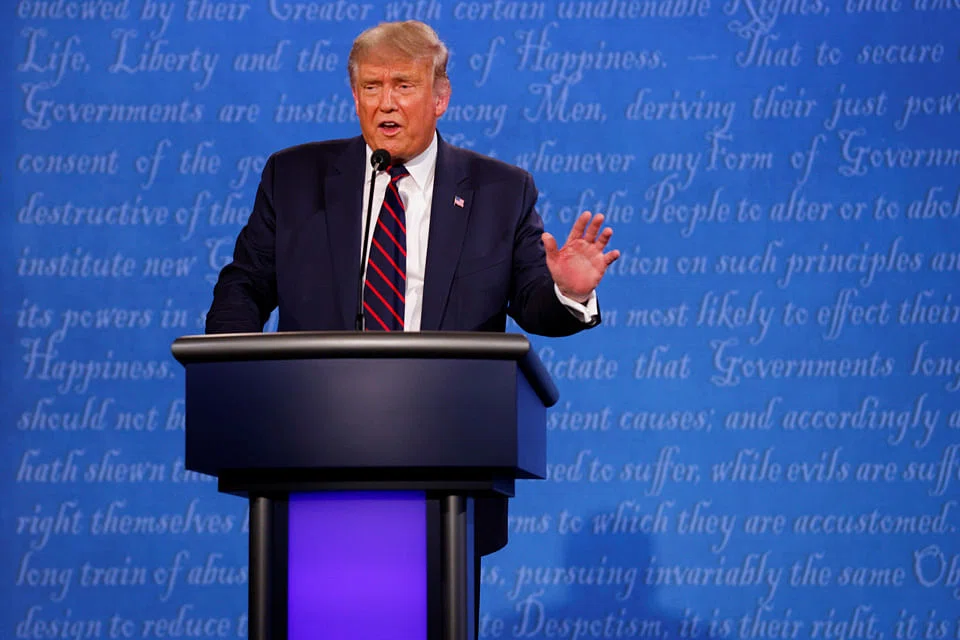
DeeperDive is a beta AI feature. Refer to full articles for the facts.
A YEAR ago, the world read a record of a phone call in which US President Donald Trump pressured Ukraine's government to provide dirt on his political rival, Joe Biden.
The transcript of that call, along with other evidence, made clear the president and his associates asked officials in Kyiv to deliver on Mr Trump's political interests in exchange for American military aid needed to defend Ukraine. At the end of last year, the president was impeached for that abuse of power.
This was not a unique instance of Mr Trump's personal priorities corrupting American foreign policy.
As the 2020 election grew closer, the president increasingly ignored the policies developed by his own government, and instead pursued transactions guided by self-interest and instinct. The result is a patchwork of formal policies and informal deals that has undermined America's interests and credibility.
But Mr Trump's sloppy management matters less than its result: No one can trust American foreign policy right now.
Unfortunately, trust is the coin of the realm in national security. One of us, Lieutenant-Colonel Alexander Vindman, served in the military for more than two decades, including 19 months on Mr Trump's national security staff. The other, John Gans, served at the Pentagon and wrote a book on how presidents from Harry Truman to Mr Trump have made national security decisions.
Navigate Asia in
a new global order
Get the insights delivered to your inbox.
We know what it is like to try to give advice and to be charged with carrying out policy. And we have both seen - in history and in recent years - what happens when decision-making becomes erratic and institutions break down.
Trust is why government officials have historically spent so much time around conference tables and in video tele-conferences developing consistent, strategic policies. For a while, these practices continued under Mr Trump. Career military officers, diplomats and members of the intelligence community worked with his political appointees to craft decisions and documents.
But increasingly, the president and his loyalists in and out of government undermined this process with winks, nods and WhatsApp messages, seeking side-transactions that prioritise personal benefit, break norms and invite corruption.
This is what happened with Ukraine. In March 2018, Mr Trump issued an executive order that affirmed that it was the policy of the United States to stand by Ukraine and against any efforts that "threaten its peace, security, stability, sovereignty and territorial integrity".
But when he picked up the phone last July, he was not focused on the stated policy but on his own re-election. The deal he looked to close on the phone was the culmination of a scheme cooked up by Russian agents and Trump loyalists. The result: Too many in Washington and Kyiv were left trying to figure out what the US policy was.
BEHIND CLOSED DOORS
It is not just Ukraine. On China, Mr Trump undermined the pressure of his own so-called trade war by pleading with President Xi Jinping behind closed doors to purchase commodities in critical electoral districts.
Remarkably, Mr Trump admitted as much last month, saying: "China has been buying a lot of - a lot of things, and they're doing it to keep me happy." His freelance dealings with Russian President Vladimir Putin, such as invitations back into the Group of Seven and for a visit to the White House, have compromised American and Nato responses to Russian aggression.
In the home stretch before the election, Mr Trump has overridden many of the remaining safeguards against bad deals, and ignores his professional advisers even more often. He is pulling out all the stops to rack up last-minute wins before the November election.
The president's deals - American interests be damned - appear to have become the point alone. Unsurprisingly, other nations have taken notice, and some have been opportunistic enough to extract concessions before granting him the photo ops he so desperately desires.
Last month, Mr Trump brought the Kosovar and Serbian presidents to the White House to normalise economic relations, a long-time objective on both sides of the Atlantic. Unfortunately, that was not the deal signed - a moment best captured when Mr Trump surprised Serbia's president, Aleksandar Vucic, with the news that his country's embassy was moving to Jerusalem (a move Mr Vucic later walked back). Since that moment, and before the ink dried, much of that deal had unravelled.
Mr Trump also applied pressure to get the leaders of Israel, Bahrain and the United Arab Emirates to the White House for an agreement that many experts believe did little to realise the regional "comprehensive peace agreement" promised by the administration's official National Security Strategy.
Instead, the engagement offered little more than a photo opportunity to help Mr Trump's re-election and may have undermined future efforts to achieve lasting and meaningful results in the region.
Mr Trump's predecessors have also, on occasion, made decisions and deals that served their political interests. But those deals typically aligned with America's stated policies and its interests. The problem is that, too often, Mr Trump's deals do not.
And that is just the deals we know about. Few people have any real idea of what is being promised in other calls and meetings. We may never know. This inconsistent, incomplete and inscrutable patchwork of foreign policy is not just inefficient, it risks disastrous mistakes by the US, and miscalculation by allies and adversaries alike.
It also provides a potential opportunity for the sort of ethical misconduct that worries many about the debts and dealings exposed in new reports about Mr Trump's taxes.
No one, not even he, can say with confidence what American foreign policy is for any given issue these days. Such uncertainty is a source of stress and friction, leaving American military personnel, diplomats and intelligence officers not only out of the loop, but also out of step with each other and with allies.
After almost four years of this uncertainty, foreign government representatives simply shortcut the system and look for a White House back channel to figure out if the US will zig when it is supposed to zag.
SHEDDING LIGHT
Even worse, the uncertainty means that Americans themselves cannot know, or trust, all the deals being made in their name. Although Mr Trump will spend the remaining weeks of the campaign talking about some deals and denying others, the true extent of his corruption of American foreign policy will not be known for many years. As Americans go to the polls, they may not understand what each of those deals includes. But they should know how and why he is making them.
If Mr Trump manages to stay in the White House, he will believe he has a mandate for more of this kind of deal-making. Re-election will remove the last remaining guard rail against the corruption of American foreign policy and drive anyone who seeks to avert disaster underground or out of government.
It is impossible to predict the damage to America's interests, power, credibility, relationships and reputation. But there is one thing to trust: Over four more years, there is little Mr Trump would not deal away. NYTIMES
Decoding Asia newsletter: your guide to navigating Asia in a new global order. Sign up here to get Decoding Asia newsletter. Delivered to your inbox. Free.
Share with us your feedback on BT's products and services
TRENDING NOW
‘Boring’ is the new black: The stars are aligning for a Singapore stock market revival

Near sell-out launches in March boost developer sales to 1,300 units after four slow months

China pips the US if Asean is forced to choose, but analysts warn against reading it like a sports result
Genting Singapore’s Lim Kok Thay receives S$7.5 million pay package for FY2025

