

US Treasury 'monitoring list': The Singapore puzzle
From some angles, it is hard not to deduce that the report is shooting from the hip, at the risk of being wide of the mark and arguably casting shadows on its motivations
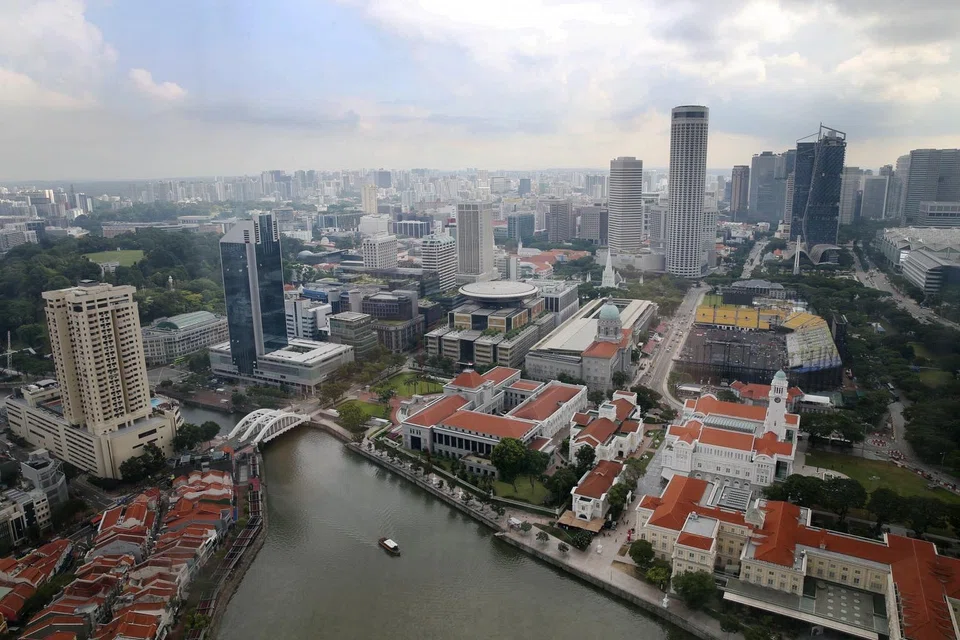
LAST week, the US Treasury placed Singapore on its so-called "Monitoring List" for currency practices of major trading partners, implicitly flagging the Republic as a potential currency manipulator.
This is the first time that Singapore has been named since the 1989 inception of the US Treasury's bi-annual report to Congress, and is puzzling given good US-Singapore trade (and strategic) relations as well as Singapore's trade deficit with the US.
Technically, economies risk being placed on the currency manipulation watch list if two of these three criteria of the "2015 Act" are met :
i) bilateral merchandise goods surplus of more than US$20 billion against the US;
ii) enduring current account surplus of more than 2 per cent of GDP; and
iii) "persistent, one-sided (currency) intervention".
Singapore's inclusion is premised on the US Treasury assessing that the republic is culpable for two of these - namely, "excessive" current account surplus and "persistent, one-sided" FX intervention.
Hence the temptation to instinctively allude to Singapore's bilateral trade deficit against the US - the only country on the "Monitoring List" and about the only one in most of Asia to import more from, than it exports to, the US - being a mitigating factor, although admittedly not absolution.
Nonetheless, even without relying on Singapore's position as a net importer of US goods, the US Treasury's conclusion is questionable, if not outright misguided. At the very least, it is sorely lacking in nuance and context.
And from some angles, it is hard not to deduce that the US Treasury's report is shooting from the hip, inevitably at the risk of being wide of the mark, and arguably casting shadows on its motivations.
Casting the net wider
For a start, with effect from this report, the US Treasury is casting a significantly wider net on its trade partners. In the past, only the 12 biggest trading partners of the US were subject to the "2015 Act", and Singapore (along with all other Asean economies) was not liable. But the US has now revised the coverage of the Treasury Report to include trading partners with whom the total bilateral trade exceeds US$40 billion. And in so doing, it has placed 21 US trade partners, covering 85 per cent of all US goods trade, under scrutiny.
What's more, the current account surplus threshold was lowered from 3 per cent of GDP to 2 per cent, while persistent FX intervention window of reference is narrowed from eight months to six months. In concert, tighter thresholds and wider scope of the "2015 Act" appreciably lower the bar for being hauled in and hung up for "currency practices".
And that begs the question of intent. In particular, whether the criteria were revamped for the purpose of currency (pun not intended) or this is a thinly veiled exercise in "weaponising" the US Treasury Report, fit for the purposes of a more pugilistic "America First" trade policy that's bent on zero-sum views of global trade. In other words, the motivation of trade hawks may be skewing biases and outcomes of the US Treasury report, especially in the context of potentially levying tariffs on self-declared currency manipulators.
Admittedly, intent is not observable. And needless to say, the US can, and will, insist that the wider net and tighter thresholds are justified. And it will be futile to protest these shifting goalposts, as the conditions of the 2015 Act are unilateral rather than a consensus among trading nations.
In any case, Singapore's ability to appeal against unfair shifting (or narrowing) of US Treasury goalposts is compromised by a current surplus of nearly 18 per cent of GDP - far above global norms and benchmarks. At first blush, this means that Singapore is at least partly liable for justifiable criticism. Or is it?
In this case, it is redemption, not the devil, that is in the details. The fact is, even the US Treasury report concedes that the unique structural factors of a small open economy, which is a financial hub, with large exports (including oil), high savings rate and rapid ageing "contribute to the external imbalance". The bone that the US Treasury report picks, though, is that Singapore needs to undertake structural reforms to run down savings, widen safety nets and consume more. Admittedly, the assessment is not unjustified; but it lacks perspective and suffers from static analysis that disregards demographic shifts with the passage of time.
In fact, criticisms of Singapore's large current account surplus ignore the fact of chronic deficits in excess of around 10 per cent in its first 20 years (1965-84); a small and open economy with a high value-add exports sector (including regional headquarters status); and crucially, expectations of an inevitable drawdown in savings as retirement needs of an ageing population come home to roost. And to hastily run down savings before that borders on irresponsibility.
But the worst of the US Treasury's misguided criticism must be the allegation that Singapore engages in "persistent, one-sided (currency) intervention".
Unique monetary policy
The fact is, to surmise that Singapore "merit(s) close attention to (its) ... currency practice and macroeconomic policies" despite acknowledging Singapore's "uncommon" monetary policy based on exchange rate reveals either a lack of appreciation for the mechanics and principles of Singapore's unique monetary policy or simply exposes a cavalier disregard for currency market volatility from event risks (some of which are ironically triggered by the US), which inadvertently necessitate that responsible central banks dampen excessive market disruption.
Above all, the fact that the default policy stance for the Monetary Authority of Singapore (MAS) is an appreciation trend of the trade-weighted exchange rate, in pursuit of price stability, categorically discredits any implied allegation of mercantilist currency practice.
A further nuance for the connoisseurs is that the trade-weighted Singapore dollar has persisted at the strong end of the bands for the last 6-12 months, reinforcing the point that the MAS is above manipulating the currency for trade gains. The evidence is clear even as the US Treasury report obfuscates and distorts.
Any country put on the "Monitoring List" will remain on it for at least two consecutive reports (one year). The silver lining is that the US Treasury "welcomes" MAS' pre-existing plans to periodically release intervention data from 2020.
The hope is that with data and context, the US Treasury will have more straightforward evidence to drop Singapore from the list. However, at the same time, the US Treasury report may just be a reflection of increasing US trade aggression and potentially a sign of more to come.
TRENDING NOW
Stocks to watch: Keppel, Seatrium, OUE Reit, Wilmar and more

Hidden value: Why SGX consumer stocks deserve a closer look

Keppel’s RigCo, Seatrium to complete four offshore rigs in deal worth over S$500 million

Decision fatigue, complexity stop people from investing despite growing retirement needs: BlackRock

