Video gaming can benefit students: study
It is not inherently bad if treated as a form of leisure activity that can help young people to de-stress during the weekends.
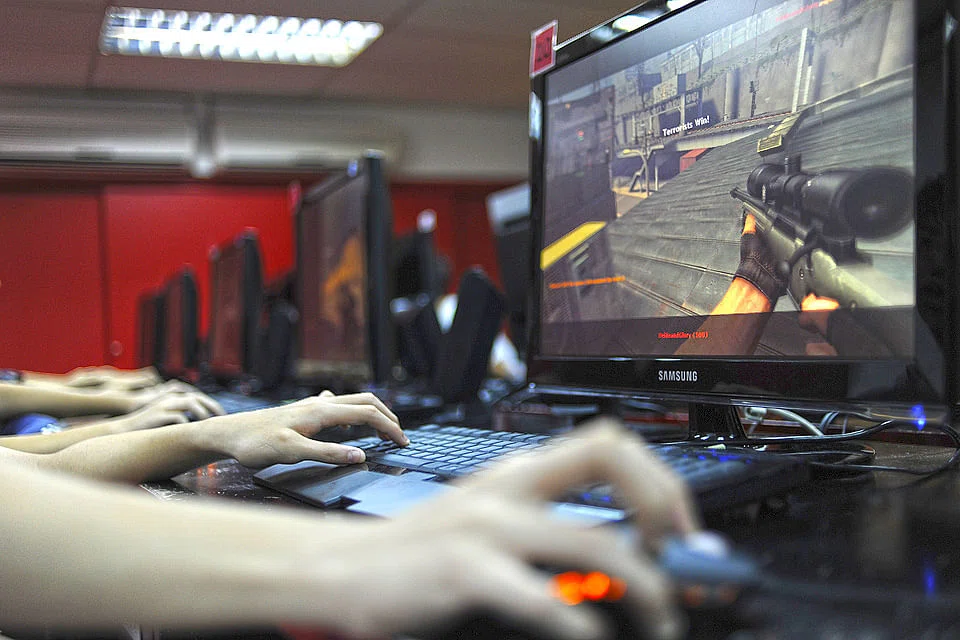
VIDEO gaming has undeniably become one of the most popular activities among adolescents worldwide. The ubiquity of high-technology smartphones and tablets allows for video games to be easily accessible and no longer confined to just arcades and home consoles. In the US for example, research has shown that about 83 per cent of children and adolescents spend a substantial amount of time playing video games regularly.
Video gaming frequency is even higher in Singapore. A study of 3,000 youths by National Institute of Education in 2010 found that Singaporean adolescents spend on average 20 hours per week on gaming. This is in stark contrast with an average of 13 hours per week among American youth.
Due to its widespread availability and popularity, it is unsurprising that video gaming has become a major source of concern for parents and educators. Many fear that playing video games might have adverse consequences on the development of children's cognitive abilities.
Although video gaming has a bad reputation among parents and educators, there is no empirical evidence to support the idea that video gaming impairs children's cognitive development. In reality, the opposite has been found.
A number of researchers from Germany, the United States, the United Kingdom, Switzerland, and Singapore have found potential cognitive benefits through video game training. In these studies, non-video-gamers who were trained to play video games for a substantial period of time had better cognitive abilities over time than those who did not undergo video game training.
These researchers have argued that these cognitive benefits of video gaming arise from the challenging and complex nature of video games, which necessitate the execution of various cognitive processes, such as strategic decision-making, coordination of multiple task demands, creative thinking, planning, and goal prioritisation, all within stringent time constraints. This in turn can help gamers to develop problem-solving skills and prepare them for quick and timely decision-making needed for success in the real world.
Consistent with these findings, in one of our previous studies published in the journal, Attention, Perception, & Psychophysics, we found that young adults who started to play video games actively at an earlier age had better multitasking and mental coordination than those who do not play video games or those who just started to play video games recently.
These research findings on the potential cognitive augmentations proffered by video gaming have been widely reported in press and Internet, such as The Wall Street Journal, The New York Times, BBC, and Scientific American.
However, the findings should not be taken literally. For example, children may use this findings as an excuse to play video games rather than revise for their exams.
We would like to caution that such cognitive benefits of video gaming may not unequivocally translate to better academic achievement.
To this end, we recently published a paper to clarify the link between video gaming and school performance. The study was conducted with careful statistical analyses of three independent large-scale datasets of about 30,000 adolescents from eight graders to twelfth graders in the United States.
In this study, we addressed limitations from previous similar studies to provide a clearer picture of the link between video gaming and school performance.
For example, some studies did not take into account demographic factors such as socioeconomic status and family composition. Without considering such demographic variables, the positive link between frequency of video gaming and school performance could be simply due to the possibility that only parents from well-to-do families can afford video games for their children and, at the same time, enrol their children in enrichment programmes to aid in school performance.
Most of the previous studies also did not make a distinction between playing video games during weekdays and doing so during weekends, which could have differential effects on academic performance.
For example, weekday video gaming may be more detrimental than weekend video gaming, because the former likely displaces time that could be dedicated to school work.
In the current study, we addressed these limitations with more rigorous statistical analyses.
Intriguingly, we found that weekday and weekend video gaming had contrasting associations with academic performance, which have important implications toward understanding the academic consequences of video gaming.
Specifically, adolescents who frequently play video games on weekends are more likely to perform better in mathematics, reading and science, regardless of their gender, socioeconomic status, home language, and family composition. In contrast, adolescents who frequently play video games on weekdays are more likely to perform poorer in the same subjects.
These findings are noteworthy because they suggest that the answer to the debate on the possible detrimental effects of video gaming is not a simple yes or no. Rather, it is contingent on when video games are played.
The positive relations between weekend video gaming and academic achievement suggest that playing video games may not necessarily lead to poorer school performance.
Perhaps the benefits could simply be due to the fact that weekend video gaming serves as a rewarding and enjoyable leisurely experience that can de-stress, energise, and motivate students to focus on their academic goals during the weekdays. Alternatively, it could be that video gaming improves school performance via enhanced cognitive functions. Regardless, it is clear that video gaming is not inherently bad if it is treated as a form of leisure activity during the weekends.
Negative effects
However, the negative associations between weekday video gaming and academic achievement imply that despite the potential cognitive benefits of video gaming, they may not offset the negative effects of displacing time that could be allocated to school work. It seems that the detrimental effects of interrupted school work during weekdays on academic performance outweigh any potential benefits that video gaming can bring.
From these findings, it is reasonable to conclude that uncontrolled and excessive video gaming, particularly during weekdays, is detrimental to academic achievement among children and adolescents.
Thus, active parental involvement is a vital aspect in ensuring healthy and age-appropriate video gaming habits in children and adolescents.
Due to the unprecedented popularity and availability of video games, it may be too difficult for parents and teachers to ban their children from video gaming entirely. In fact, some studies suggest that the practice of a complete ban on video gaming among children is less likely to be successful and more likely to backfire.
Instead, parents and educators should consider making use of video gaming as an effective reward system to encourage other healthy activities, such as exercising, proper sleep, and school responsibilities. Moreover, parents can even employ video gaming as a means to connect with their child and to facilitate quality parent-child bonding. This is corroborated by past research which has shown that families that engage in video games together have better parent-child relationships.
In general, video gaming can be seen as another form of entertainment like watching TV and reading comic books. Like any other hobby for children and adolescents, moderation coupled with active parental involvement is always the best way to go.