

Viewing creativity through the lens of the pandemic
In the face of the chaos arising from the pandemic, the world is now predisposed to a radical approach to innovation. The gravity of the situation draws businesses to take the leap of faith and innovate where they would previously be less daring.
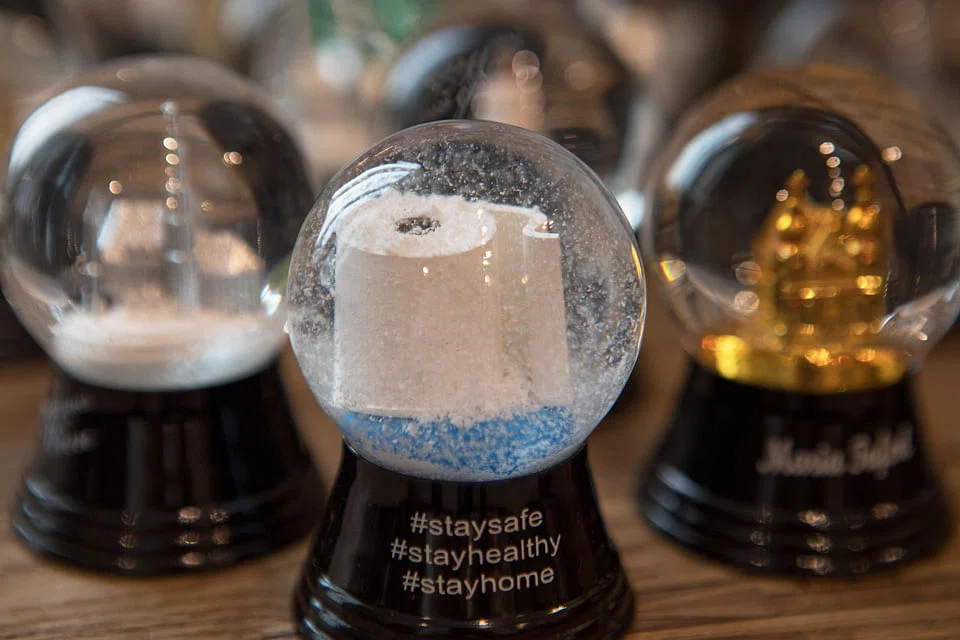
THE Covid-19 pandemic has brought a turbulent change to human life. Amid the overwhelming negative outcomes, the crisis also saw many people and organisations respond with rapid innovation. I turn to psychological research to examine what propels or hampers creativity amidst the pandemic.
When prevention may not be better
One theory is that major crises will impinge creativity because it induces a prevention mindset.
In general, people tend to have a promotion or prevention mindset, but may switch between them depending on situational forces.
The promotion mindset is one that eagerly pursues gains and advancement. It is unfazed by potential losses and is excited to take opportunistic risks when available. This mindset spurs creative thinking.
In contrast, the prevention mindset is vigilant against losses and seek to maintain the status quo. It desires safety and security, and is content to miss out on gains and opportunities.
Crises such as the Covid-19 pandemic generally induce a prevention mindset. This possibly explains why people hoard masks, food, toilet paper and other supplies. This prevention mindset stems from our natural human adaptation to hunker down and avoid risks during threatening times. Unfortunately, it comes at a cost of creativity and innovation, the kind of adaptation demanded in today's world.
Overcoming the mental lockdown
While the world grappled wearily with the Covid-19 crisis, it also saw a surge of rapid innovations. In Germany, manufacturers of coffee filters, toys and even bras rapidly repurposed their existing production lines to produce masks with innovative details inspired by their original niche products.
These ideas demonstrate creativity through the ability to transfer resources to unconventional uses, and integrate them with typically disconnected concepts. Additionally, whereas creativity typically weathers multiple failed attempts before a successful product is born, these innovations were implemented with impressive speed.
Outside of these examples, the economy at large has undergone rapid digital transformation and novel ways to remain competitive and circumvent the challenge of safe distancing measures implemented worldwide. Worldwide reports of creative works and designs sparked by Covid-19 abound.
Is the recent surge in creativity a fluke? Is it limited to a few creative geniuses? I discuss the psychology behind how the Covid-19 crisis may in fact unlock creative potentials in all of us.
Schemas and creativity
Creativity is our psychological ability to generate novel and useful ideas; a uniquely human ability that continually enables us to remain competitive and adaptable especially in the modern economy.
Unfortunately, even though we all possess creativity, truly creative ideas are very rare. The main reason is because our brains automatically rely on schemas to create new ideas.
Schemas are our well-learned mental models of the world. They are unconsciously accessed to help us quickly process complex information in our everyday lives. We lean on our schemas to make sense of how everything works.
Unfortunately, the use of schemas also limits our creativity, and this automatic process is exceptionally difficult to suppress. For example, say you decide to creatively design a car. In that very moment, your mind would have automatically retrieved your schema of cars - typically a four- wheeled metal carriage and a rectangular top view. Schemas may even include associated features such as roads, petrol, electricity and high costs.
Many psychologists have documented the cognitive regularities in our creative processes. Tables are often designed with four legs and a symmetrically-shaped flat surface. When asked to imagine an otherworldly alien, designs often resemble dogs or humans in bodily and facial features. Even the slightest clues trigger our schemas. Suggesting that a design has fins almost always results in a design that travels on water, including fish-like or boat-like features.
Importantly, our schemas often contain unfounded assumptions that block our potential for innovative designs. Many researchers have sought ways to break people's schemas, but because it is an automatic mental process, most interventions seeking to spark creativity have temporary effects.
Schema-breaking schemas
In my own research I questioned: If schemas are so pervasive, can we use a schema to break another schema? Together with Associate Professor Angela Leung from Singapore Management University, we discovered that people may all possess a creativity-inducing schema.
When asked to think about the future, people automatically envision high levels of change and progress. In fact, it is difficult for people to imagine an unchanged future, even though some anticipate a problematic future. These future-oriented schemas in turn shape people's creativity when tasked to generate new products.
Across three studies, participants are randomly asked to describe their perception of either future or present human societies, before they generated ideas for new products. Consistently, people who thought about the future generated more creative ideas They were also more creative to the extent that they anticipated change and progress in the future or present society.
Overall, the research shows that imagining a future filled with change and progress can break our everyday schemas and inspire us to adopt an innovative posture that embraces that change.
The silver lining in crises
The Covid-19 pandemic could have similar creativity-inducing effects. It has shocked and forced us to question many basic assumptions about the world. Indeed, in turbulent times, our minds rely less on schemas which are actually heuristics for quick thinking in predictable situations. As the Covid-19 situation prompts us to question the fundamentals, sometimes, that provokes creativity.
Research by Professors Markus Hällgren and David Buchanan support this idea. They used extreme scenarios such as a zombie apocalypse to trigger leaders' imagination and develop their capabilities for leading in a crisis. In essence, these apocalyptic simulations bent people's sense of law and order. To survive, people have to constantly seek resources via unusual means and make risky decisions between equally difficult choices.
Ultimately, crisis situations break our schemas and force us to rethink how things could be different. This has important lessons for creativity and adaptability.
For instance, before Covid-19, many smaller food and beverage (F&B) businesses may resist digital transformation. It was easy to believe that a fundamental service like F&B will always retain a sizable customer base. Yet, when Covid-19 hit, it first and foremost revolutionised how we consume essential services, and online-delivery demand for food, groceries and other supplies boomed. These consumer habits may last well after the world recovers from the crisis.
Unplanned births of radical innovation
In psychology, the pathways to innovation can be classified under a radical or incremental approach.
The incremental approach builds upon tried-and-tested solutions that gradually improve a product. Much like mobile phone updates, each model resembles its previous version with modified capabilities. For businesses, the incremental approach capitalises on the company's known strengths, existing market share, and the predictability of consumer responses to a new idea.
However, to discover truly game-changing innovations, a radical approach is often necessary. It typically involves integrating remotely associated ideas and delving into uncharted territories. Risk of failure is high, but successful innovations will often redefine a class of products. The first smartphone radically combined the traditional phone and computer. As a result, the smartphone now neither resembles a phone or computer and has earned its own definition. Today, making phone calls is no longer the primary use of your smartphone.
In the face of the chaos arising from the pandemic, the world is now predisposed to a radical approach to innovation. The current unpredictable environment makes it difficult to evaluate ideas with confidence - a cornerstone of the incremental approach. Additionally, crises often demand impactful solutions rapidly, and does not reward half measures. The gravity of the situation draws businesses to take the leap of faith and innovate where they would be less daring if the more cautious incremental approach remained tenable.
Think big, stay home
So, what do you think the future will look like after Covid-19? What might change, and how will we progress? Now is the best time to break free from our schemas and innovate for a better future. Your ideas may just go viral.
TRENDING NOW

World’s largest offshore wind platform by Seatrium consortium on track to be completed by 2028
Is stamp collecting enjoying an analogue revival or are its best days over?
GovTech retrenches another 38 staff in second round of layoffs

MBS adjusted property Ebitda falls 20.6% in Q3 with fewer high-roller visits, weaker hold

