Why firms need investor relations
With mandatory quarterly reporting now abolished for most SGX firms, attention should be paid to engaging stakeholders.
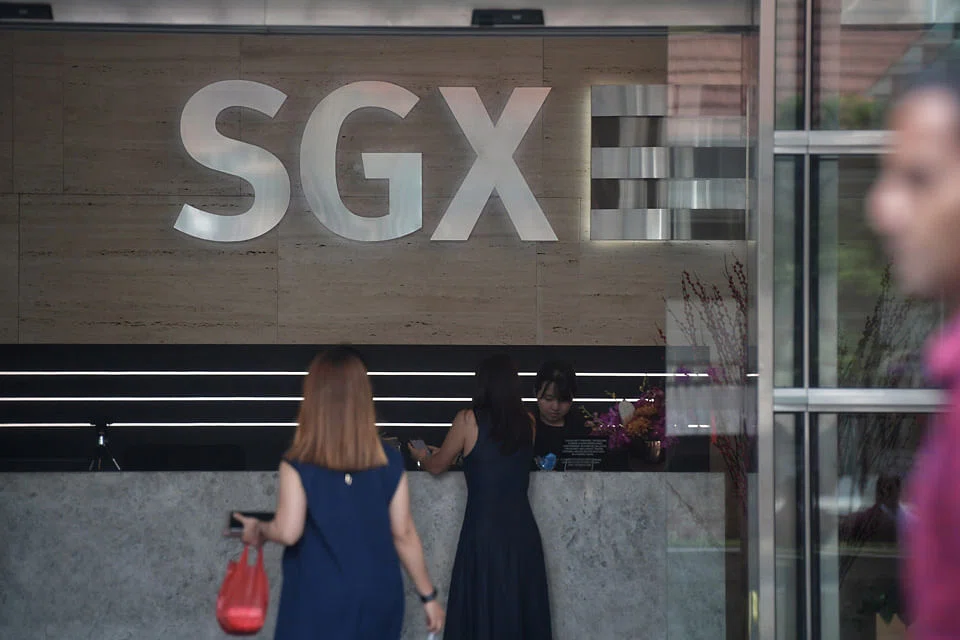
FROM Feb 7, mandatory quarterly reporting (QR) for the majority of the companies listed on the Singapore Exchange (SGX) became a thing of the past. This followed a considerable period of public consultation and deliberation by the Singapore Exchange Regulation (SGX RegCo).
The move represents a shift to adopt a new risk-based approach by the stock exchange. Henceforth, only companies that have a modified opinion from auditors on their latest financial statements will have to continue with QR. This includes companies whose auditors have expressed material uncertainty about the company as a going concern.
The risk-based approach will also apply to companies over which SGX RegCo has regulatory concerns that will have a "significant financial impact" on the firm.
Based on these criteria, 109 companies were asked to comply, comprising 61 from the Mainboard and 48 Catalist-listed companies. The SGX RegCo has cautioned listed companies that they are still subject to continuous disclosure rules and have to declare to SGX material developments at the company. Any omission of information that leads to an establishment of a false market will mean the company has to do QR.
Following the SGX ruling, Micro-Mechanics, a company ranked highly for its transparency, has announced that it will continue to do QR. In contrast, one company immediately cancelled its board meeting convened to review the quarterly results because it is no longer a requirement. An unnamed seasoned retail investor commented that he wishes more companies will follow the example of Micro-Mechanics. For those that do not, he "sincerely hopes that the companies can channel some of the resources they saved in not continuing with quarterly reporting to investor engagement".
I certainly hope that SGX-listed companies will not follow the herd mentality we recently witnessed when the Disease Outbreak Response System Condition (Dorscon) status was raised from yellow to orange.
THE VALUE OF INVESTOR RELATIONS
In my experience with SGX-listed companies, many merely adhere to the template requirements in their quarterly financial reporting statements. The disclosures under Note 8 and Note 10 are brief and not meaningful, which do not help investors in arriving at an informed investment decision.
I believe that in general, the investment community would like SGX-listed companies to continue with quarterly disclosure, especially those that have been doing so for years. If they choose to stop with QR, it begs the question of how seriously they take stakeholder engagement, unless they can quantify a meaningful cost saving, which they are happy to distribute in the form of higher core dividends to their shareholders.
In light of this new regime, I feel it is an opportune time to highlight to corporate leaders the importance of stakeholder engagement, particularly in the area of investor relations (IR), as a dynamic tool in enhancing corporate governance standards and practices in Singapore.
Good IR will help companies to achieve sustained corporate performance and investor confidence in the equity market. Companies that communicate better and more responsively with their stakeholders will foster greater transparency and stronger corporate governance within the organisation.
Let me elaborate by repeating some of the points I made in an article titled "The Strategic Value of Investor Relations", which first appeared in the Q2 2019 issue of SID Directors Bulletin published by the Singapore Institute of Directors.
Over the years, the concept of IR has shifted from a marketing-oriented, public relations exercise with a company's shareholders to a deeper, more sustained strategic development. This latter approach takes the long-term view to developing more meaningful interaction between company and shareholder, ensuring greater transparency and accountability in corporate governance.
The modern profession of IR is said to have originated in 1953 from the US-based General Electric, which created a public relations function to take charge of communications with its shareholders. The practitioners, lacking in financial knowledge, were generally focused on getting the company's name into the mass media. They played the role mainly of publicists rather than IR officers (IROs), who understood the strategic and managerial responsibilities expected of them.
As financial markets institutionalised and the focus shifted from private retail shareholders to professional investors, IR practices also moved from the hands of communication specialists to accountants and financial professionals. In most cases, the IR function came under the purview of the chief financial officer, and IR activities centred on providing financial disclosure to investors.
This re-orientation, from marketing the company using mass media to a more interactive process, evolved to one-on-one meetings between financial analysts and institutional investors. This enabled a two-way communication flow and provided a feedback loop to corporations.
In recent years, the concept of IR has seen further changes. Increasingly more investors are probing deeper and going further, asking the companies they have invested in how their business will drive future growth.
In essence, investors would like to know, from the company's communications with them, five things in particular: its product or service offering, its financial track record, its competitive advantage, its strategy, and the credibility of the company's plan to execute its strategy.
Increasingly, companies are finding that it is easier to articulate their offering and financial track record than to explain their company strategy and implementation. A good company is one that can present a coherent message about a multi-year strategy.
With the disruptions of traditional business models, many companies are finding it harder to extrapolate future trends from past performance. As a result of the changing economic landscape, many companies have to transform and it is not easy to articulate the strategy correctly the first time round. The fall in the number of analysts covering the stock coupled with increased volatility, opacity and strategic shifts further aggravate the situation.
Hence, it is extremely important that companies adopt an attitude of openness with a high degree of transparency and timely communication in good times - and in difficult times as well. This is where an effective IR policy shows its true worth.
INVESTING IN SHAREHOLDERS
Both communication and finance skill sets are highly valued constituents of a successful IR function. The desired outcome is an improved understanding of the company among investors and analysts. Sometimes, companies do not understand that how the business sees itself and how investors perceive it are not one and the same thing. An effective IRO needs to focus on building relationships and gaining the trust and confidence of analysts and investors.
Besides these external relationships, internal relationships within the organisation are equally important. IR is not a siloed function, and top management should emphasise across each of the business units that IR is part and parcel of their responsibility.
Many unpleasant and thorny issues could have been avoided or nipped in the bud if the company maintained regular, effective communication with its shareholders and facilitated shareholder participation during general meetings, dialogues and non-deal roadshows.
This is where a skilled, professionally-qualified IRO can make a difference. The IRO should be a competent communicator of the company's business model and strategy, and empowered by senior management to win the trust of its investors, both the institutional and retail players.
In this regard, the Investor Relations Professionals Association (Singapore) (IRPAS) in 2012 introduced the International Certificate in IR (ICIR) by the IR Society of the UK to IR practitioners and others in Singapore contemplating a career in IR. The ICIR has become an internationally recognised benchmark for competence in IR, and is now offered with a number of IR professional bodies in Asia, Europe, Latin America and the Middle East.
IRPAS see its role in championing IR as part of the efforts of all IR professional bodies around the world. With SGX as its sponsor, it advocates that best practice in listed companies accrues from the strategic value of IR through the use of effective investor communications, and is a key part of well-functioning capital markets. It recognises the importance of continuous professional development for its members and has undertaken steps to further this important agenda.
The strategic value of IR to listed companies is to promote effective engagement with investors so as to increase the number of long-term shareholders that are aligned with its strategic objectives. Stakeholder engagement should be incorporated as part of the company's long-term strategy to create value.
There can be no vibrant stock exchange without sound listed companies that practise good governance and transparency for the benefit of investors. To use the simple analogy of a fabulous meal, an exquisite dish comes about because it is derived from the best ingredients.