Working together to help build Asean's future liveable cities
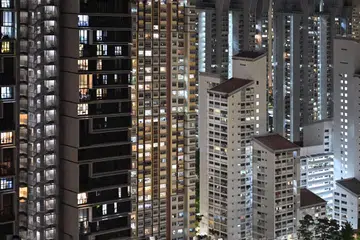
OUR region embodies opportunity. Significant urbanisation is underway in South-east Asia, with an additional 90 million people expected in Asean cities by 2030.
These urban populations will likely triple by 2050. The region's economic growth is tipped to outpace the global average in the next decade, meaning that Asean is on track to be equivalent to the world's fourth-largest economy by 2030.
This rapid growth presents opportunities for Australia and Singapore's built environment companies which possess world-class capabilities in addressing the expanding needs of cities.
Singapore has a strong appetite for innovation and new technologies, as it looks to transform its own built environment sector, increasing productivity and operations efficiency.
We see this locally in Singapore's continued strong construction demand and its commitment to infrastructure investment, including urban renewal.
Singapore's innovation effort inspires our region. Australia is a world leader in built environment expertise and technologies. Our companies, research organisations and authorities are world leaders in their respective fields and I want to share Australia's built environment expertise with the region.
This is why the Australian High Commission in Singapore, with our partners - the Australian Trade and Investment Commission (Austrade), and the Commonwealth Scientific and Industrial Research Organisation (CSIRO) - are running the inaugural Regional Built Environment Forum 2019 (BEF) in Singapore on June 3 and 4.
The BEF will promote Australia's and Singapore's capability and encourage even greater collaboration between our two countries in the built environment and Asean smart city development.
Bringing together Australian, Singaporean, regional and international built environment companies, business leaders, experts, decision-makers and officials, the BEF will promote Australia's and Singapore's capabilities and explore how our countries can jointly support Asean's unfolding urbanisation story.
The BEF includes keynote speeches by United Smart Cities' advisory board chairman Gordon Falconer on Asia's future cities, and Singtel's CEO of group enterprise Bill Chang on the digitalisation of urban environments.
Panel sessions will cover regional opportunities in the built environment; digitalisation; future skills and education for the sector; sustainability and city resilience; and platforms and partnerships for commercial opportunities.
The BEF will also include a Built Environment Marketplace, where selected organisations will display their capabilities in smart cities design, construction and technologies.
Companies taking part include AAM Group, Jones Lang LaSalle (JLL), Kaer and Lendlease, to name a few. Singapore's Info-communications Media Development Authority and the Building and Construction Authority (BCA) are taking part in our BEF.
This event is a precursor to BCA's International Built Environment Week programme scheduled for the early part of September, which I will be encouraging all Australian companies and partners to attend, and to explore opportunities for collaboration with Singaporean counterparts.
Indeed, Australian organisations are already working with partners in Singapore to provide built environment solutions.
Construction company powerhouse Lendlease is delivering the soon-to-open S$3.2 billion Paya Lebar Quarter, an integrated mega-mixed use development that includes retail, commercial and residential.
Innovative air-conditioning "as-a-service" company Kaer's business model is disrupting the real estate industry with positive results.
Engineering and infrastructure advisory company Aurecon helped deliver Global Switch's new data centre in Woodlands, which is the first project in Singapore to use prefabricated and modular techniques on a large scale.
Geospatial Solutions company AAM Group is partnering with the government and companies to "digitise the real world" in Singapore.
Australia's expertise in the built environment is complemented by the high quality of our science and innovation. Our national science research agency, CSIRO, is a world leader in integrated sustainable cities research.
CSIRO's future cities research in energy, water and waste solutions; smart city analytics and operations; and liveability, health and wellbeing is of real relevance to Singapore and Asean cities as they continue to grow and develop.
Our universities are at the forefront of research, teaching and learning in built environment disciplines. We will have leading academics and entrepreneurial fellows from The Australian National University, Curtin University, James Cook University, Murdoch University and The University of Newcastle participating in the BEF.
Joining them are experts from Singapore University of Technology and Design, Singapore Polytechnic and SkillsFuture Singapore, bringing Singapore's expertise in built environment skills and education to our forum.
At the regional level, Australia is supporting efforts to enhance Asean connectivity and the development of smart city systems.
Over the next five years, the Asean-Australia Smart Cities initiative will provide education, training, technical assistance and innovation support to Asean member states. This includes the development of an Asean-Australia Cities Accelerator.
More broadly, infrastructure development in the region is a key policy priority for Australia. This is why Australia launched the South-east Asia Economic Governance and Infrastructure Initiative last year.
This A$60 million (S$57.4 million) initiative will support South-east Asian countries with reforms needed to unlock economic growth as well as the preparation of quality infrastructure projects and mobilising finance to meet the region's infrastructure needs.
Separately, we are working on the Indonesia-Australia Infrastructure Partnership (A$146.2 million over six years for technical assistance); the Palembang City Sanitation Project in South Sumatra (A$45 million over six years to develop a sustainable urban sewerage system); A$30 million over 10 years to strengthen public-private partnerships in the Philippines; and the Vietnam Aus4Transport Program (A$30 million over five years) for transport infrastructure.
In many ways, the challenges facing our economies and communities, and those of the region, are ones that need the best built environment solutions.
Infrastructure and major construction can increase productivity but, increasingly, we are seeing the integration of digital infrastructure and the built environment driving growth in key sectors.
Working together and leveraging our respective expertise, Australia and Singapore have the opportunity and capability to help Asean build our region's future cities in smart, liveable and sustainable ways, supporting urbanisation and tackling climate and energy challenges.
I'm excited about connecting Australian expertise and companies with the opportunities across our region to help develop city systems in smart and sustainable ways. Singapore is a natural partner in this endeavour.