

10 new sites, including Jurong Lake District carve-out, up for sale in H1 2026 GLS programme
Supply from the confirmed list consists of 4,575 private homes, including 635 executive condominium units and 22,500 sq m of commercial space

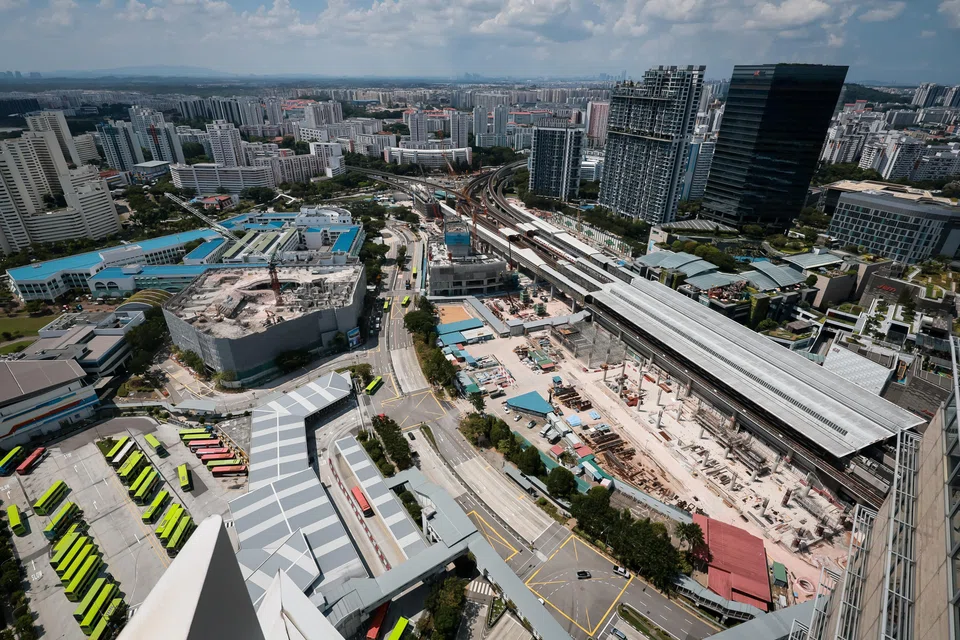
[SINGAPORE] Ten new sites will be on offer under the government land sales (GLS) programme for private residential housing in the first half of 2026 – seven on the confirmed list and three on the reserve list.
They include a white site at Town Hall Link on the reserve list, the first parcel to be carved out from the Jurong Lake District (JLD) master-developer site.
Selling the massive white site in smaller parcels, starting with the Town Hall Link site, will help to advance the development of JLD as the largest mixed-use business district outside the city centre, said the Ministry of National Development (MND) in a statement on Tuesday (Dec 2).
This approach takes into account macroeconomic and property market conditions, and feedback gathered from engagements with industry stakeholders, it said.
At 3.72 hectares (ha), the Town Hall Link plot is around half the size of the original JLD master-developer site. It will have a total potential yield of 186,000 square metres (sq m) of gross floor area (GFA), comprising at least 40,000 sq m of office space, up to 1,200 private homes and 44,000 sq m for other uses, such as retail or hotels.
“The proposed integrated mixed-use development in Town Hall Link will provide the critical mass needed to catalyse the next phase of development for JLD and help cater to medium-term growth in demand across market segments,” said MND.
Accessibility to the proposed development will be strengthened with the expected opening of the Jurong Region Line in 2028 and Cross Island Line in 2032, it added.
Given the site’s smaller size, MND said it is likely to have less development risk, which means developers can undertake the project with “greater confidence”.
“In addition, the government will be undertaking some infrastructure works upfront to reduce the cost burden on developers,” it said.
The JLD master-developer site was first released under the confirmed list of the H1 2023 GLS programme. It encompassed three plots of land to be built over 10 to 15 years, which would house at least 1.5 million square feet (sq ft) of office space, up to 1,700 homes and close to 800,000 sq ft of space for other uses such as retail and food and beverage.
A five-member consortium bid S$640 per square foot per plot ratio for the 6.5-ha land parcel in March 2024. This was rejected in September 2024 for being “too low”.
The site was later placed on the state’s reserve list, where it could be activated for tender subject to a minimum price that is acceptable to the government. Its minimum office quantum was reduced to 100,000 sq m, from 146,000 sq m, while the maximum residential GFA was increased to 186,000 sq m.
Market watchers said then that while JLD was a viable project, the risks were too high for developers, who face high costs and huge uncertainties. It was especially unclear if there was sufficient demand for the site’s immense office space.
Desmond Sim, group chief executive officer of Realion (OrangeTee & ETC) Group, added that there were “unforeseen responsibilities”, particularly in the infrastructure work. “That’s not something every developer has got experience doing, since it’s almost like doing a township.”
The recent changes signal the government’s willingness to work with the private sector to build Singapore’s next business district, he added.
“Office demand is still a question mark because of what’s going on in the macroeconomy, but the push for decentralised offices is still there, and vacancy (rates) in the Central Business District (are) getting tighter,” he said.
“So I won’t be surprised if (the Town Hall Link site) is triggered, probably six months down the road.”
Supply boost
Overall, the GLS programme for H1 2026 comprises nine confirmed list sites that can yield 4,575 private homes, including 635 executive condominium units, and 22,500 sq m of commercial space.
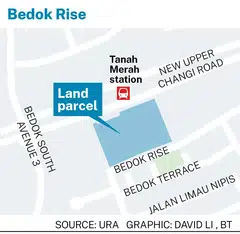
Of the nine (*see amendment note) sites, seven are new and can house 3,825 residential units. This includes a 5.74-ha integrated site in Bayshore Drive, which is expected to launch in March, and a 2.54-ha private residential plot at Berlayer Drive, which is expected to launch in May.
The supply injection for the upcoming H1 GLS programme is a shade under the 4,725 units provided in the preceding half year. The H2 2025 supply was itself some 6 per cent less than the 5,030 units released in H1 2025.
Still, MND noted that the supply boost from the H1 2026 confirmed list will bring Singapore’s overall supply pipeline for private homes to around 58,600 units, from the current 54,100 units.
“The supply will be from a good spread of sites across various locations, supporting the development of both conventional private residential units and long-stay serviced apartments, to cater to both owner-occupation and rental housing demand,” it said.
Meanwhile, the reserve list comprises six private residential sites, one commercial site, three white sites and two hotels. These 12 sites are expected to yield 4,610 homes, 186,650 sq m of commercial space and 970 hotel rooms.
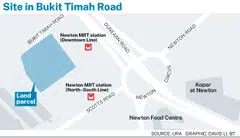
Of the 12 sites, two residential plots – at Morrison Lane and Kitchener Link – and the Town Hall Link white site are new. They will house around 1,535 homes and 84,750 sq m of commercial space.
Knight Frank research head Leonard Tay noted a running trend over the past year of the government “carefully lowering” the number of private homes in the GLS confirmed list, while steadily increasing those on the reserve list.
“The messaging for developers from the government is clear,” he said. “Should developers sense that homebuyer demand cannot be met by the sites in the confirmed list, they should dip into the reserve list to trigger additional sites instead, even though developers have generally given the reserve list a wide berth.”
He also noted that even with the new Town Hall Link site, there is a glaring absence of commercial sites in the Downtown Core submarket.
With new CBD office supply expected to stay tight until 2028, providing a commercial site for office use in the area could avert a repeat of the supply crunch in 2006 and 2007, he added.
“This was when a surge in office demand led to skyrocketing rents and the introduction of transitional office sites with 15-year tenures as a stopgap measure.”
But some have said that the lack of provision for a big downtown office site, as in the upcoming H1 2026 GLS programme, may be to spur the decentralisation of office space.
* Amendment note: A previous version of this story said 10 sites, when it should have been nine.
Decoding Asia newsletter: your guide to navigating Asia in a new global order. Sign up here to get Decoding Asia newsletter. Delivered to your inbox. Free.
Copyright SPH Media. All rights reserved.
TRENDING NOW

Once staunchly pro-China, Malaysian Chinese businesses are now distancing themselves from Beijing

Looking beyond looming CEO succession, should UOB potentially pursue a transformative merger?

Could stablecoins be the future of money?

Grab CEO’s wife Chloe Tong on life with Anthony Tan and finding her purpose

