39 JTC properties to get smart facilities management systems
Singapore
JTC is spending about S$15 million in its roll-out of "smart" facilities management (FM) solutions across 39 of its 106 JTC properties in the first half of this year.
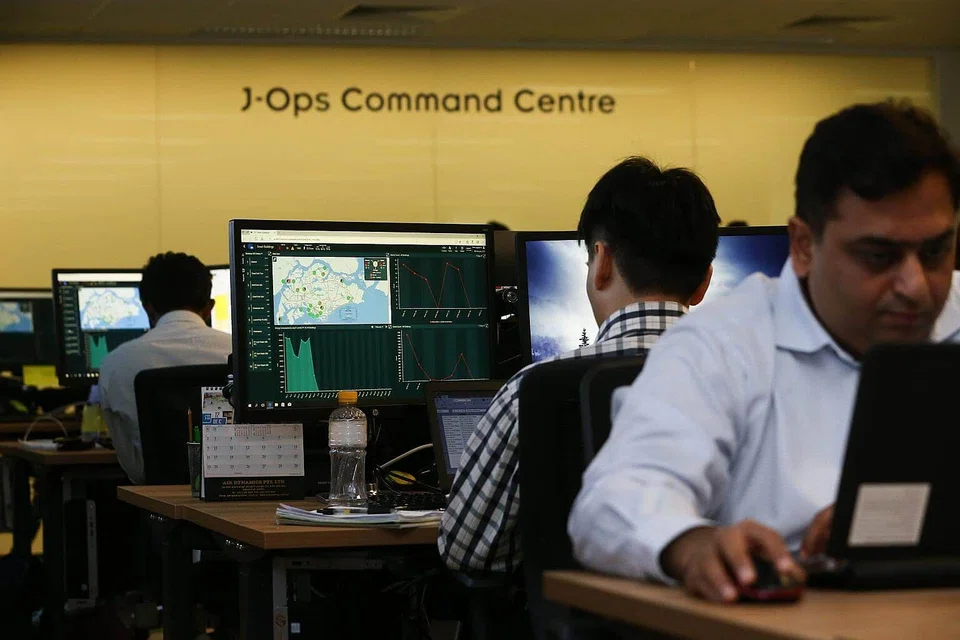
The multiple "smart" FM systems are housed in J-Ops Command Centre, one of the first integrated building and estate operations command centres in Singapore. The command centre was unveiled on Thursday by Second Minister for National Development Desmond Lee.
JTC said that its adoption of "smart" FM solutions is compelled by a growing and ageing portfolio, the need to curb rising operating and energy costs, manpower constraints and rising expectations of service levels.
This aligns with the Real Estate Industry Transformation Map (ITM), which has identified FM as one of the two sub-sectors with huge transformation potential.
Through the multiple FM systems at J-Ops Command Centre, JTC is able to remotely monitor, analyse and optimise the performance of its buildings and manage FM operations islandwide.
The adoption of "smart" FM solutions is expected to generate 15 per cent improvement in productivity and energy savings, based on JTC's pilot test on three properties.
In other words, JTC saved an average of 1.5 man hours per day per property executive in each building and about S$400,000 in utilities across the three buildings in a year. The overall cost of operating buildings is also expected to come down.
In the past, the FM work was trade-specific and equipment-focused, with a heavy reliance on manual inspections. This resulted in having to manage multiple trade-specific contracts and vendors. With the use of "smart" FM solutions, JTC is able to consolidate its contracts with FM service providers.
About S$1.5 million was spent on an earlier proof-of-concept trial involving three buildings - The JTC Summit, JTC MedTech Hub and JTC CleanTech Two.
Meanwhile, JTC is still testing new FM technologies, including a mobile app that allows users to control the temperature of their workspace, and a lift monitoring system at Fusionopolis One in one-north.
Other companies that have implemented "smart" FM solutions on a large scale include Surbana Jurong and CapitaLand, while Ascendas Singbridge (ASB) is experimenting with such solutions.
Ascendas Singbridge has set up an ASB Operations Centre, which has conducted pilot-tests in two buildings so far. It is in the process of adding more properties on the platform and developing an asset management system using the Building Information Modelling (BIM) tool.
CapitaLand has adopted several "smart" FM solutions in the malls it manages. These include functions that allow it to track FM jobs and operational readiness of its malls, allow users to provide feedback for prompt action, and the use of sensor data to remotely monitor the use of toilets to deploy manpower more efficiently.
Urban solutions consultancy Surbana Jurong develops and manages smart solutions for Singapore's HDB town councils and other private-sector clients. These include a lift monitoring system and a customised Web and mobile-based system that allows users to report faults in facilities directly.
It is also collaborating with its technology partner to improve its FM solutions based on BIM technology. "This is aimed at increasing the productivity of FM managers, and bring about cost savings for building owners in terms of their long-term building maintenance and operational cycle," a Surbana Jurong spokesman said.
Augustine Tan, president of the Real Estate Developers' Association of Singapore, noted that it is in the interest of commercial landlords or a master-developer of a district to incorporate smart FM solutions to save energy costs and bring in good tenants.
But it becomes less feasible to implement homogeneous FM systems at a district level where there are multiple landlords, he added.
Tony Khoo, president of International Facility Management Association (Singapore Chapter), noted that landlords and FM firms are already deploying varying degrees of "smart" FM solutions. It would take a big landlord or FM company that manages a large property portfolio to launch a command centre with a scale like J-Ops, he said.