

ABSD deadline extended to up to 7 years for developers of large en bloc sites to encourage reuse of land
The 15-month wait-out in the HDB resale market for private property owners is also lifted, as the market has cooled

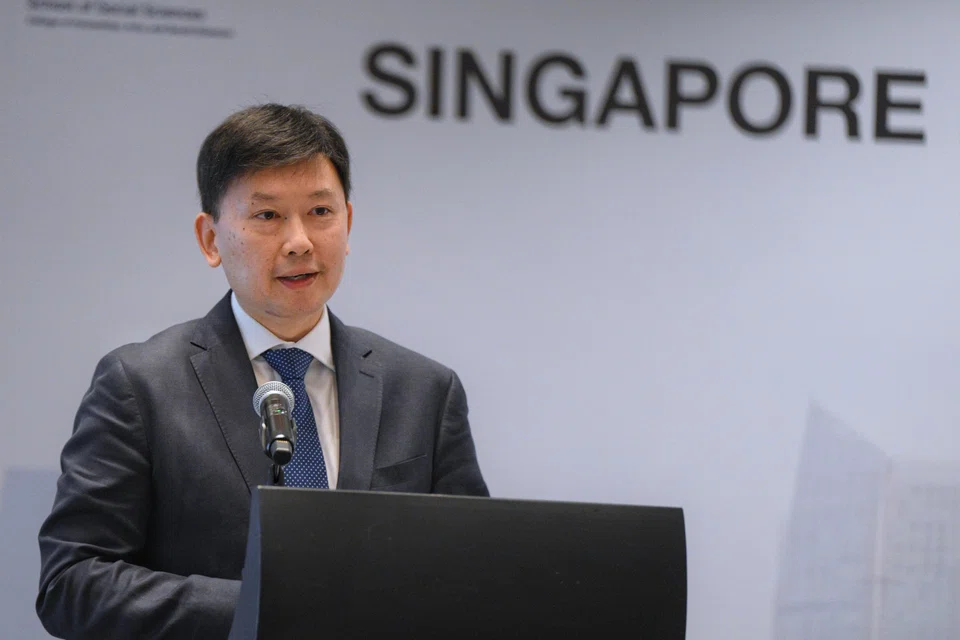
[SINGAPORE] The government will extend a critical sales timeline for developers of large en bloc sites to up to seven years, a move expected to give a boost to collective sale land deals often stalled by viability concerns.
At the Singapore Economic Conference on Tuesday (Jul 28), National Development Minister Chee Hong Tat announced that from Wednesday (Jul 29), large en bloc redevelopments of at least 700 units will have their critical sales deadline extended by one year, instead of six months. This means developers will have six years to complete construction and sell all units.
Developers of mega en bloc projects of at least 1,400 units will have the deadline extended by two years, bringing the additional buyer’s stamp duty (ABSD) remission timeline to seven years.
But they must still sell at least half the units by the end of the sixth year; if they fail to do so, the remittable ABSD component will be clawed back with interest then.
Chee said: “These changes are intended to set the right incentives for developers to rejuvenate larger estates, so that we can encourage more land intensification and achieve an outcome, which is good for society as a whole.”
Developers are subject to ABSD of 40 per cent on the price of land acquired for residential development. They pay a non-remittable 5 per cent upfront, leaving the remaining 35 per cent remittable.
The 35 per cent will be clawed back with interest if they fail to sell at least 90 per cent of units within five years, or fail to commence construction within two years of buying the site.
“These conditions ensure the timely injection of housing supply and encourage developers to bid prudently for the land,” Chee said.
“(But) we recognise that developers seeking to undertake the redevelopment of large residential en bloc sites will require more time… We could end up with a lose-lose outcome for the society as a whole if developers are discouraged from rejuvenating (such) sites.”
SEE ALSO

In Budget 2025, the authorities extended the critical sales timeline for certain developments by six months to support developers in their “transformation efforts”.
This change applied to large en bloc redevelopments with at least 700 units and at least 1.5 times the number of homes of the existing development, those with complex technical or infrastructure requirements, as well as rebuilds approved under the Strategic Development Incentive scheme.
Extensions were also granted for smaller projects submitted through Corenet X, to encourage early adoption of the platform that streamlines how companies seek regulatory approvals.
On Tuesday, the Ministry of National Development and Ministry of Finance said that large and mega projects that meet these additional criteria will get a further six-month extension. This means that they will have three years to begin construction and up to 7.5 years to complete and sell all units.
“From our experience, the best way is for the government to shape behaviours with the judicious use of market-based incentives, where possible,” Chee added.
“When done well, this brings out the best of both worlds – tapping into the dynamism and efficiency of the market, while guiding it towards socially desirable outcomes.”
The collective sales market, once a hotbed of deals and yielding large windfall gains for owners, fell into an extended period of inactivity as owners’ asking prices reached levels judged as untenable by developers.
With the en bloc market now stirring again, the move to extend the ABSD remission deadline is widely expected to give potential sales a leg-up.
Wait-out period of 15 months lifted
In his speech, the minister also announced the government would lift a 15-month wait-out period imposed on private property owners looking to buy a Housing & Development Board (HDB) flat in the resale market.
The restriction was rolled out in September 2022 to moderate demand for HDB resale flats and keep them affordable, especially for first-time homebuyers, as overall prices spiked.
Exceptions were made for those aged 55 and above who were moving from a private property to a four-room or smaller HDB resale flat, a two-room flexi flat or a community care apartment intended for seniors.
Chee noted that resale flat prices in the public housing market have moderated in the last few quarters, following multiple rounds of cooling measures as resale prices surged.
Most recently in Q2 2026, resale prices fell 0.3 per cent, extending a 0.1 per cent dip in Q1 and a significant reversal from a high of 10.4 per cent growth in 2022.
“We recognise that with the 15-month wait-out period, households with genuine housing needs faced inconveniences and disruption in their plans to switch from private property to public housing resale,” said Chee.
“MND (Ministry of National Development) indicated from the onset that this was intended to be a temporary measure to help moderate demand and stabilise resale prices,” he added. “As market conditions improved, we have assessed that the 15-month wait-out period has met its purpose and will be removed with immediate effect.”
With the change, private property owners of all ages will no longer face a wait-out period to buy a non-subsidised HDB resale flat of any size.
Chee emphasised the need for government policies to continue evolving and adapting amid changes in societal needs.
He said: “This is a hallmark of the PAP government: Take a pragmatic approach and do what works best for Singapore, based on evidence rather than ideology, and to be willing to change course when we are facing a new situation or operating in a new environment.”
This means being comfortable in “taking more calculated risks” and accepting that “some of these ventures will fail”.
The authorities must also be “even more open” to working with the industry to innovate and develop new solutions, rather than take “a more arms-length regulatory approach”, while fostering a more “pro-enterprise ecosystem” with closer collaboration across agencies.
Give and take
In his speech, Chee acknowledged the difficult trade-offs in planning for land-scarce Singapore.
“We try to overcome this constraint by reclaiming new land where possible, building taller or going deeper underground when we can, and integrated different uses in mixed-use developments through clever design and engineering,” he said.
For instance, tensions between development and conservation “unavoidably surfaced” as housing demand grew in recent years. Chee said the authorities will study these trade-offs before making any decisions, and detailed studies are done for new estates such as Bukit Timah Turf City and Mount Pleasant to guide development plans.
The minister also pointed to fiscal trade-offs involved in maintaining a “robust” public housing programme.
“Every dollar spent on public housing is a dollar not spent elsewhere for education, defence, healthcare, economic development or social welfare,” he said.
The government was nevertheless “willing to make” the investment to ensure Singaporeans have access to affordable public housing – a commitment it continues to hold.
“(But) we see that the failure to adequately address issues like housing affordability and widening wealth inequality has fuelled deep social frustration in other societies, feeding the rise of ultra-right wing politics and xenophobia,” he said.
“Singapore must not go down this path,” said Chee, stressing that the city-state must stay open and connected to the world to sustain growth and create jobs.
This will also enable Singapore to generate the fiscal resources needed to fund priorities such as housing, education and healthcare, as well as defend itself against “future shocks in this changing world”, he said.
Decoding Asia newsletter: your guide to navigating Asia in a new global order. Sign up here to get Decoding Asia newsletter. Delivered to your inbox. Free.
Copyright SPH Media. All rights reserved.
TRENDING NOW

Britain’s mansion tax shows the difficulty of targeting wealth

Once staunchly pro-China, Malaysian Chinese businesses are now distancing themselves from Beijing

The only common thing in S-E Asia is that we all eat rice: Cisco’s Asean president

Singapore data centre operator DayOne opts for US IPO at likely US$20 billion valuation

