

ACT Holdings said to be selling shophouse portfolio to SilkRoad Property Partners
Observers estimate a total price of about S$110m to S$115m for the properties along Mosque Street, Pagoda Street and Craig Road.

Kalpana Rashiwala
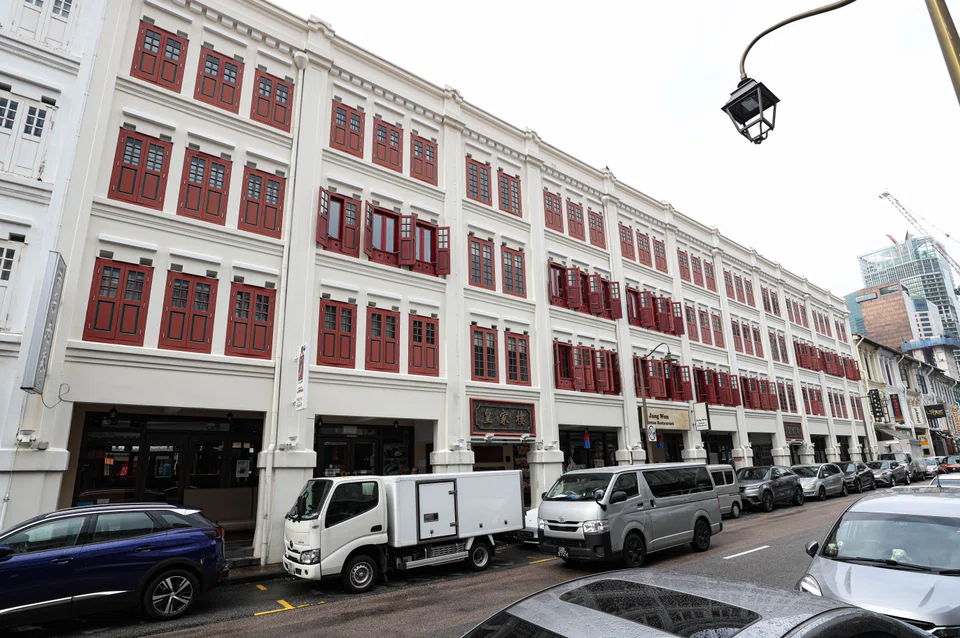
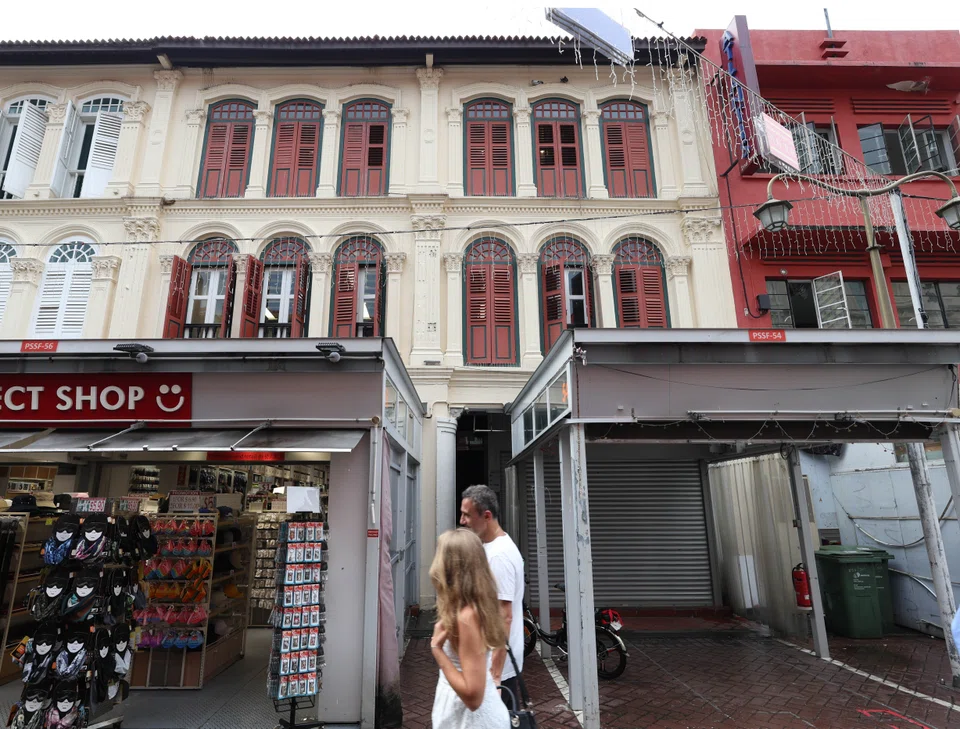
A PORTFOLIO of conservation shophouses along Mosque Street, Pagoda Street and Craig Road, owned by home-grown ACT Holdings, is being sold to SilkRoad Property Partners, The Business Times understands.
The deal is being executed through the sale of shares in ACT’s fully-owned subsidiary, Empire Lofts, which holds the shophouses. The pricing of the shophouse portfolio is being kept under wraps, though some market observers estimate this at about S$110 million to S$115 million, making it one of the largest conservation shophouse deals here.
The shophouses are on sites with 99-year leasehold tenures, with balance leases of between 66 years and 79 years.
ACT, founded in 1969 by the late Toh Aik Choon, is now the primary investment office for the Toh family, with a focus on real estate and private equity, says the company’s website. The founder’s son, James, heads ACT.
SilkRoad is a Singapore-headquartered private equity real estate firm set up in 2012 by the former AEW Asia senior management team led by Peter Wittendorp.
CBRE is understood to have brokered the transaction by private treaty, but the property consulting group declined to comment.
The Mosque Street shophouses held by Empire Lofts are next to Porcelain Hotel and comprise 11 contiguous units. They all have 4 storeys and a mezzanine level, adding up to a total floor area of 34,238 sq ft. There is also 2,200 sq ft of open terrace space with landscaping on the second floor. The shophouses are at 42, 43, 44 and 45 Mosque Street, and sit on 8,804 sq ft of land, with about 79 years’ balance leasehold tenure.
Empire Lofts also owns 54 and 56 Pagoda Street, a stone’s throw from the Chinatown MRT interchange station. The pair of properties are on 3,010 sq ft land area with about 72 years left on the lease; they span 3 storeys and a mezzanine level. The total floor area is 9,226 sq ft, going by information in a press statement issued in January 2020, when another property agency launched for sale the Mosque Street and Pagoda Street properties via an expression-of-interest exercise.
The final shophouse in the Empire Lofts portfolio, 42 Craig Road, has a land area of 1,558 sq ft, with a balance leasehold tenure of about 66 years.
“Amid increased volatility in markets this year, a key driver of shophouse demand has been the desire to park capital in safer asset classes that provide capital preservation with exposure to inflation.”
A major shophouse landlord
The sale of Empire Lofts’ shophouse portfolio has not been captured in the Urban Redevelopment Authority’s (URA) Realis caveats database. Typically, a property deal involving the sale of shares in a special-purpose vehicle holding the asset does not result in the buyer lodging a caveat, which is a claim of interest in property. In any case, the lodging of caveats is not compulsory.
A seasoned shophouse agent said SilkRoad’s sizeable acquisition is a good sign for the Singapore conservation shophouse market, proving that it is not just ultra-high-net-worth foreigners (from China/Hong Kong and South-east Asia) and Singaporean individuals and family offices that are buying shophouses, but also property funds/institutional investors.
“Some categories of shophouse buyers (such as ultra-high net worth individuals and family offices) typically also take a lower LTV; so they are less impacted by rising interest rates.”
Tricia Song of CBRE
Year-to-date tally
According to URA Realis caveats data downloaded by CBRE on Jul 25 (with the latest transaction dated Jul 14, 2022), there have been 125 shophouse deals totalling S$1.05 billion in the year to date, similar to the 138 deals worth S$963.95 million in the same period year.
Said CBRE’s head of research for South-east Asia, Tricia Song: “Assuming the sales velocity for shophouses continues till end-2022, the total transacted sales volume and value for this year should be similar to that in 2021.”
The shophouse market had a bumper year in 2021, with deals totalling S$1.94 billion in sales (across 254 transactions), surpassing the previous high of S$1.46 billion in 2018.
A major shophouse landlord said that amid increased volatility in markets this year, a key driver of shophouse demand has been the desire to park capital in safer asset classes that provide “capital preservation with exposure to inflation”.
Similarly, Song of CBRE noted: “Inflation rates have escalated in the past few months, and shophouses could be seen as a store of wealth or a hedge against inflation, even as interest rates on mortgages are rising and have started to outstrip property yields.
“Some categories of shophouse buyers (such as ultra-high-net-worth individuals and family offices) typically also take a lower LTV (loan-to-value) when purchasing shophouses; so they are less impacted by the rising interest rates.”
Furthermore, market observers note that the transaction cost for shophouses on sites fully-zoned as commercial is relatively minimal. No additional buyer’s stamp duty is payable. Neither is any stamp duty payable on exiting the investment. Buying into this property segment enables foreigners to gain ownership of land.
Observers say that following the steep price increases in 2021 and this year in the prime shophouse districts 1 and 2 in the CBD, investors are seeing more value in city-fringe locations such as Jalan Besar and Little India, where prices have not risen as much.
City-fringe appeal
Singapore-based Clifton Partners, set up in 2011, is an example. Based on caveat information, the group, through an affiliate, this year made its maiden acquisition in Jalan Besar, picking up a pair of freehold shophouses at the corner of Jalan Besar and Petain Road for S$28 million. The price for 309 and 311 Jalan Besar works out to about S$2,700 psf on a floor area of 10,353 sq ft. Savills was involved with the transaction.
A market observer highlights that in comparison, freehold shophouse prices in highly sought-after D1/D2 locations such as Amoy Street, Telok Ayer Street and the Keong Saik area exceed S$4,000 psf of floor area.
Furthermore, buyers with a budget of no more than S$10 million will find it tough to find a shophouse in D1/D2, but shophouses in this price range are still available in places such as Little India and Jalan Besar, which are in D8, he added.
CBRE’s analysis of caveats shows that there were more deals in D8 between Jan 1 and July 14 this year than in the same period last year; the number of transactions in D1 and D2 has fallen.
As a result, the proportion of shophouse deals in D8 has risen to 44 per cent from 24 per cent; the share of D1 and D2 has slipped to 16 per cent from 29 per cent.
Still, buyers with bigger budgets continue to shop in D1 and D2. Word on the street is that 45 Ann Siang Road, where PS Cafe is a tenant, is being sold for about S$43 million. The 999-year leasehold property has a floor area of about 9,080 sq ft.
TRENDING NOW

Two Singapore-listed palm oil firms named in Greenpeace report on Indonesian plantation fires

Singapore Airlines flight returns to San Francisco after ‘unruly’ passenger incident

Singapore looking into which companies responsible for haze-causing fires: PM Wong

Deluge IPO 3.86 times subscribed ahead of SGX debut

