

After urban flight, corporate campuses add a taste of the city
 Add BT as a preferred source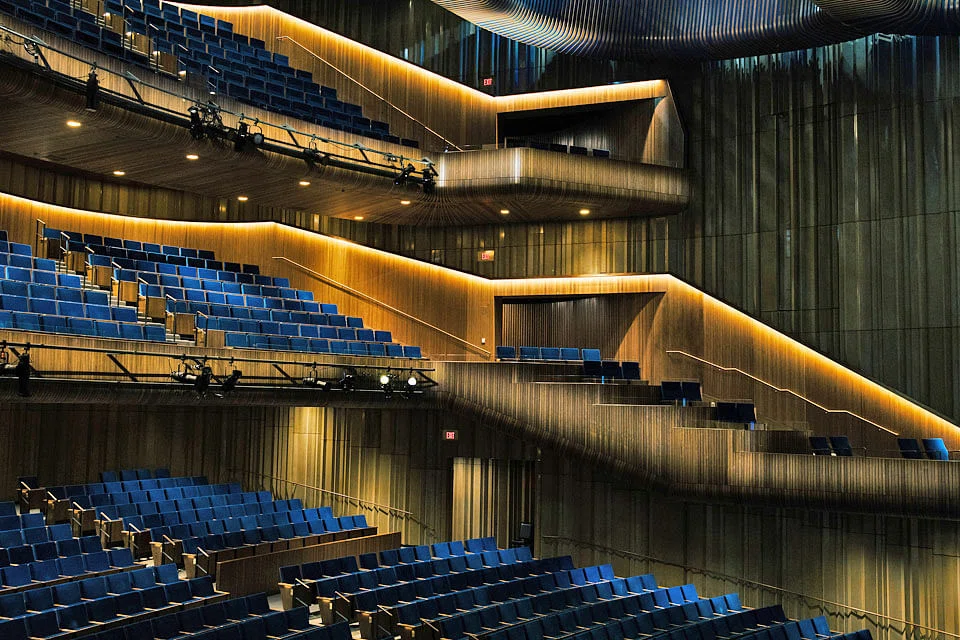
DeeperDive is a beta AI feature. Refer to full articles for the facts.
Tysons, Virginia
AFTER World War II, corporations in the United States moved to exclusive gated suburban campuses to escape traffic, crowds and big-city clamour. Now companies are designing a little city hubbub back into suburban headquarters by adding shops, restaurants, hotels, residences and public parks.
The change in the concept of the corporate campus reflects 2 related trends that executives say appear to be unaffected by the pandemic. The first is the public and private investment in communities across the country that is making suburbs more dense, walkable, bike-friendly and less dependent on cars. The second is the competition to attract the brightest young employees who want to live and work in lively places.
"It's urbanisation of the suburban experience," said Alex Krieger, professor of urban design at Harvard University and a principal at NBBJ, an architecture and planning firm in Boston. "Companies are bringing some of the characteristics of the city to their suburban campuses."
One prominent example is in Tysons, Virginia, a Washington suburb where Capital One has expanded its 24-acre campus with a performing arts hall, a Wegmans supermarket, a 300-room hotel and a rooftop park, all for corporate and public use. Across the street, a 30-story office building under construction will include ground-floor retail and restaurant space.
"As a company, we think, 'What can we offer to our associates or to potential associates?'" said Jonathan Griffith, Capital One's managing director. "We wanted vibrant mixed-use amenities that are public-facing to bring in that energy that we all kind of thrive off of."
Navigate Asia in
a new global order
Get the insights delivered to your inbox.
Other examples are appearing across the country. Walmart is building a 350-acre headquarters in Bentonville, Arkansas, that includes 2.4 million square feet of office space, a hotel, a food truck plaza, a walking and biking trail and retail shops open to visitors.
Microsoft spent US$149.5 million last year to buy 90 acres on the western edge of Atlanta to build a regional headquarters. The company said its plan for the parcel was not fully formed, with 1 exception. In February, the company revealed that it would invite residents of Grove Park, a neighbouring African-American working-class community, to help design 25 per cent of the site for "construction of affordable and empowered housing and other local community services and needs".
"Looking outside as well as within is an important step in our campus and office design," Michael Ford, Microsoft's corporate vice president for global workplace services, said. "We take pride in designing spaces that help us connect with our neighbours."
The company's strategy is to become an integral part of the community, said Ellen Dunham-Jones, the director of the Urban Design Program at the Georgia Institute of Technology in Atlanta. "Microsoft is asking, 'What can we do for equity and to mitigate gentrification that is the most progressive thing that no one else is doing?'" she added.
Such concerns are a sharp departure from the expansive, private, single-use suburban headquarters built in the 20th century that featured large parking lots and typically included cafeterias. Urban history specialists trace the design trend to 1942 when AT&T Bell Telephone Laboratories moved from Manhattan to a 213-acre campus outside Summit, New Jersey.
Others took the same path out of the city. In 1958, General Mills opened its suburban headquarters, a statement of glass-enclosed modernism, 8 miles outside Minneapolis. IBM moved from Manhattan and opened its gated headquarters in 1964 in Armonk, New York, on land that was once an apple orchard.
Capital One's plan for a new headquarters fit the 20th-century model in 1999 when it bought 26 acres in Tysons Corner, a 4-square-mile commercial centre near the intersection of the Capital Beltway and the Dulles Toll Road, two of the busiest highways in suburban Washington. At the time, Tysons Corner was the embodiment of what author Joel Garreau called an edge city - a concentration, outside a big city, of daytime shopping, entertainment and business that emptied at night.
Capital One initially planned 4 matching 14-story office buildings. Each would have connecting parking decks with space for 1,600 cars. A barbed-wire security fence ringed the perimeter, and guardhouses were stationed at the entrances. "What was the thinking behind that?" said Griffith. "'We didn't want people here on our secured campus. You know, stay away.'"
In 2003, the company completed the first of the 4 office towers, but promptly abandoned its design plan because the spread-out, guarded corporate campus it envisioned no longer reflected the neighbourhood. By then, the Federal Transit Administration, which oversees public transportation systems, and the state of Virginia had approved the extension of the Washington Metro, with 4 station stops in Tysons Corner, including 1 on Capital One's doorstep.
Not long after, Fairfax County initiated a plan to transform Tysons Corner into a community with more residences, safer pedestrian connections, public spaces and parks. In 2010, the county unveiled a comprehensive plan to encourage housing for 100,000 residents by 2050, roughly 75,000 more than today. The county helped lead a marketing campaign for the evolution of the planned community with a name change to simply Tysons.
Capital One actively participated in the process because the new plan allowed companies to significantly increase the scale of their developments in return for offering public benefits.
For example, Capital One could build taller and larger buildings if it also added a street grid to make walking more inviting.
Capital One easily won county approval for its redesigned headquarters. It includes the region's 2 tallest office buildings - a 31-story tower completed in 2018 and a 30-story office tower scheduled to open this year. The 2 buildings have space for more than 5,000 employees.
A block away is the events center, theatre, hotel and grocery store. Among the design innovations is a 2.5-acre rooftop park with an 18-hole miniature golf course, a beer garden and food truck lot, a dog park and a 250-seat amphitheater 11 stories above the street.
Capital One Center is approved for 4 high-rise apartment buildings and 100,000 more square feet of restaurants and retailing. Griffith said the bank had not decided on a timetable for the additions.
When it's completed, Capital One Center will encompass enough office, retail, entertainment and residential space to be its own downtown. "We think about where the world is headed and how to get there," Griffith said. "Our campus reflects that." NYTIMES
Decoding Asia newsletter: your guide to navigating Asia in a new global order. Sign up here to get Decoding Asia newsletter. Delivered to your inbox. Free.
Share with us your feedback on BT's products and services
TRENDING NOW
‘We’ve seen the worst-case scenario’: How Indonesia’s Cinema XXI navigated crisis and change

Higher costs, lower returns: Why are Singaporeans still betting on real estate?
S-E Asia tourism takes hit from Middle East crisis, but intra-regional travel could spell hope
Auditors flag uncertainty on Katrina Group’s ability to continue as a going concern

