

America's 'little land mines' could prevent a summertime boom
A roaring recovery is in sight, but a lot depends on what the US Congress does next for the winter economy
 Add BT as a preferred source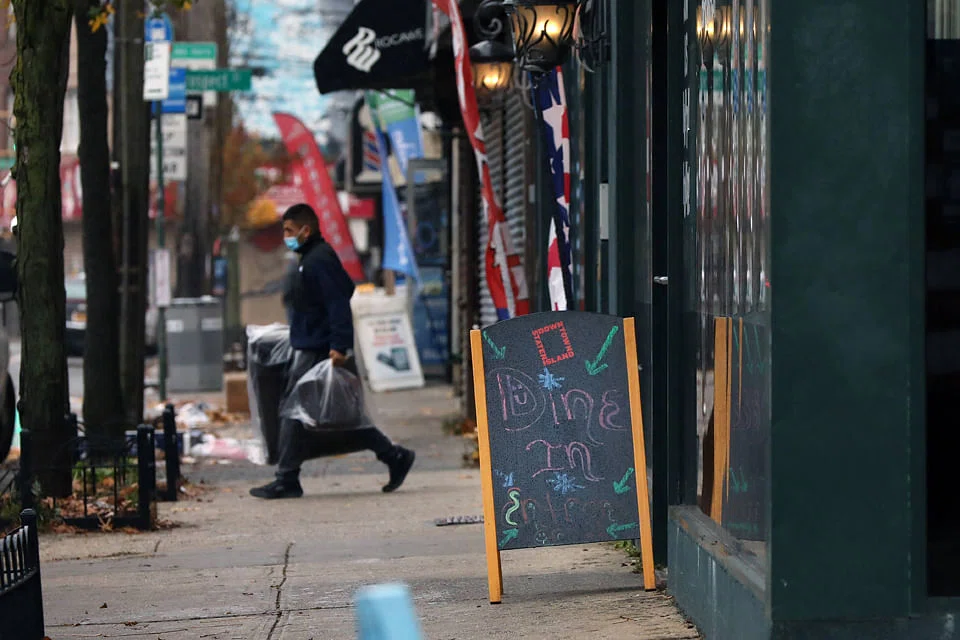
New York
FOR the first time since the pandemic shuttered the economy eight months ago, the end is in sight. The development of vaccines that appear to be safe, effective and ready for wide distribution in the months ahead means it's now possible to envision a post-COVID economy by summer.
There is a distinct possibility that the United States economy could roar back to full health quickly as soon as public health conditions allow. But for that to happen, the US will need to make it through what might be a cold, dark winter in which damage could be done to the tissue of the economy that prevents that rapid healing.
With many service businesses having already depleted cash reserves and the government aid they received earlier in the year, another wave of failures looms. And that imperils not only individual shops and restaurants, but also the commercial landlords they pay rent to, and the state and local governments relying on their tax dollars.
The challenge is to keep everything going long enough to prevent irreparable damage to the ecosystem on which a huge share of US economic activity is built when so many individual elements of the ecosystem are under severe strain.
Boka Restaurant Group in Chicago had 2,000 employees working at 20 restaurants before the pandemic and in the immediate aftermath of shutdowns in March furloughed more than 1,800 of them, said Kevin Boehm, a co-founder of the group.
Navigate Asia in
a new global order
Get the insights delivered to your inbox.
But as the weather warmed and Chicago allowed extensive outdoor dining, the company's restaurants were able to claw back. By midsummer, sales were down only 35 per cent to 40 per cent compared with normal. A refundable loan through the US federal government's Paycheck Protection Program helped meet rent and payroll obligations.
Now, the federal loan is long gone, the weather has turned cold again and a new wave of Covid-19 infections has put a pall on indoor dining. Sales are down 90 per cent from normal levels.
"I've spent the last two days sitting in a room with employees who are being furloughed or having a salary reduction," Mr Boehm said in mid-November. "This is happening right now. One of our restaurants is one of the highest grossing in America, and last night we did US$900 of sales. On a normal night, that restaurant would have done US$50,000."
For restaurants, many expenses move pretty much in line with sales, like ingredient costs and labour. But others, especially rent, do not; in a healthy restaurant, rent would amount to 6 per cent to 10 per cent of revenue. When revenue collapses but fixed costs do not, as is the case now, a restaurant cannot survive for long. At some of Mr Boehm's restaurants, rent is now an untenable 50 per cent of sales.
"If there's no federal assistance, it will wipe out a very large portion of the independent restaurants in America," said Mr Boehm, who with dozens of other restaurateurs formed the Independent Restaurant Coalition to seek help from Congress. "We can't make it to April or May."
If there are widespread restaurant failures, as the coalition argues is inevitable without a major new federal rescue, it will create an ugly situation next summer. You would simultaneously see hungry diners eager to return to restaurants; vacant former restaurant spaces; unemployed restaurant workers; and restaurant entrepreneurs bankrupted and in no position to start over.
A related challenge could hold the national economy back even after a vaccine is widely available. There has been a slow-moving crisis in some commercial real estate sectors, as missed rent payments start to pile up.
When retailers and restaurants miss rent payments, or hotel rooms sit empty, property owners can typically endure for a while, but defaults are inevitable if those conditions persist. According to Trepp, a commercial real estate research firm, that is now starting to happen.
The delinquency rate for mortgage securities backed by retail real estate was 14.3 per cent in October, up from 4.6 per cent a year earlier. Delinquencies for lodging properties were 19.4 per cent, up from 1.5 per cent.
And that reflects missed loan payments before the latest surge in virus cases and renewed lockdowns. Moreover, the new wave of trouble comes after commercial property owners have already taken dire steps to keep making debt payments, such as hotel owners making loan payments out of reserves meant for upkeep. In other words, brace for a wave of commercial foreclosures, which could create closings and other disruptions as new owners seize control of shopping malls, hotels and other properties.
"It's already started," said Manus Clancy, a senior managing director at Trepp, referring to foreclosures in retail real estate. "Borrowers are now cash-flow negative because of bankruptcies, so they're throwing in the towel or looking to restructure. That part of the problem remains after we have a vaccine."
That could mean more malls and shopping centres that are converted to other uses - shifts that would have happened eventually anyway but are being accelerated. It's hard to get back to shopping at your local mall - or maintain a job there as a store clerk - if the mall is closed while a new owner tries to figure out how to build a retirement community on the land.
"There are these little land mines across the economic landscape," said Joe Brusuelas, chief economist at RSM, an accounting firm that services midsize businesses. "Even if they don't matter at the macro level, at the local level they can matter a lot."
State and municipal governments face similar lagged effects, as the economic activity that has not occurred since March results in less money coming into tax collection offices - with the exact timing depending on how a given state funds itself.
Businesses must pay sales taxes relatively promptly, for example, so the contraction in activity has already showed up in those collections. But income tax payments arrive with a longer lag, which pushes some shortfalls into spring 2021. And while a fall in commercial real estate prices could affect property tax collections, that would play out over years.
Projections vary widely depending on the severity of the virus in a state; the composition of its economy; and its tax system. But most states are expecting revenue to fall in the fiscal year ending in 2021, with several projecting 10 per cent to 20 per cent declines, according to data compiled by the Urban Institute.
The federal government, which unlike states is free to run a fiscal deficit, could close some or all of that gap. Democrats widely support such an action. In the absence of that, weak revenue collection would mean states and localities would probably need to cut deeper, adding to the 1.3 million jobs they have already slashed since February. Those job losses would arrive just as public health restrictions are loosening and the economy is otherwise surging ahead.
At the same time, the industries that have benefited most from the pandemic could see a reversal of fortune. As Americans have halted spending on services like travel and sports attendance, they have redirected much of that spending toward physical goods.
In the third quarter, Americans' spending on goods was up 6.9 per cent from a year earlier, while services spending was down 7.2 per cent. If those patterns were to fully reverse to pre-pandemic levels, goods-producing industries would experience a pullback in 2021 equivalent to what the services industry experienced in 2020.
Combine all these forces, and the story is one of both hope and despair.
"We're still in sight of both the good place and the bad place," said Adam Ozimek, chief economist for Upwork, a platform for temporary labor. "If we pass another round of business relief and help for households, there is a really strong possibility we're going to make it through to the vaccine with an economy that doesn't have massive long-term damage. If we don't do that, we could still end up in a situation as bad or worse than the Great Recession. It's totally up for grabs."
There is now a light at the end of the tunnel, in other words, but it is still an open question exactly how far the tunnel goes and how bright the light will shine when we arrive. NYTIMES
Decoding Asia newsletter: your guide to navigating Asia in a new global order. Sign up here to get Decoding Asia newsletter. Delivered to your inbox. Free.
Share with us your feedback on BT's products and services
TRENDING NOW

‘We’re not a bubble tea brand’: Chagee aims to double Asia-Pacific footprint to 600 stores by 2027
Thai and Vietnamese farmers may stop planting rice because of the Iran war. Here’s why

Middle East-linked energy supply shocks put Asean Power Grid back in focus

As more Asean states turn to Russia for fuel, will Moscow boost its influence in the region?

