

Are buyers overpaying for freehold properties?
IREUS study shows that freehold property here were sold 10.4% higher on average than comparable leasehold properties, yet model ratio implies a premium of just 4%
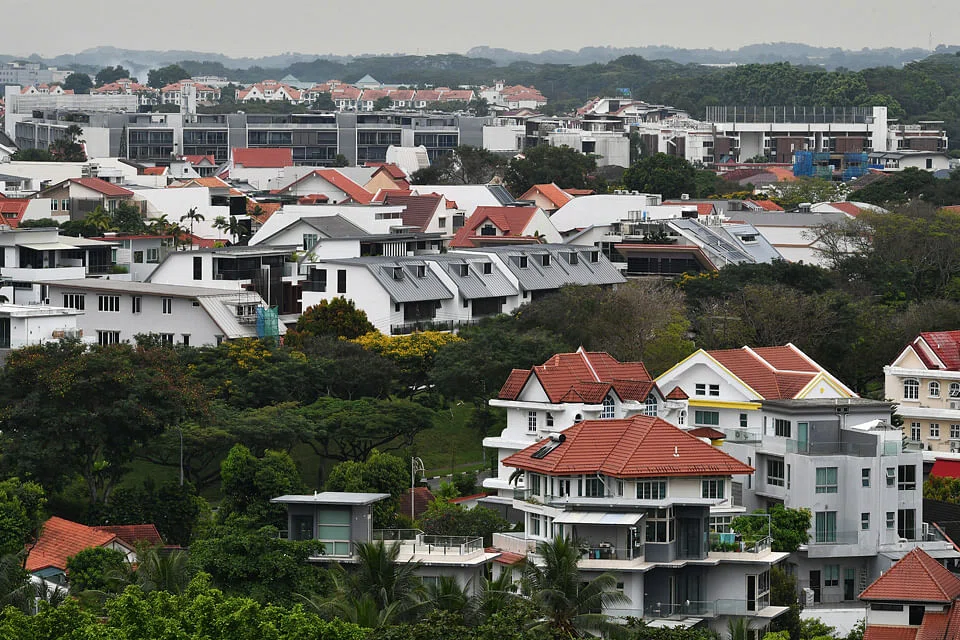
PRIVATE freehold lands are scarce in Singapore, where more than 80 per cent of the lands are state-owned. The government sells state lands with a finite tenure of 99 years to private developers for residential development purposes. The lands, together with any buildings and structures built on the lands, will be returned to the state at the end of the lease.
In highly urbanised Singapore, many buildings that are still structurally sound are redeveloped before the 99-year lease tenure.
The redevelopment process is commonly known as an en bloc sale, where individual strata property owners band together to sell their development rights to developers. Subject to the approval from the planning authority, the redevelopment process involves both intensification of land use and topping up of lease term.
Unlike freehold lands that confer owners the right of use of the property built thereon in perpetuity, the 99-year leasehold property has a finite life. Many leasehold property owners are concerned about the depreciating values in view of shortening lease term.
Effects of decaying lease
Freehold properties that are limited in supply command price premiums over leasehold properties, ceteris paribus - that is, everything else remains the same.
In other words, for properties of the same age and size, with the same view and in the same neighbourhood, a freehold property will be priced higher than a comparable leasehold property. How much will be the price difference between the two properties? Why should there be difference in the prices?
From a renter's perspective, he will be indifferent between living in a freehold property or a leasehold property because of the short-term nature of the occupation.
However, from an owner's perspective, the length of the lease tenure matters. Owners of freehold property are able to rent out the property and collect rents for an infinite period of time, as long as the building built thereon is still structurally sound and safe for occupation.
Both leasehold and freehold owners could sell future redevelopment rights on the land via an en bloc process to developers.
Developers will demolish and redevelop the acquired en bloc properties into new and usually taller properties, if economic values of the new properties outweigh redevelopment costs and loss of rental revenue during the construction process.
While there is no impact of decaying lease on freehold sites, developers of leasehold properties are concerned with the shorter balance lease term, and will usually pay upgrading premiums to the government to top up the lease tenure to 99 years.
A table containing a series of conversion ratios of freehold to leasehold values has been used by the Singapore Land Authority (SLA) in computing lease upgrading premiums.
The table, also known as "Bala's Table" and named after the person who created it in 1948, uses varying discounting rates to compute the discounted (present value) future cash flows.
The exact discounting factors used are not disclosed, however, our simulation analysis shows that the table uses an approximated rate at about 3 per cent.
The table pegs the conversion ratio of a 99-year leasehold value to a comparable freehold value at 96 per cent. This ratio implies a differential premium of 4 per cent for having a perpetual right of use relative to a use with a finite term of 99 years.
To verify the ratio in the Bala's Table, we collected 156,500 private non-landed property transactions from 1995 to mid-2019 consisting of 49 per cent of freehold properties and 51 per cent of leasehold properties.
Our empirical model shows that freehold property was sold at 10.4 per cent higher on the average per unit price than comparable leasehold properties, after controlling for property age, unit size, distance to MRT stations and expressways, and other unobserved planning region variations.
The model also controls for the three crises, which include the Asian financial crisis in 1997-1998, the Sars outbreak in 2003 and the US sub-prime crisis in 2007-2008.
The difference between the 4 per cent premium set in the Bala's Table and the approximately 10 per cent premium reflected by the market evidence may have two possible implications.
First, this may imply that buyers are overly optimistic and overpay for freehold properties.
Second, this does not rule out that use of the 4 per cent rate can lead to overestimation of the 99-year leasehold values when computing the lease top-up premiums.
Do buyers accurately and rationally price the very long-term interests in freehold properties? Should the premium be either 4 per cent as determined in the Bala's Table, or 10 per cent as supported by the transaction evidence in the market?
Whichever outcome prevails, a more robust pricing for freehold and leasehold interests is needed.
Valuing long-term interests
There are two possible explanations for the higher values the market puts on the very long-term interests in freehold properties.
First, three US professors (Stefano, Maggiori and Stroebel) show in a paper published in the Quarterly Journal of Economics in 2015 that the high freehold premiums were attributed to buyers discounting very long-run cash flows using a very low rate of below 2.6 per cent.
Second, two other professors (Capozza and Sick) showed using the real options model that multiple redevelopment options over an unlimited lease period contribute to the large premiums in freehold lands relative to leasehold lands.
For leasehold lands sold by the government, developers need to seek the government's permission to redevelop the lands acquired through the en bloc process. The government levies differential premiums for intensification of land use, and also upgrading premiums for extending the lease term to 99 years.
However, there are cases where future redevelopment rights are retained by private land owners. Spring Grove condominium located in prime district at Grange Road is an example where 99-year lease tenure is carved out from a freehold site formerly used as the diplomat residence of the United States of America.
Strata owners of Spring Grove condominium who attempt to put up the property for en bloc sale need the approval of the US government for the topping up of the lease.
Several private residential projects of Far East Organization were built on freehold lands, but sold to buyers on shorter leases of 103 years, which include The Shore Residences, Cabana, The Scotts Tower and Greenwood Mews.
Given the scarcity of freehold lands in Singapore, we expect the demand for freehold properties to continue to increase, which in turn, could further widen the price gap between freehold properties and leasehold properties.
Therefore, it is necessary to review if the 4 per cent premiums used to compute the lease's top-up premium is still representative.
Extending the lease to 99 years not just simply grants the additional rights at the tail end of the lease, it will also push up the value of the front end of the balance lease.
In a case of a leasehold land with a balance 70 years term, for example, topping up the lease will not just give the leasehold owner an additional 29-year lease term at the end of 70 years, it will also have positive impact on the value of the portion of the existing 70-year lease.
The gross effect of the lease top up will be a positive one, which not just increases the values of the existing leasehold land. It would also create positive spillover to neighbouring lands, inducing more redevelopment activities for surrounding older properties.
- Professor Sing Tien Foo is director at the Institute of Real Estate and Urban Studies (IREUS) and head of Department of Real Estate, National University of Singapore, and Sia Xin Rang Sophronia is a research assistant at the same institute. The views and opinions expressed herein are those of the authors and do not represent the views and opinions of the National University of Singapore or any of its subsidiaries or affiliates.
TRENDING NOW

Once staunchly pro-China, Malaysian Chinese businesses are now distancing themselves from Beijing
New launch or resale unit? Here’s a guide for homebuyers
The lesser-known prospects in the Asian chipmaking supply chain

Cliff Tan has 7 million followers and a 4-month waitlist. Why won’t he expand his business?

