

Ascott, Frasers scale up in China rental housing to tap fast-growing market
Hospitality players are banking on a mindset shift driving young professionals into premium rentals


[SINGAPORE] A boom in China’s premium rental housing market is drawing international hospitality players to the growing market, with brands now scaling up to meet renter demand and investor interest.
China’s residential rental market has transformed in recent decades, underpinned by a shift in attitudes among younger consumers, an April 2025 report by Invesco found.
While homeownership was historically a symbol of financial stability, younger residents now prioritise mobility, cash-flow preservation and quality of life. Professionally managed rental housing appeals strongly to this demographic, market watchers say.
“Demand has become more structurally supported as professionally managed platforms have become more established and better known, with clearer positioning and more optionality across price points, unit types and service levels,” said James Macdonald, Savills China head of research. This draws young professionals and drives project-based demand, where flexibility and predictable service standards matter, he added.
“In addition, weaker sentiment in the residential sales market can reduce urgency to buy quickly, so renting is increasingly viewed as a practical short-term choice for some households until there is greater clarity on the sales market and pricing trajectory.”
Singapore hospitality players Ascott and Frasers have both moved to expand in the China rental sector.
Ascott – a wholly owned subsidiary of CapitaLand Investment – entered China in 1998, and today operates and has under development over 250 properties with more than 55,000 units across more than 40 cities nationwide.
Joseph Wong, Ascott’s managing director for China, said that it launched in 2020 the Adoor Apartment and Adoor Suites in response to strong local demand for professionally managed rental housing.
The company started a franchise model for Adoor Suites in May 2025 and is negotiating more than 10 potential franchise projects.
The real estate asset class has been actively promoted by the government to develop the rental housing market and improve living conditions, Wong added.
“Since affordable rental housing assets became eligible for China real estate investment trusts (C-Reits), Adoor Apartment and Adoor Suites have gained strong traction among property owners,” he said.
“State-owned enterprises in particular are showing interest in these brands for securitising their assets, attracted by the optimised valuation and liquidity benefits.”
Adoor Apartment focuses on mid-to-large-scale, fully long-stay rental housing projects.
Ascott opened its first rental housing property, Adoor Apartment Heda Hangzhou (Xiasha), in 2021, targeting young professionals seeking fully furnished homes in first-tier and second-tier cities.
The brand’s Adoor Apartment line now operates in eight cities with 11 properties and more than 5,000 units, including some in the pipeline. Adoor Suites spans nine cities with 15 properties and about 3,500 units.
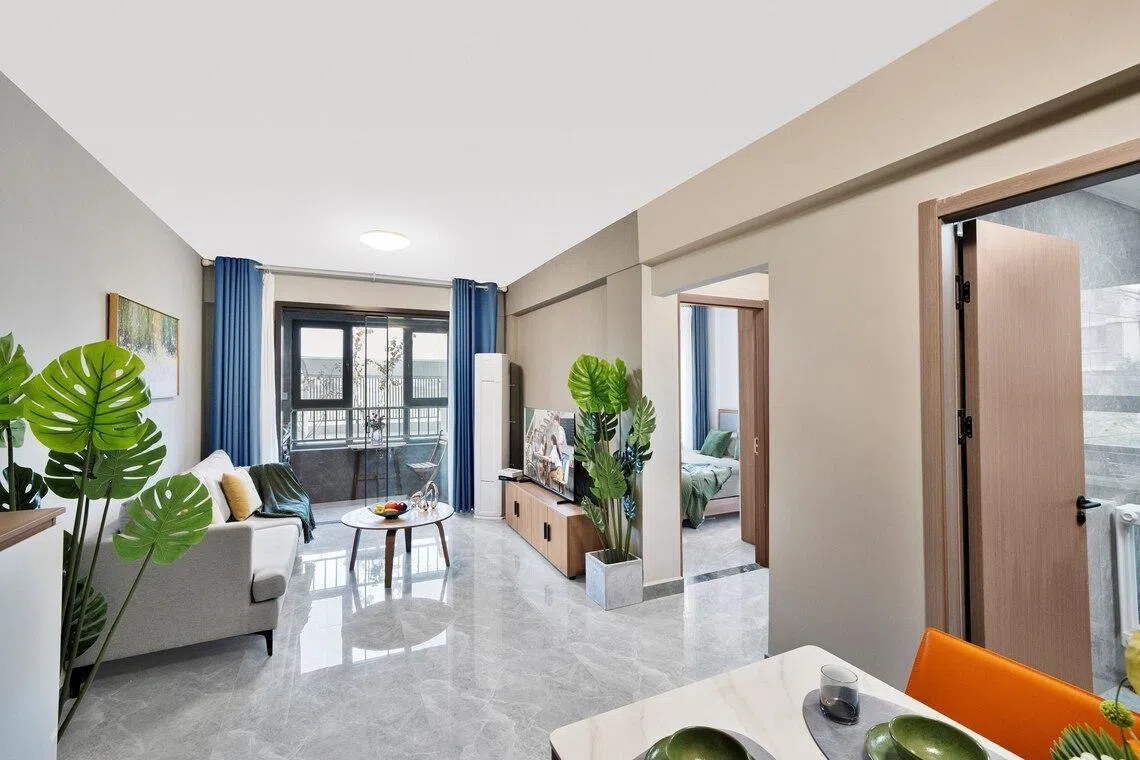
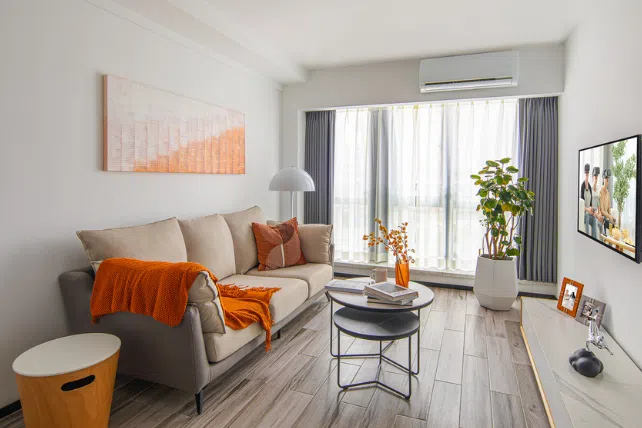
“By addressing selected essential needs, these brands help property owners create C-Reit-friendly cash flow while maintaining the quality and service excellence associated with Ascott’s global portfolio,” said Wong.
“This differentiated approach positions Adoor Apartment and Adoor Suites as the ideal bridge between international hospitality standards and China’s unique rental housing market requirements, enabling us to capture opportunities across multiple segments while supporting the country’s broader housing policy objectives.”
Frasers Hospitality has also pushed into China’s premium rental segment with its Modena by Fraser brand, targeting young professionals seeking long-term rentals.
Its latest launch, Modena by Fraser Shenzhen, a 325-unit property within Shennan 1001, caters to a demographic that increasingly values flexibility, convenience and lifestyle over traditional homeownership.
The building was jointly acquired with developer Tishman Speyer in May 2023.
Frasers Hospitality also manages Tishman Speyer’s 307-unit property in Wujiaochang, Shanghai, which soft-opened last May. Tishman Speyer had acquired a majority stake in the hotel and converted it into premium rental apartments.
Chew Hang Song, Frasers Hospitality’s chief operating officer, said that while government-led housing provides affordable options, the company positions Modena between mass-market rentals and full-service serviced apartments.

Pointing to the near-full occupancy at Modena, Chew added that demand for such premium rentals is robust.
Competition in this space is inevitable, said Frasers Hospitality’s chief investment officer Jason Leong, who expects more players to enter the market in the near term.
“China is such a vast market – and it has not even reached maturity like Tokyo. There’s still room to grow; other international chains will come, and there will always be innovation and new ideas tested,” he added.
Louisa Zhu, head of Savills Residence in China, expects continued expansion of branded and institutionally operated rental housing over the next two to three years.
Still, she cautioned that international entrants face localisation challenges, such as adapting to regulations, achieving operational scale and consumer behaviour, which may slow growth if not strategically addressed.
Rising long-term rental demand is boosting China’s serviced apartment sector. According to Research and Markets, the China serviced apartment market was valued at US$8.39 billion in 2025 and is projected to reach US$22.92 billion by 2033, growing at a compound annual growth rate of 13.4 per cent.
Competition is intensifying, particularly in first-tier cities. Macdonald said that in Shanghai, the market “has expanded meaningfully”.
Citing third-party estimates, he noted that institutional rental housing stock is largest in Shanghai (430,000 units), followed by Shenzhen (340,000), Hangzhou (200,000) and Chengdu (over 100,000). About 195,000 units were completed in 15 core cities in 2025, highlighting the market’s size.
“We are not currently seeing a clear step-change deterioration in occupancy, but it is a competitive operating environment,” he added. “Domestic platforms have also scaled quickly and compete effectively alongside international operators.”
The key difference lies less in headline rents and more in stable income streams and vacancy management, Macdonald noted.
Institutional operators typically have more sophisticated leasing, marketing and pricing systems, while individual landlords often rely on lowering rents to attract tenants. This gives professionally managed housing a relative edge during weaker market conditions.
TRENDING NOW

Once staunchly pro-China, Malaysian Chinese businesses are now distancing themselves from Beijing

Britain’s mansion tax shows the difficulty of targeting wealth

Three hats, one goal: How Ng Kian Swan runs sustainability at NUHS

COE review: The gap between luxury and mass-market cars isn’t the only one worth bridging

