Aussie property market not overvalued: Morrison
The treasurer also says the central bank is unlikely to cut interest rates further, which are already at record low
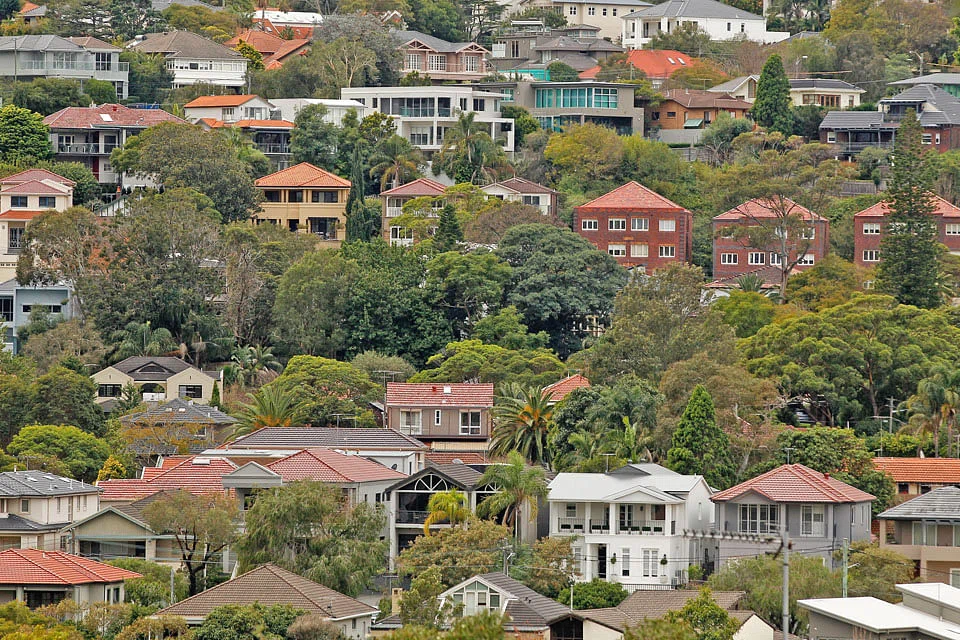
Sydney
AUSTRALIAN Treasurer Scott Morrison said debate on the country's housing market is prone to exaggeration - even as Sydney property prices rise anew - and indicated he doesn't see much appetite at the central bank for further cuts in the nation's already record-low interest rates.
There's "no evidence" the property market is overvalued outside "arguably some pockets if x and y and z happened, and x and y and z as yet has not happened", he said in an interview at the International Monetary Fund's (IMF) headquarters in Washington. "So I think these risks can be overstated. They can be really overstated."
A three-year surge in Australian home prices paused at the end of 2015 after banks raised mortgage rates to offset the cost of holding more capital. The market is taking off again as a growing population tries to squeeze into too few properties: Sydney house prices are up 14 per cent this year through September, compared with 9 per cent across the nation's major cities, according to CoreLogic Inc.
The market has been fuelled by an easing cycle begun late in 2011 that brought the cash rate to 1.5 per cent as the central bank sought to counter the drag from plunging mining investment. But a jump in exports and a residential construction boom has helped lift annual economic growth to 3.3 per cent in the second quarter and unemployment fall to 5.6 per cent in August.
The main challenge remains weak inflation, and new central bank governor Philip Lowe told lawmakers last month that while consumer-price growth could be returned to its 2 per cent to 3 per cent target faster via looser policy, he is reluctant to do so because it risked igniting a new round of borrowing among debt-laden households.
Mr Lowe made clear he and his central bank colleagues aren't "inflation nutters".
Mr Morrison said in the interview that monetary policy worldwide has basically "exhausted its effectiveness", while acknowledging that some attending the Group of 20 and IMF meetings still believe it has a role to play - particularly Japan and the European Union.
"From our perspective, the old pushing-against-the-string analogy is very relevant," Mr Morrison said of monetary policy in Australia. "It's up to Phil what happens next, but I don't detect any great sort of enthusiasm for any further easing there."
Money markets are reaching a similar conclusion, pricing in a less than 50 per cent chance the Reserve Bank of Australia (RBA) will cut its cash rate from 1.5 per cent through 2017.
Mr Morrison, who took over as treasurer about a year ago during a national leadership change, allied himself closely with former RBA governor Glenn Stevens as he sought to get up to speed on the economy. Mr Lowe replaced Mr Stevens last month and in his renewed monetary policy agreement with the government introduced a more direct link with financial stability, with the housing market likely a key area.
Mr Morrison spoke after meetings that included Federal Reserve chair Janet Yellen and S&P Global Ratings, which in July cut the outlook on Australia's AAA credit score to negative from stable. Quizzed on the government's decision to focus on reining in a budget deficit and bringing debt under control rather than using fiscal stimulus, Mr Morrison made the case for spending restraint.
"Our debt-to-GDP, which will peak just over 30 per cent, is low by global standards," he said. "But given our current-account deficit position, I think we have far less wriggle room when it comes to government debt in Australia."
Australian Prime Minister Malcolm Turnbull is operating with a razor-thin majority in parliament after a July election that saw the government's tally of 90 seats in the 150-member lower house cut to just 76 - a majority of one.
Mr Stevens and Mr Lowe have made the case for utilising low global rates to borrow cheaply to fund infrastructure and boost productivity in the economy. Mr Morrison said while Australia is still increasing borrowing to cover government spending on obligations such as health, education and welfare, it wasn't in a position to splurge on capital.
"The priority is to get ourselves in a position where you're not increasing your debt to cover off recurrent expenditure," he said. "If you are going to take those decisions you're doing it knowingly to boost productive capacity in the economy. Now the other condition on that is projects. There's got to be the projects. This has been a source of frustration for some years."
Australia's electorate is sceptical of government-funded infrastructure that is often either politically motivated or not properly costed, leading to blow outs in the final price.
"What we want to see in our economy now is an increase in private investment," Mr Morrison said. "We have to be very conscious of arresting our debt at the moment."
Asked about his meeting with the S&P and their response to the passing of government savings measures worth A$6.3 billion (S$6.58 billion), Mr Morrison said: "They had noticed."
"I was able, not just on that issue but a number of other issues that we've been able to land since then, been able to demonstrate that this is a more workable parliament," Mr Morrison said. "I mean I'm not going to get overly excited at this point, it's still early days. But if the expectation was that nothing would pass, that's not true. We have been able to get things to pass."
As to the housing market, Mr Morrison maintains the key driver has been lack of supply at a time of low rates. Surging prices have seen developers throwing up apartment blocks across major cities, leading to the reverse risk of a glut once they are completed. BLOOMBERG