

Australian households well placed to absorb rising borrowing costs: RBA
 Add BT as a preferred source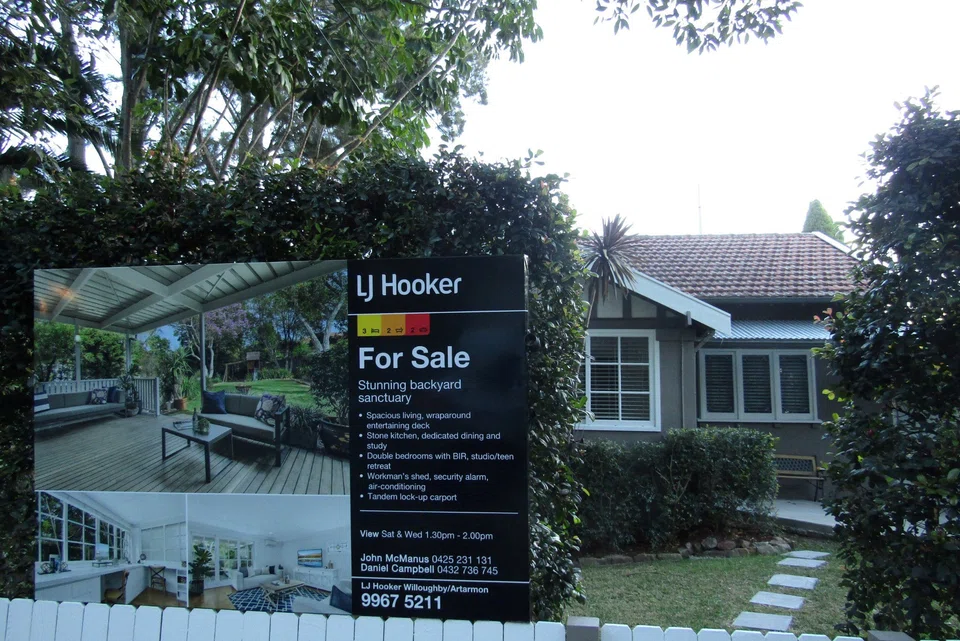
DeeperDive is a beta AI feature. Refer to full articles for the facts.
AUSTRALIAN households are generally well placed to absorb rising borrowing costs though more recent home buyers could be vulnerable with interest rates set to rise further in the months ahead, a top central banker said on Tuesday.
Reserve Bank of Australia (RBA) Deputy Governor Michele Bullock said households had built up around A$260 billion (S$247.8 billion) in excess savings during the pandemic and most were well ahead on their mortgage repayments.
Most also had substantial equity in the homes after steep price rises in recent years, though values in Sydney and Melbourne had begun to decline in the past few months.
“I would conclude that as a whole households are in a fairly good position,” to contend with higher rates, Bullock said in a speech in Brisbane, while also flagging more increases ahead.
The central bank raised rates by 50 basis points to 1.35 per cent in early July, the third hike in as many months, and markets are wagering rates could top 3 per cent by the end of the year.
Minutes of the RBA’s July policy meeting showed the Board discussed the neutral rate – one that is neither expansionary nor contractionary – and decided the current rate of 1.35 per cent was “well below” that.
Navigate Asia in
a new global order
Get the insights delivered to your inbox.
The neutral rate is imprecise but has been estimated to be in a range of 2 to 3 per cent, with RBA Governor Philip Lowe often nominating 2.5 per cent as around neutral.
Consumer price figures due next week are expected to show annual inflation accelerated beyond 6 per cent in the June quarter, and the RBA itself expects it to reach at least 7 per cent by Christmas.
Recent data showed unemployment fell sharply in June to a 48-year low of 3.5 per cent as hiring outstripped all expectations, fuelling pressure for larger rate increases.

Bullock cautioned that some households would be pressured by higher borrowing costs, including those that had taken out fixed loans in the last year or two.
She estimated half of fixed-rate loans would face an increase in repayments of at least 40 per cent when they expired, leading to a median rise of around A$650 in monthly repayments.
“While in aggregate it seems unlikely that there will be substantial financial stability risks arising from the household sector, risks are a little elevated,” Bullock warned.
How those risks played out would be influential on the pace and scope of further rate increase, she added. REUTERS
Decoding Asia newsletter: your guide to navigating Asia in a new global order. Sign up here to get Decoding Asia newsletter. Delivered to your inbox. Free.
Share with us your feedback on BT's products and services
TRENDING NOW

China pips the US if Asean is forced to choose, but analysts warn against reading it like a sports result

Beijing’s calculated silence on the Iran war

Shelving S$5 billion office redevelopment plan proved ‘wise’ as geopolitical risks mount: OCBC chairman

Vietnam formalises new state leadership, redefining ‘four pillars’ power balance

